Safely Hang a Child’s Hammock: A Step-by-Step Guide
Hanging a hammock for your child safely is totally achievable! The most important step is to use sturdy anchor points and appropriate hardware, like strong ropes or straps rated for the weight. You also need to ensure the hammock is hung at a safe height with plenty of soft ground below.
Ensuring your child can enjoy their new cozy spot without worry is key. We found that checking the weight limit of both the hammock and your anchor system is non-negotiable. It’s also wise to position the hammock away from potential hazards, like sharp objects or furniture they could bump into.
- Always use strong anchor points.
- Check the weight capacity carefully.
- Hang it at a safe height.
- Ensure soft landing below.
- Position away from hazards.
Ready to get this done? Let’s walk through exactly how to hang your child’s hammock safely, step by step.
Setting Up Your Child’s Hammock Securely
You’re looking to hang a hammock for your little one, and safety is your top priority. That’s fantastic! It’s all about making sure those anchor points are strong and the setup is stable. We’ve researched the best ways to ensure your child’s hammock is a cozy, safe haven.
Choosing the Right Anchor Points: Trees vs. Posts vs. Stands
The foundation of a safe hammock setup starts with your anchor points. These need to be incredibly robust. What works best often depends on your backyard or living space.
Using Sturdy Trees
If you have mature, healthy trees, they can be excellent anchors. Look for trees that are at least Learn about choosing mature, healthy trees for secure hammock anchoring.12 inches in diameter. Avoid trees that show signs of disease, rot, or damage. Your trees should feel solid and unmoving when you lean on them.
Installing Strong Posts
For a more permanent solution, you can install sturdy posts. We found that 4×4 or 6×6 treated lumber posts are a good choice. These should be sunk deep into the ground, ideally 3-4 feet deep, and set in concrete for maximum stability. Ensure they are spaced correctly for your hammock’s length.
Opting for a Hammock Stand
A dedicated hammock stand is a fantastic option, especially if you don’t have ideal trees or can’t install posts. Many stands are designed for easy setup and portability. Look for stands with a A dedicated hammock stand offers an alternative to tree or post anchoring.high weight capacity and a stable base. This removes much of the guesswork from anchoring.
Selecting Safe Hammock Hardware and Materials
Once you have your anchor points figured out, the hardware connecting them to the hammock is your next critical consideration. This is where you don’t want to cut corners.
Hammock Straps vs. Ropes: What’s Best?
Both straps and ropes can work, but there are key differences in safety and ease of use.
Weight Capacity is Key
Hammock straps are often made from strong, durable nylon or polyester webbing. They distribute weight evenly across the tree or post, which is gentler on the anchor. We found that straps rated for at least 500 pounds are a good starting point for a child’s hammock, even if the child is lighter. Always check the manufacturer’s stated weight limit for the straps.
Rope Considerations
If you choose rope, make sure it’s a high-strength, low-stretch type. Think climbing rope or marine-grade rope. Avoid natural fibers like cotton, which can degrade and break. Ensure the rope is thick enough to handle the load comfortably and doesn’t dig into your anchor points.
Choosing the Right Carabiners and Hardware
The connection points between your straps/ropes and the hammock itself also need to be robust. Locking carabiners are a popular and secure choice. Make sure they are rated for substantial weight—well over the intended load. We saw that some experts recommend carabiners rated for at least 5,000 pounds for general hammock use.
Proper Hammock Height and Spacing for Safety
The height at which you hang your child’s hammock is crucial for preventing injuries. Too high, and a fall can be dangerous. Too low, and it might drag on the ground.
The “Knee-High” Rule of Thumb
A common recommendation is to hang the hammock so that when your child is sitting in it, their feet can still touch the ground. Many sources suggest the bottom edge of the hammock should be about 18-30 inches off the ground when taut. This makes it easy for your child to get in and out safely.
Ensuring Adequate Space Around the Hammock
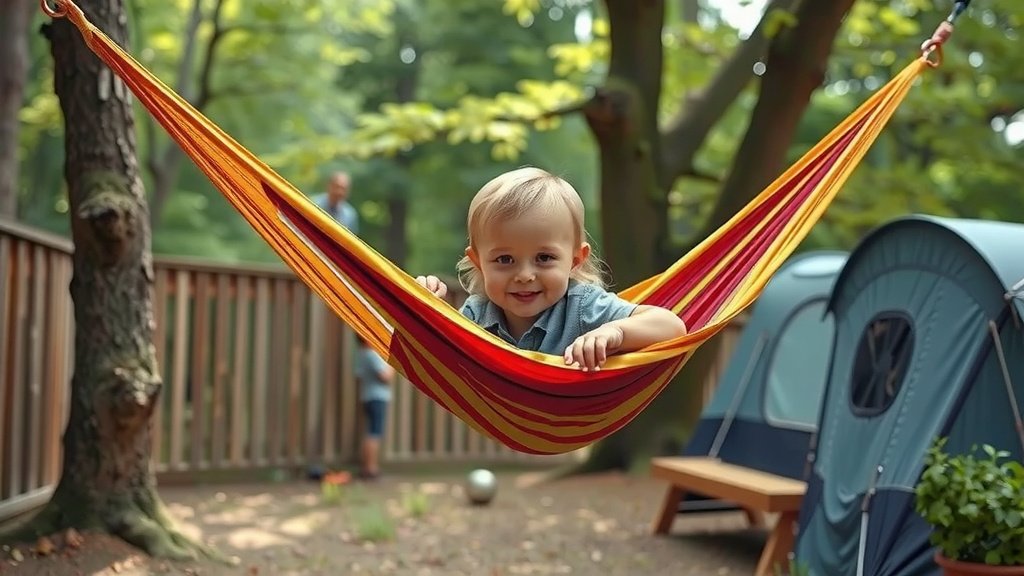
You also need to consider the space your hammock will occupy. Hammocks need room to sway! Make sure there are no nearby obstacles like fences, sharp rocks, trees, or furniture that your child could bump into if they shift unexpectedly. A good rule of thumb is to have at least 6 feet of clear space on all sides of the hammock’s potential swing area.
Creating a Soft Landing Zone
Even with the best setup, accidents can happen. Preparing a soft surface beneath the hammock can significantly reduce the risk of injury from falls.
Ideal Ground Cover Materials
What kind of ground cover works best? You want something that absorbs impact. We found that a thick layer of wood chips, mulch, sand, or rubber playground surfacing is excellent. Aim for a depth of at least 9-12 inches for maximum effectiveness. Grass can work in a pinch, but it offers less cushioning.
Regular Checks for Hazards
It’s also important to regularly inspect the area beneath the hammock. Remove any toys, rocks, tools, or other items that could pose a tripping hazard or make a fall more dangerous. This is an easy step that often gets overlooked.
Final Safety Checklist Before Your Child Swings
Before you let your child enjoy their new hammock, give it one last thorough check. This quick checklist can give you peace of mind.
- Anchor Points: Are they sturdy, healthy, and securely fastened?
- Hardware: Are straps, ropes, and carabiners rated for the weight and free from wear?
- Height: Is the hammock hung at a safe, easily accessible height?
- Clearance: Is there plenty of clear, unobstructed space around the hammock?
- Landing Zone: Is the ground beneath soft and free of hazards?
- Weight Limit: Double-check the hammock’s and hardware’s weight capacity.
Conclusion
You’re now well-equipped to hang your child’s hammock safely! Remember, the key lies in secure anchor points, appropriate hardware with ample weight capacity, and a safe hanging height. Ensuring a soft landing zone and clear space around the hammock adds that extra layer of protection. Take your time with each step, and you’ll create a wonderful, worry-free space for your child to relax and play. Now, go ahead and get that hammock set up for some fun!
Frequently Asked Questions
How far apart should the anchor points be for a child’s hammock?
The spacing depends on your hammock’s length, but generally, your anchor points should be positioned so the hammock hangs with a gentle curve, not completely taut. A common guideline is to have your anchor points roughly 8-15 feet apart, but always check your specific hammock’s instructions.
What is the safest material for hammock straps or ropes?
For maximum safety, we found that wide polyester or nylon webbing straps are excellent because they distribute weight evenly. If using rope, opt for high-strength, low-stretch materials like dynamic climbing rope or marine-grade braided rope, avoiding natural fibers that can degrade.
Can I hang a hammock from a porch ceiling or a doorway?
Hanging a hammock from a porch ceiling or doorway requires specialized hardware and very strong structural support. You’ll need to locate ceiling joists or sturdy door frames and use heavy-duty eye bolts or hooks rated for significant weight. If you’re unsure, it’s best to consult a professional to ensure structural integrity.
How often should I inspect the hammock and its hardware?
It’s wise to conduct a quick visual inspection of the hammock, straps, ropes, and anchor points before each use, especially if the hammock has been exposed to the elements. A more thorough check for wear and tear on the hardware and anchor points should be done monthly.
Is it safe for my child to sleep in a hammock overnight?
While hammocks are great for lounging and napping, overnight sleeping is generally not recommended for children. Hammocks can restrict movement, and it’s essential for children to have space to shift positions comfortably and safely during extended sleep periods.