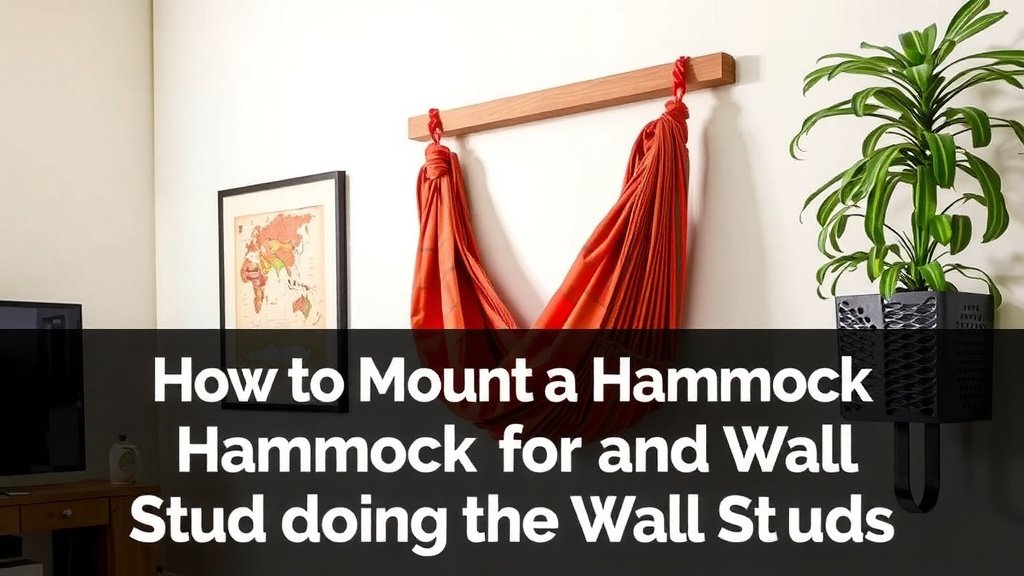
How to Mount a Hammock to a Wall Stud: A Simple Guide
The easiest way to mount a hammock to a wall stud is to find the stud with a detector, drill a pilot hole, and install a heavy-duty eye bolt or hammock anchor rated for at least 300 pounds. You’ll want to mount it about 4 to 5 feet off the floor so your hammock hangs at a comfy height. Done right, that single stud can hold you, your book, and even a nap that goes a little too long.
Here’s the thing, though. Not every wall has studs where you want them, and hanging into the wrong spot can send you and your hammock straight to the floor. Many experts say the mounting hardware matters just as much as the stud itself, so picking the right bolt and checking the weight rating is a big deal. We researched what works and what doesn’t, so you don’t have to learn the hard way (or the bruised way).
- Use a stud finder to locate a solid wood stud, not drywall.
- Drill a pilot hole slightly smaller than your bolt’s threads.
- Install a lag eye bolt or hammock anchor rated for 300+ pounds.
- Mount it 4 to 5 feet up for the perfect hang angle.
- Always test the setup slowly before putting your full weight in.
Below, we break down everything you need to know about mounting a hammock to a wall stud, step by step. Grab your drill, and let’s get you swinging.
Hanging a Hammock From a Wall Stud Without the Headaches
The short version: a wall stud is the only part of your wall strong enough to hold you, so everything comes down to hitting it dead center and using hardware that won’t quit. We found that most hammock failures happen because of one of two things, a missed stud or a weak bolt. Fix both, and you’re golden.
Why the Stud Is the Only Safe Anchor Point
Drywall looks tough, but it’s basically chalk dust pressed between two sheets of paper. It holds up a paint job, not a 180-pound human. The wood stud behind it is what carries the load, the same way the frame of a house carries the roof.
What Happens if You Hit Just Drywall
An anchor bolt in plain drywall can pull out in seconds. We found that even heavy-duty toggle bolts, which are great for shelves, aren’t built for the dynamic load of a swinging body. Falls are no joke either; the CDC lists falls among the leading causes of injury for adults at home. One bad landing can turn a relaxing weekend project into an urgent care visit.
Choosing Hardware That Won’t Let You Down
Your best bet is a 3/8-inch lag eye bolt screwed directly into the stud, or a purpose-built hammock wall anchor. Many experts say the screw should bury at least 2 inches into solid wood. Anything less is asking for trouble.
Comparing Your Main Options
Not all hardware is created equal. Here’s a quick side-by-side to help you pick.
| Hardware Type | Weight Rating | Best For | Watch Out For |
|---|---|---|---|
| 3/8″ lag eye bolt | 300 to 500+ lbs | Direct stud mounting | Needs a deep pilot hole |
| Hammock wall anchor kit | Usually 300 to 400 lbs | Beginners who want a matched set | Check that the rating covers you |
| J-hooks (utility style) | Varies widely | Light-duty hanging chairs | Often not rated for hammocks |
| Drywall toggle bolts | Under 100 lbs | Shelves and decor only | Never for hammocks |
Understanding Weight Ratings
Here’s a rule of thumb: pick hardware rated for at least two times your body weight. Why? A hammock doesn’t just hold your weight; it adds force when you sit down, shift, and swing. That spike, sometimes called dynamic load, can double the stress on your bolt in an instant.
Finding the Stud the First Time, Every Time
Studs in most American homes sit 16 inches apart, measured from the center of one to the center of the next. Start your search about a foot from a corner or near a window frame, since studs usually flank openings.
Getting Accurate Readings From Your Stud Finder
A magnetic stud finder finds the screws in the drywall; an electronic one senses density changes. Both work, but technique matters more than the tool.
Simple Tricks for Double-Checking Your Spot
Don’t trust a single beep. We found a few old-school checks that save a lot of patched drywall.
- Mark the first reading, then scan a few inches left and right to confirm the edges.
- Knock on the wall; a stud sounds solid and dull, hollow spots sound empty.
- Measure 16 inches from another known stud as a sanity check.
- Drill a tiny test hole first. If you hit wood, you’re in business.
Installing the Bolt, Step by Step
With your spot marked and hardware ready, the install takes about 15 minutes. Slow and steady beats fast and crooked every time.
Drilling the Pilot Hole
The pilot hole is your insurance policy. It keeps the wood from splitting and makes driving the bolt way easier. For a 3/8-inch lag bolt, drill a hole slightly smaller than the bolt’s threads, about 3/16 to 5/16 inch, and go as deep as the threads will reach.
Getting the Angle Right
Screw the eye bolt straight into the stud, perpendicular to the wall. If it tilts, the load pulls sideways on the threads and weakens the hold. We found that a washer between the eye and the wall helps the bolt sit snug and spread the pressure evenly.
Driving It Home
You can use a socket wrench or a drill with a hex adapter. Turn slowly. Stop when the eye sits flush against the washer, and give it a firm tug. If it budges at all, back it out and start again. A bolt that moves now will move later, with you in the hammock.
Testing Before You Commit Your Whole Body
Don’t cannonball in. Test like you’re dipping a toe in a cold pool, then wading in slowly. Our first-time hammock setup guide covers the full weight check in more detail.
- Push test: Press down on the bolt with both hands and your full arm weight.
- Sit test: Lower yourself in gently from a squat, keeping your feet on the floor.
- Bounce test: Add small, controlled bounces and listen for creaks or cracks.
- Visual check: Look for gaps between the eye and the washer after each test.
- Recheck: Tighten the bolt again after your first week of use, since new wood compresses slightly.
Many experts suggest treating hardware checks like smoke detector checks, a quick look every month or two (Mayo Clinic recommends similar routine checks for home safety gear). It takes ten seconds and buys real peace of mind.
Mistakes That Ruin an Otherwise Perfect Setup
Most hammock disasters trace back to a handful of avoidable errors. We found these are the usual suspects:
- Mounting into drywall anchors instead of actual wood.
- Using an eye bolt that’s too short, leaving threads shallow in the stud.
- Skipping the pilot hole and splitting the stud.
- Mounting too high, which makes the hang angle steep and the hammock cramped.
- Ignoring the weight rating or forgetting a partner might join in.
Get these right, and your wall-mounted hammock will be the comfiest spot in the house. Get them wrong, and well, your floor gets a new hammock holder.
Conclusion
Mounting a hammock to a wall stud comes down to three things: finding solid wood, using a 3/8-inch lag eye bolt rated for 300+ pounds, and drilling a proper pilot hole. Add a slow test before you commit your full weight, and you’ve got a setup that will hold you for years of lazy afternoons. We found that most people who take their time with the stud finder and the drill end up with a hang spot they never want to leave. So grab that stud finder this weekend, pick your bolt, and give your favorite book a proper home. Your perfect nap is waiting about four feet up the wall.
Frequently Asked Questions
Can I mount a hammock to a metal stud instead of a wood stud?
We don’t recommend it. Metal studs in most homes are thin gauge steel meant to carry drywall, not a swinging body. If metal is your only option, you’d need specialized through-bolting with backing plates, and even then many experts suggest a freestanding hammock stand is the safer call.
How far apart should two wall-mounted hammock hooks be?
It depends on your hammock, but most standard hammocks want anchor points 10 to 15 feet apart. Measure the total length of your hammock, including the suspension ropes or straps, then subtract about two feet. That gives you a comfortable sag instead of a tight, board-like lay.
Can I use the same wall stud to hang a hammock chair or swing?
Yes, as long as the stud is solid and your hardware is rated for the load. Hammock chairs concentrate weight on a single point, so a 3/8-inch lag eye bolt buried at least 2 inches into the stud works well. Just check the weight rating on any chair hardware, since some swivel hooks are rated lower than lag bolts.
Do I need to worry about the eye bolt rusting over time?
Indoors, rust is rarely an issue. In a humid space like a screened porch or bathroom, we suggest choosing a stainless steel or galvanized eye bolt. Give the eye a quick wiggle during your monthly check, and replace any hardware that shows flaking or discoloration.
What should I do if no stud lines up where I want my hammock?
You have a few honest options. Shift your mounting point left or right to the nearest stud, since a foot of difference rarely ruins a room layout. You can also mount a solid wood backing board across two studs and anchor into that, which spreads the load nicely. A freestanding stand is another solid fallback when the wall just won’t cooperate.