Best Wall Anchor for a Hammock: How to Choose in 2026
Choosing the right wall anchor for a hammock comes down to one thing: match the anchor to your wall type. For solid concrete or brick, use a sleeve anchor or wedge anchor. For wood studs, a heavy-duty eye bolt with a lag thread works best. And for drywall alone? Don’t. No anchor can safely hold a hammock in plain drywall.
Why does this matter so much? A hammock puts serious pull on your walls, and a failed anchor can send you straight to the floor. We researched what experts recommend and found that weight rating and wall material matter more than brand names. You’ll also want to check that your anchors can hold at least 300 pounds per mounting point, since hammocks create dynamic, swinging loads.
Here’s the quick version before we dig in:
- Wood studs: use lag eye bolts rated for 300+ pounds
- Concrete or brick: use sleeve or wedge anchors
- Never anchor into drywall alone — hit a stud or masonry
- Drill the right hole size so the anchor grips properly
- Always test the setup slowly before fully relaxing into it
Below, we break down each wall type step by step, so you can hang your hammock with confidence and actually enjoy that nap you’ve been dreaming about.
Matching Hammock Anchors to Your Wall Type
The best anchor for your hammock is the one that matches the material behind your wall. Wood, concrete, and brick each need a different type of anchor. Pick the wrong one and even a top-rated anchor will fail.
Think of it like shoes. Great boots won’t help you swim. Same idea here — the anchor has to fit the wall, not just the hammock.
Hanging Into Wood Studs
Wood studs are the easiest and most forgiving option for most people. If your home has wooden framing, you’re in luck. We found that a lag thread eye bolt is the go-to choice here.
A lag eye bolt screws directly into the stud’s wood. Its threaded shaft grips the fibers tightly, and the closed eye gives your hammock hook a secure place to clip. Many experts say a 3/8-inch lag eye bolt is the sweet spot for indoor hammocks.
Finding the Stud First
You can’t screw into a stud you can’t find. Use a stud finder, or knock along the wall and listen. A hollow sound means drywall only. A solid, dull thud means you’ve hit wood.
Studs are usually spaced 16 or 24 inches apart, center to center. Once you find one, measure to confirm the next one. Mark both spots with painter’s tape before drilling.
Drilling a Pilot Hole
Never drive a lag bolt straight into bare wood. Drill a pilot hole first — slightly smaller than the bolt’s threaded shank. This keeps the wood from splitting and makes installation much easier.
Screw the eye bolt in until the full threaded portion is buried. The eye should sit snug against the wood, with the loop facing the direction your hammock will pull.
Hanging Into Concrete or Brick
Masonry walls need anchors that expand inside the hole. Two types work best: sleeve anchors and wedge anchors. Both grip by pressing outward against the concrete as you tighten them.
A sleeve anchor works well for most indoor hammock setups. A wedge anchor holds even more weight, but it’s better suited to thick, solid concrete. For hollow brick, be careful — expansion anchors can crack hollow material. Many masonry pros recommend checking brick type before drilling.
You’ll need a hammer drill with a masonry bit for this job. A regular drill will struggle, and you’ll get frustrated fast. Trust us on that one.
Why Drywall Alone Never Works
Let’s be blunt: drywall cannot hold a hammock. It’s basically pressed plaster powder wrapped in paper. Even the strongest drywall anchor is rated for a fraction of what a swinging hammock demands.
Ever seen someone pull a towel bar off a bathroom wall? That’s a light static pull. A hammock adds dynamic, jerky loads — getting in, swinging, shifting your weight. Multiply that by a body’s weight and you get a hole in the wall and a sore backside.
Weight Ratings: What the Numbers Really Mean
Anchor packaging lists a weight rating, but here’s the catch. Those numbers usually describe static load — a steady, straight-down pull. A hammock creates something messier.
When you swing or plop into a hammock, the force spikes well above your body weight. Your angle of hang matters too. The wider your hammock’s hanging angle, the more force pulls on each anchor point. Research on rope and rigging loads shows forces can reach two to three times body weight at shallow angles.
That’s why we recommend anchors rated for at least 300 pounds per point for most adults. If two people share the hammock, add both weights and round up generously.
Reading Anchor Packaging Like a Pro
Look for three things on the box: weight rating, approved wall material, and required hole size. If the package doesn’t list a rating, skip that anchor. Quality manufacturers always publish their numbers.
Also check the fine print. Some ratings assume the load pulls straight down. Hammock loads pull outward and downward at an angle, which is harder on the anchor. Many hardware pros suggest choosing a rating well above what the label shows for angled pulls.
Quick Comparison of Common Wall Anchors
| Anchor Type | Best Wall Type | Good for Hammocks? |
|---|---|---|
| Lag eye bolt | Wood studs | Yes — top choice |
| Sleeve anchor | Concrete, solid brick | Yes — top choice |
| Wedge anchor | Thick solid concrete | Yes — heavy-duty pick |
| Toggle bolt | Drywall, hollow block | No — not for dynamic loads |
| Plastic wall plug | Light items only | No — way too weak |
| Self-drilling drywall anchor | Shelves, pictures | No — never for hammocks |
Hammock Hanging Hardware Checklist
Before you drill anything, run through this quick list. Two minutes here saves a very bad afternoon later.
- Confirm your wall type — stud, concrete, or brick — before buying anchors
- Choose anchors rated 300+ pounds per mounting point
- Buy a drill bit that matches the anchor’s listed hole size
- Use S-hooks or carabiners rated for climbing loads
- Check the hammock’s own weight limit, not just the anchors
- Plan for a slight sag — a taut hammock strains anchors more
How Far Apart Should Your Anchor Points Be?
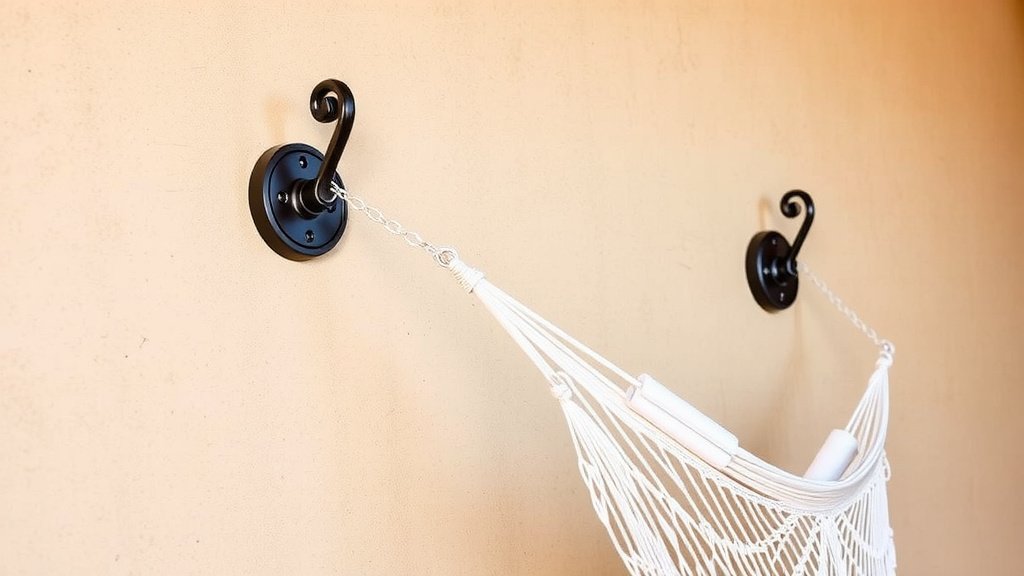
Distance matters as much as hardware. For a standard 9 to 10-foot hammock, mount your anchors roughly 10 to 12 feet apart. Indoor walls are rarely that wide, which is why many people add a hammock stand or a wall-mounted spreader bar instead.
Height counts too. Hang your anchors about 4 to 5 feet off the ground. That gives you a comfortable sag without your hammock dragging the floor. Many hammock makers publish spacing charts — check yours before drilling.
Testing Your Setup Before You Commit
Here’s the part everyone skips. Don’t skip it. Sit in the hammock slowly, with one hand braced on the wall or a chair. Feel for any movement, creaking, or pulling at the anchor points.
Then lower yourself gently and shift your weight side to side. If the anchors hold steady, you’re good. If you hear cracking or see the drywall flexing around the bolt, stop immediately and re-check your installation.
What If Your Walls Just Won’t Work?
Sometimes a wall simply can’t host a hammock. Renters, old buildings, and rooms without studs in the right spots all run into this. Don’t force it — there are smart alternatives.
- A hammock stand with steel tubing — no wall contact at all
- A freestanding hammock chair frame with a spreader base
- Ceiling joists, if your room layout allows safe overhead mounting
- A sturdy porch post or exposed beam, checked for condition first
A quality stand often costs less than a trip to the emergency room. Falls from even a low hammock can cause real injuries, and emergency room data on household falls shows they’re more common than most people think (CDC).
Common Mistakes to Avoid
We found a few repeat offenders when it comes to failed hammock mounts. Avoid these and you’ll sidestep 90 percent of the trouble.
- Trusting a stud finder without verifying with a second method
- Screwing an eye bolt into drywall and hoping for the best
- Using rusted or bargain-bin hooks with no rating printed on them
- Drilling pilot holes that are too big, leaving the anchor spinning loose
- Mounting too close to the edge of a stud or brick, which weakens the grip
One more tip: recheck your anchors a week after installation. Wood can settle, and masonry dust can shift. A quick wiggle test keeps everything honest and tight.
Conclusion
You’ve got everything you need to hang your hammock the right way. Match your anchor to your wall: a lag eye bolt for wood studs, a sleeve or wedge anchor for concrete or brick. Skip the drywall entirely — it simply can’t take the load. Keep every mounting point rated for 300+ pounds, drill the correct pilot hole, and give your setup a slow test before you commit your full weight.
We found that most failed mounts come down to rushing. Take your time, verify your studs, and recheck your hardware after a week. Your next step: grab a stud finder or masonry bit, confirm what’s behind your wall, and pick anchors that match. Then hang it, test it, and enjoy the best nap of your life.
Frequently Asked Questions
Can I use a hammock chair wall anchor for a regular hammock?
Usually, yes — as long as the rating and wall type match. A single-point hammock chair puts all the load on one anchor, so check that it’s rated for at least 300 pounds. A two-point hammock spreads the weight across both anchors, but each still needs a solid rating because of dynamic forces.
How do I know if my wall anchor failed or just shifted a little?
Small settling is normal; a loosened bolt that turns with your fingers is not. If you see cracks radiating from the hole, drywall dust collecting below the anchor, or the eye pulling away from the wall, stop using the hammock right away. Reinstall in a fresh spot with the correct anchor.
What size drill bit should I use for a 3/8-inch lag eye bolt?
Research and hardware guidelines suggest a pilot hole around 1/4 inch for a 3/8-inch lag bolt in softwood, and slightly larger in hardwood. When in doubt, check the anchor’s packaging, which should list the exact bit size. A hole that’s too big is the most common reason a lag bolt spins loose.
Is it safe to hang a hammock from the same anchor as a ceiling swing or yoga trapeze?
Only if the anchor was originally rated and installed for swinging dynamic loads — many aren’t. Swinging hardware multiplies force far beyond your body weight, so a hook installed for a plant or picture won’t cut it. We recommend inspecting the anchor’s rating, depth, and wall material before clipping in anything that swings.
Can I mount my hammock anchor into a metal stud instead of wood?
It’s possible, but tricky. Metal studs are thin, and standard lag bolts won’t grip them. You’d need toggle bolts or purpose-built metal stud anchors, and even then many pros suggest avoiding metal studs for hammock loads. If your building has metal framing, a freestanding hammock stand is often the safer call.