Hammock Height Guide: How High to Hang Your Hammock
Hanging your hammock at the right height is key for a comfy, safe experience. Most experts recommend a height of about 18 inches from the ground. This general guideline helps ensure you won’t hit the ground when you settle in. You want that gentle sag, not a crash landing! So, aim for your hammock to be low enough for comfort but high enough to avoid the dirt.
Finding that sweet spot involves a bit of trial and error. It depends on your hammock’s length and how much you like it to dip. Many hammock users find that starting with an 18-inch height and adjusting from there works best. This simple rule helps prevent strains and makes for a much more relaxing time. Think of it as the perfect balance between ease of entry and secure lounging.
- Aim for about 18 inches off the ground.
- Adjust based on your hammock’s length.
- You want a comfortable sag, not a tight line.
- Check that you won’t hit the ground when sitting.
Now that you know the basic height, let’s look at how to achieve it perfectly for your setup.
Finding Your Hammock’s Ideal Hanging Height
So, you’ve got your hammock and a couple of sturdy anchor points. Now comes the fun part: figuring out just how high to hang it. The goal is to create a perfect nest for relaxation. We want it to feel inviting, not like a precarious perch or a forgotten laundry line.
Getting the height right is more art than exact science. It depends on a few key factors about your hammock and your personal preferences. Let’s break down how to land on that sweet spot for maximum comfort and safety.
The 18-Inch Rule: A Solid Starting Point
Most hammock enthusiasts and even some manufacturers suggest starting with your anchor points roughly 18 inches off the ground. Think of it as a baseline. This height is usually low enough that you won’t need a ladder or a hoist to get in.
Why 18 inches? It’s a height that allows for a decent amount of sag when you lie down. This sag is what makes a hammock so comfortable. It cradles your body. If your hammock is too high, you might struggle to get in gracefully. You could also end up with too little sag, making it feel more like a tight rope than a cozy hammock.
Understanding Hammock Sag (The “Cheeseburger Curve”)
You’ve probably seen pictures of hammocks hanging super taut, like a guitar string. Resist that urge! A properly hung hammock should have a gentle curve. We like to call it the “cheeseburger curve” – not too flat, not too rounded, just right for sinking into.
This curve, or sag, allows your body to distribute evenly. It takes pressure off your spine and hips. A good rule of thumb for sag is about a 30-degree angle from your anchor points. If you imagine a clock face, the hammock lines would be pointing roughly at the 10 and 2 o’clock positions when stretched out.
Checking for the Right Amount of Sag
Once you’ve hung your hammock, lie down in it. Does it feel like you’re sinking into a cloud, or are you perched awkwardly? If it feels too tight, you need to lower your anchor points or use shorter suspension straps. If it feels like you’re about to touch the ground, your anchor points might be too low.
Remember, the 18-inch starting point is just that – a start. Your hammock’s length plays a big role. A longer hammock naturally sags more than a shorter one. You’ll adjust the height based on how your specific hammock behaves.
Factors Influencing Your Perfect Height
Beyond the basic 18-inch rule, several other things can influence how high you should hang your hammock. Think of these as the ingredients that fine-tune your ultimate relaxation station.
Your Hammock’s Length and Material
Different hammocks are made for different purposes. Camping hammocks are often shorter and designed for a quick setup. Leisure hammocks might be longer and wider, perfect for lounging in your backyard.
A longer hammock will naturally require your anchor points to be a bit lower to achieve that ideal sag. Conversely, a shorter hammock might need slightly higher anchor points. The material also matters. Some fabrics are stretchier than others and will sag more over time.
The Space Between Your Anchor Points
The distance between the trees, posts, or hammock stands you’re using is critical. If you have a lot of space between anchor points, you’ll need to hang your hammock lower to get that good curve. If the space is limited, you might need to hang it higher.
Many experts suggest that for every foot of distance between anchor points, you should aim for roughly one inch of drop. So, if your trees are 10 feet apart, you’d aim for your anchor points to be about 10 inches lower than the attachment point on the tree. This is a rough guideline and still requires adjustment based on hammock length and sag preference.
Your Personal Comfort and Entry Style
How do you like to get into your hammock? Some people prefer to ease in gently, while others might plop down with a bit more enthusiasm. If you’re a gentle slider, a slightly lower hang might be fine. If you tend to drop in, you’ll want a bit more clearance.
Consider also what you’ll be doing in the hammock. Reading a book? You might want it a bit lower for easy access to the ground. Taking a nap? Height might matter less than the perfect cradle. Think about how you’ll be using it most often.
Checking for Safety and Stability
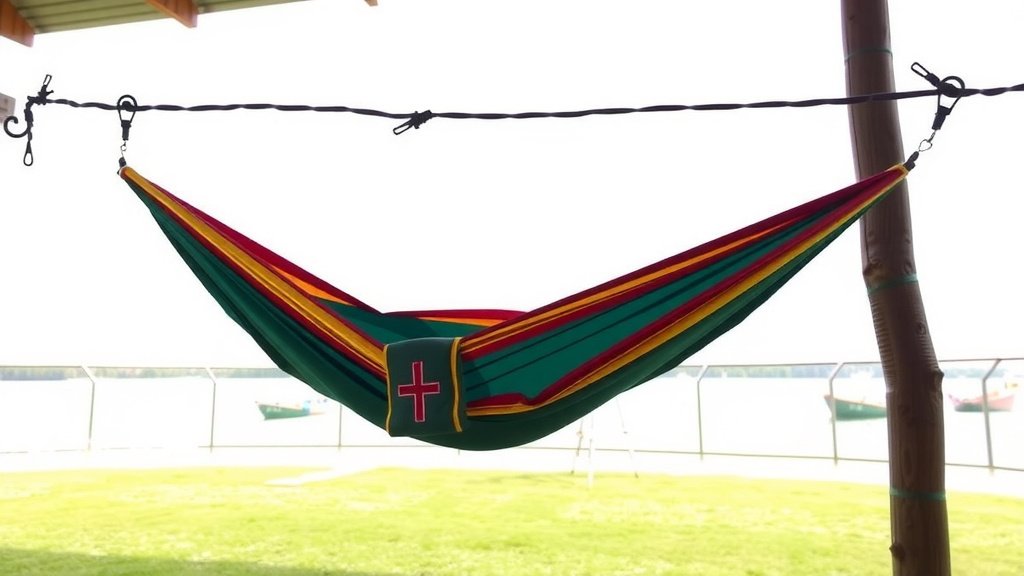
Safety is always the top priority when hanging anything, especially something you’ll be relaxing in. We want to avoid any unexpected tumbles.
The Ground Clearance Test
This is the most crucial test. Once you think you’ve found the right height, lie down in the hammock. Have a friend stand next to you with a tape measure, or use your own judgment. How close are your hips to the ground when you’re fully reclined?
Many safety guidelines suggest at least 12 inches of ground clearance when you’re in the hammock. This ensures that even if the hammock stretches or you shift your weight, you won’t scrape yourself on the ground. For children, you might want even more clearance, perhaps 18-24 inches (CDC).
What to Do if You’re Too Low or Too High
If you’re consistently hitting the ground when you settle in, you have two main options. First, raise your anchor points slightly. Second, shorten the suspension system you’re using. Many suspension systems come with adjustable straps or carabiners that make this easy.
On the flip side, if your hammock feels too tight and doesn’t have enough sag, you can try lowering your anchor points. Or, you might need longer suspension straps. It’s all about achieving that perfect balance.
Your Hammock Height Checklist
Ready to nail your hammock’s perfect height? Follow these quick steps:
- Start with anchor points about 18 inches off the ground.
- Consider your hammock’s length and material.
- Aim for a comfortable sag, not a tight line.
- Test the ground clearance when lying down – aim for at least 12 inches.
- Adjust anchor points or suspension until it feels just right.
- Ensure easy and safe entry and exit.
Conclusion
You’ve learned that hanging your hammock at the right height is key for ultimate relaxation and safety. Remember that 18 inches is your starting point, but your hammock’s length, the distance between anchor points, and your personal preferences all play a role. The goal is a comfortable sag, like the “cheeseburger curve,” with at least 12 inches of ground clearance when you’re in it. Don’t be afraid to adjust! Now, go hang your hammock and enjoy that perfect, gentle sway you’ve worked to create.
Frequently Asked Questions
What’s the easiest way to measure hammock height?
Start by measuring the distance from the ground to your attachment points (where the straps meet the tree or post). Aim for about 18 inches as a baseline. You can then lie in the hammock to check for proper sag and ground clearance.
Can I hang my hammock too high?
Yes, hanging your hammock too high can make it difficult to get in and out safely. It also prevents the hammock from developing the necessary sag, making it feel like a taut line rather than a comfortable nest.
Should I adjust height based on who’s using the hammock?
Absolutely. If children will be using the hammock, you’ll want to hang it lower to ensure they have plenty of ground clearance, aiming for 18-24 inches. For lighter users, you might be able to hang it slightly higher.
How do I know if my hammock has too much sag?
If you feel like you’re sinking too low, almost touching the ground, or the fabric is wrapping too far around you, you likely have too much sag. Try raising your anchor points or using shorter suspension straps.
What if my hammock feels too tight and doesn’t sag enough?
A tight hammock means your anchor points are likely too high or too close together. Try lowering your anchor points or using longer suspension straps to allow for that essential, comfortable curve.