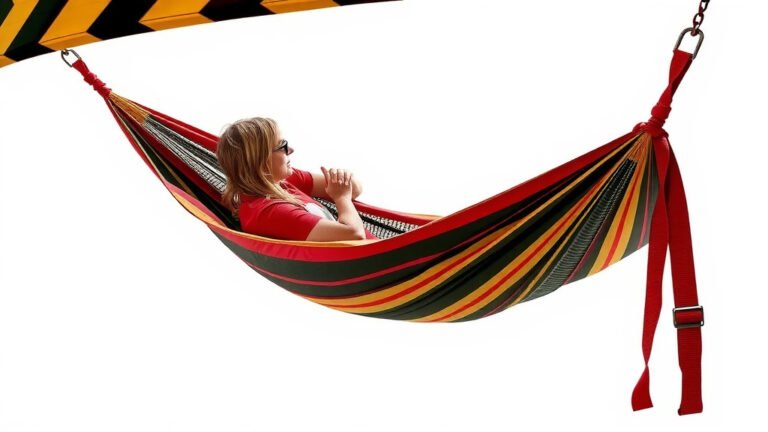

Swing Hammock Weight Limit: How Much Can They Really Hold?
Most swing hammocks hold between 250 and 450 pounds, so knowing the exact weight limit for a swing hammock comes down to checking the rating on your specific model. The number depends on the materials, the stand or mounting hardware, and how the hammock is built.
Why does this matter so much? Because pushing past the limit can snap ropes, bend stands, or send you straight to the ground — and nobody wants that kind of surprise mid-nap. We researched dozens of manufacturer specs and found that single hammocks usually sit lower on the scale, while double hammocks and hanging chairs often handle more. Many experts say you should also count the weight of kids, pets, or a cold drink in hand.
Here’s the quick version before we dive in:
- Most standard swing hammocks support 250 to 450 pounds.
- Double and two-person models often hold 450 to 600+ pounds.
- Always check the manufacturer’s label — it’s the final word.
- Stands, hooks, and tree straps have their own limits too. Our guide to sizing a hammock stand walks through matching the stand’s capacity to your hammock.
- Staying under the max weight keeps your hammock (and you) safe longer.
Below, we break down everything you need to know about hammock weight limits, including how to find yours and what happens if you go over. Let’s get you lounging with total peace of mind.
Understanding Swing Hammock Weight Ratings
Swing hammock weight ratings tell you the maximum load the product can safely hold at rest. That number isn’t a guess from the factory — it comes from testing the weakest link in the setup. We found that manufacturers usually base the rating on the fabric, ropes, and spreader bars combined.
Think of it like an elevator sign. The number isn’t the average weight; it’s the ceiling. Stay under it, and everything works smoothly. Go over it, and you’re rolling the dice with your afternoon nap.
Many experts recommend treating the rating as a firm line, not a suggestion. Building in a small buffer — say, 10 to 20 percent below the max — gives you extra safety margin for sudden movements, like a kid cannonballing onto the hammock next to you.
Where to Find Your Hammock’s Weight Limit
The fastest place to check is the manufacturer’s label. Look for a sewn-in tag near the rope loops or on the underside of the bed. Most brands print the capacity right there in plain numbers.
No tag? Check the original box, the instruction manual, or the product page online. Search the brand and model name plus the words “weight capacity.” If the listing doesn’t mention it at all, that’s a red flag — we’d treat unlisted models as holding no more than 250 pounds until proven otherwise.
How Weight Limits Vary by Hammock Type
Not all swing hammocks are built the same. Design, materials, and mounting style all change the math. Here’s a quick breakdown of common types:
| Hammock Type | Typical Weight Limit |
|---|---|
| Single swing hammock | 250–350 lbs |
| Double / two-person hammock | 450–600 lbs |
| Hanging chair or egg swing | 250–300 lbs |
| Platform-style porch swing bed | 400–800 lbs |
Notice how hanging chairs often rate lower than full-size beds? A narrow rope connection point takes more stress per square inch than a wide, spread-out platform. That’s simple physics working for or against you.
Why Materials Make a Big Difference
Cotton ropes feel dreamy but stretch and weaken faster than synthetics. We found that weather-resistant options like DuraCord or UV-treated nylon tend to hold their rated capacity longer outdoors. Sunlight, rain, and mildew quietly chew through natural fibers over time.
Spreaders and frame parts matter too. Wooden bars can rot. Steel stands can rust at the joints. If your hammock lives outside year-round, a quick monthly once-over of every component goes a long way.
Rope and Fabric Considerations
Fabric sling hammocks generally handle weight better than loose rope styles because they distribute pressure across a wider surface. Rope hammocks, on the other hand, concentrate stress at the knots. Either style works fine — just match expectations to the design.
Don’t Forget the Stand and Hanging Hardware
Here’s where many people get burned. Your hammock might rate 450 pounds, but a cheap stand or worn-out eye hooks could rate far less. The whole system is only as strong as its weakest part — like a chain, or a group project.
Check three things before every season:
- Stand frame: look for bends, cracks, or rust spots.
- Hooks and bolts: confirm they’re rated for the full hammock capacity.
- Tree straps or anchors: verify their rating matches the hammock.
- Mounting studs: a single screw in drywall holds almost nothing.
- Connecting carabiners: climbing-rated gear beats hardware-store clips.
- Wear points: frayed rope ends are the first sign of trouble.
Structural engineers note that overhead fasteners installed into solid framing — like a wall stud or ceiling joist — perform dramatically better than anchors placed in hollow drywall. When in doubt, hire a pro for twenty minutes of drilling peace of mind.

What Happens If You Exceed the Limit
Going over the limit rarely causes an instant, dramatic snap. More often, it’s slow damage: stretched fibers, loosened knots, and fatigued metal. Then one ordinary Tuesday, everything lets go at once.
The real risk isn’t broken gear — it’s injury. Falls from even a low height can cause fractures, especially in older adults. Many medical sources warn that falls remain a leading cause of household injuries across all age groups. Landing flat on the patio is nobody’s idea of relaxation.
Signs Your Hammock Is Overloaded or Worn Out
Your hammock will usually warn you before it fails. Watch for:
- Frayed or fuzzed-up rope strands
- Tears or thin spots in the fabric bed
- Creaking, popping, or bending sounds from the stand
- Metal hooks that look stretched or bent open
- A sagging ride height that keeps getting lower
Spot one warning sign? Stop using it until you fix or replace that part. Spot two? Retire the hammock entirely. Gear is replaceable. You, less so.
Multiple People? Add Everyone’s Weight
We found this trips up a lot of buyers. A 450-pound limit doesn’t mean 450 per person — it means 450 total. Two adults at 200 pounds each leaves you only 50 pounds of headroom, which a dog, a blanket pile, and a cooler of drinks can blow through fast.
Weigh everyone honestly, add kids and pets, and round up. Doing this five-minute math in advance beats a surprise reunion with the ground.
Quick Safety Checklist Before You Climb In
Run through this short list every few weeks. It takes two minutes:
- Confirm the rating: know the exact number for your model.
- Total your load: humans, pets, drinks, blankets — all of it.
- Inspect connections: ropes, straps, hooks, and stand joints.
- Test gently: press down by hand before sitting fully.
- Set entry height: the lowest point should sit no higher than knee level.
- Teach the kids: no swinging like a trapeze in a rope hammock.
That last one matters more than it sounds. Pediatric safety guidance consistently warns against standing or jumping in suspended seating, since dynamic forces multiply the effective load several times beyond body weight. A gentle sway is safe. A flying leap is not.
When to Buy a Higher-Capacity Model
If your household runs toward the higher end of a rating — or you regularly share the hammock — upgrade rather than gamble. Many brands offer reinforced or family-sized versions rated from 500 pounds up. Spending a bit more up front beats replacing a collapsed stand mid-summer. For a closer look at sturdy options, our guide to hammocks for heavier people covers what to check before buying.
Bottom line for now: know your number, respect your number, and check the hardware around your number. Your hammock will happily carry you for years when you treat it right.
Conclusion
Finding your swing hammock’s weight limit comes down to three simple habits: check the tag, add up everyone on board, and inspect the stand and hardware along with the bed itself. We found that the weakest link — whether it’s a frayed rope or a rusty hook — sets your real capacity, not the biggest number on the box. Give yourself a small buffer below the max, retire gear that shows wear, and never let kids launch themselves into the swing. A few minutes of attention buys you years of worry-free naps. Your next step? Go find that label and write your hammock’s number down today.
Frequently Asked Questions
Can I put two adults in a single swing hammock?
You can if their combined weight stays under the rating, but most single models top out around 250 to 350 pounds. Two adults usually push past that. We’d suggest a double model instead — they’re built with wider beds and stronger suspension for exactly this situation.
Does the weight limit include a mattress, blanket, or pad?
Yes, every pound counts toward the total. A thick pad, heavy quilt, or sleeping bag adds up quickly alongside you and anyone else in the hammock. Round up your math so you stay comfortably under the rated capacity.
Do hammocks get weaker over time even if I never overload them?
They can. Sun exposure, moisture, and repeated stretching gradually break down cotton rope and weaken knots, which lowers the real-world capacity below the original rating. That’s why a quick monthly inspection matters so much for outdoor setups.
Is a hammock with a higher weight limit always safer?
Only if the entire system matches — a 600-pound hammock hung from a cheap stand rated at 300 is still a 300-pound setup. We found the safest approach is buying the hammock, stand, straps, and hooks as a matched package or verifying each rating individually.
How much weight can a ceiling-mounted swing hammock hold indoors?
The hammock itself may hold 400 pounds or more, but your ceiling mount is the deciding factor. A properly installed eye bolt into a solid ceiling joist can typically handle the full rating, while anything anchored into drywall alone cannot. When in doubt, have a professional confirm your mounting point.