
Perfect Hammock Distance: How Far Apart Should Your Trees Be
The right distance between trees for a hammock is generally between 10 to 15 feet. This range allows for a comfortable hang, preventing your hammock from being too taut or too saggy. Most common hammocks, whether for camping or backyard lounging, are designed to work best within these tree spacing guidelines.
Getting this distance right is key to a relaxing hammock experience. Too close, and you’ll feel like you’re stuck in a tight sling. Too far, and your hammock might lie too flat, making it harder to get in and out of gracefully. We found that finding that sweet spot ensures your hammock is perfectly suspended for maximum comfort.
- General rule: 10-15 feet between trees.
- Too close = tight, uncomfortable hang.
- Too far = lays too flat, hard to enter.
- Perfect distance = balanced, cozy relaxation.
- Adjust based on hammock length and strap type.
Ready to find the perfect spot for your hammock? Let’s walk through how to measure and set it up so you can start enjoying those lazy afternoons.
Finding the Perfect Tree Spacing for Your Hammock
You’ve got your hammock, you’ve found some great trees, but what’s the magic number for how far apart they should be? We found that the ideal distance generally falls between 10 and 15 feet.
This sweet spot ensures your hammock hangs just right. It’s not too tight, like a banjo string, nor is it too loose, feeling like a floppy piece of fabric. Let’s dig a little deeper into why this spacing matters so much for your relaxation.
The Science Behind Hammock Hanging: Distance and Sag
Hammocks are designed to work with gravity, not against it. When trees are spaced too far apart, you’ll likely end up with a hammock that lies too flat. This makes it difficult to get in and out of without a struggle. Think of trying to sit on a sheet that’s stretched out tight – not very comfortable!
Conversely, if the trees are too close, your hammock will have too much sag. You might find yourself in a “U” shape, with your head and feet higher than your midsection. While some hammocks are designed for a deeper sag, most common camping and backyard hammocks are meant for a more balanced hang. We found that too much sag can actually put **more stress on the suspension system**.
Understanding Hammock Sag (The “50% Rule”)
A good rule of thumb is the “50% rule” for sag. This means your hammock should ideally sag about halfway down the length of the suspension system between the trees. For instance, if your suspension system (straps and carabiners) is 10 feet long, you’d want about 5 feet of sag in the hammock body itself.
This provides a comfortable lounging angle. It allows you to lie diagonally, which is often the most comfortable way to relax in a hammock. We found this position helps distribute your weight evenly, taking pressure off your back.
How Hammock Length Affects Spacing
Not all hammocks are created equal in length. A longer hammock can often accommodate a slightly wider tree spacing. Shorter hammocks will require trees that are closer together. Always check the manufacturer’s recommendations for your specific hammock model.
We discovered that a typical 10-foot hammock might feel best between 10-12 feet of tree spacing. A longer 11 or 12-foot hammock could comfortably hang between 12-15 feet. It’s all about finding that perfect balance for your particular hammock.
Types of Hammock Suspension and Their Impact
The way you attach your hammock to the trees also plays a role. Different suspension systems offer varying degrees of adjustability.
Webbing Straps vs. Rope
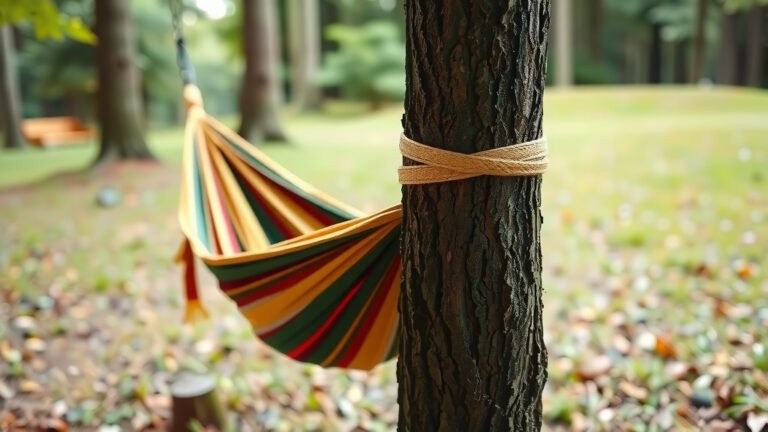
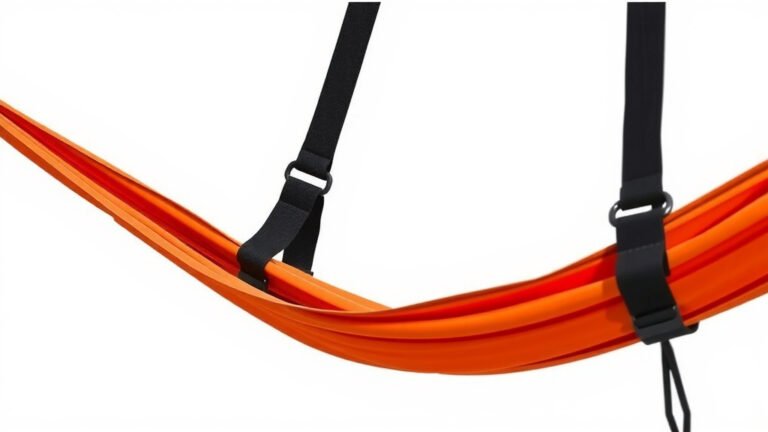
Webbing straps, often called tree-friendly straps, are generally wider and distribute pressure better on the tree bark. Many come with multiple loops, allowing for easy adjustments in distance and sag. This makes them a favorite for campers and hikers. We found these are often the easiest for beginners.
Rope can also be used, but it requires more careful knot-tying and can potentially damage tree bark if not used with a protector. Adjusting the distance with rope might involve more trial and error. Many experts recommend using a wide webbing strap to protect the trees (National Forest Service).
Adjustable Systems
Many modern suspension systems are highly adjustable. Systems with carabiners and adjustable loops allow you to fine-tune the distance and hang angle easily. This is a huge advantage when you’re trying to find that perfect spot in the woods or your backyard.
We found that these adjustable systems can be a lifesaver when tree spacing isn’t exactly what you’d hoped for. They give you the flexibility to make it work.
Practical Steps: Measuring and Setting Up
So, how do you actually put this into practice? It’s simpler than you might think.
The Tape Measure Method
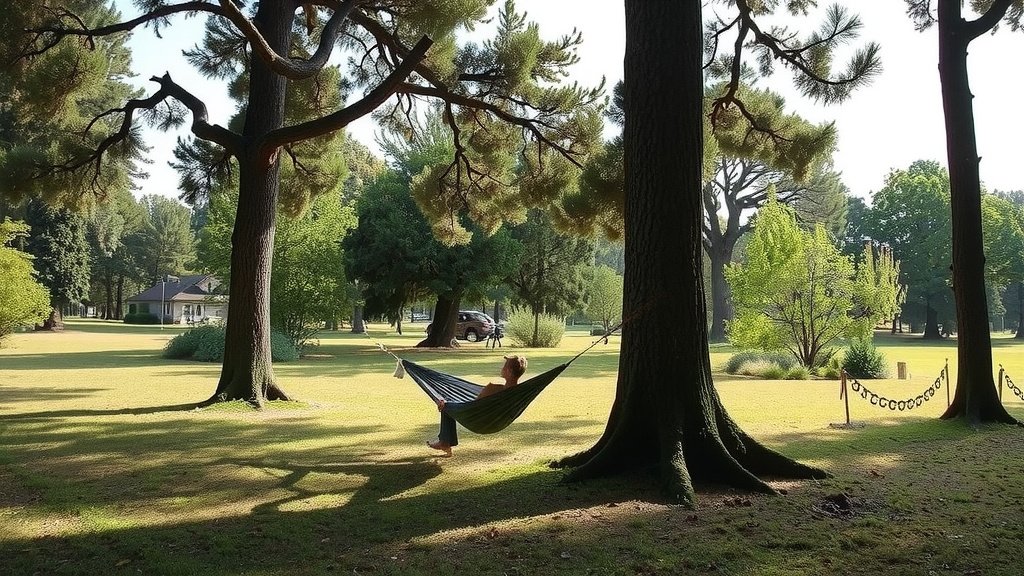
The most straightforward way is to use a tape measure. Stand at the base of one tree and measure out 10 to 15 feet. This is where you’ll aim to place your second anchor point (the other tree or a sturdy post).
Remember to account for the height at which you’ll hang your straps. Hammocks are typically hung about 5-6 feet off the ground. This height, combined with the tree spacing, creates the optimal sag.
Visual Estimation (and How to Check)
With practice, you’ll get a good eye for distance. However, it’s always best to double-check. Once you’ve hung your hammock, get in it! Does it feel comfortable? Can you lie down without feeling like you’re falling out or being squeezed?
If it feels too tight, you might need to find trees that are further apart or adjust your suspension to create more slack. If it’s too saggy, you might need closer trees or a shorter suspension length. We found that a quick test sit is the best way to tell.
A Quick Hammock Setup Checklist:
- Find two sturdy, healthy trees.
- Check the distance: Aim for 10-15 feet apart.
- Wrap your suspension straps around the trees at about 5-6 feet high.
- Attach your hammock to the straps using carabiners or knots.
- Get in gently and test the sag.
- Adjust as needed for comfort.
What If Your Trees Aren’t the Ideal Distance Apart?
Don’t despair if your available trees are a bit too close or too far. There are solutions!
For Trees Too Close Together
If your trees are less than 10 feet apart, you might need to:
- Use a longer hammock.
- Employ a suspension system that allows for a bit more length and sag.
- Consider using a hammock stand if trees aren’t an option.
For Trees Too Far Apart
If your trees are more than 15 feet apart, you might need to:
- Use longer suspension straps or extra rope.
- Look for intermediate anchor points if available.
- Ensure your hammock is long enough to span the distance without lying too flat.
We found that often, a slight adjustment in hang height or suspension length can make a big difference, even if the tree spacing isn’t perfect. It’s about adapting to your environment.
Conclusion
Finding the right distance between trees for your hammock is key to unlocking true relaxation. We’ve learned that the sweet spot generally lies between 10 to 15 feet. This range allows for the perfect amount of sag, ensuring you can comfortably lie diagonally without feeling too tight or too buried. Remember, your hammock’s length and suspension system also play a role, so always consider those factors. Don’t be afraid to test your setup! Grab your hammock, find your trees, and make those minor adjustments until it feels just right for you. Happy hanging!
Frequently Asked Questions
What is the minimum distance between trees for a hammock?
While 10 to 15 feet is the ideal range, you can often make a hammock work with trees closer than 10 feet apart. You might need a longer hammock or a suspension system that allows for more sag to compensate.
Can I hang a hammock if my trees are more than 15 feet apart?
Yes, you can! If your trees are spaced further than 15 feet, you’ll likely need longer suspension straps or additional rope. Ensure your hammock itself is long enough to span the distance without becoming too taut.
How do I measure the distance between trees accurately?
The easiest way is to use a standard tape measure. Stand at the base of one tree and measure out the desired distance, marking where you want to anchor your hammock on the second tree or post.
What if I don’t have trees suitable for hanging a hammock?
No worries! If trees aren’t an option, you can always use a hammock stand. These stands are designed to hold your hammock at the perfect height and tension, offering a stable and comfortable hang anywhere you place them.
Does the height I hang my hammock affect the required tree distance?
Yes, hang height does play a part. Hammocks are typically hung about 5-6 feet off the ground. This height, combined with the tree spacing, helps create the optimal sag. Adjusting the hang height can sometimes help achieve a better hang even if tree spacing isn’t perfect.