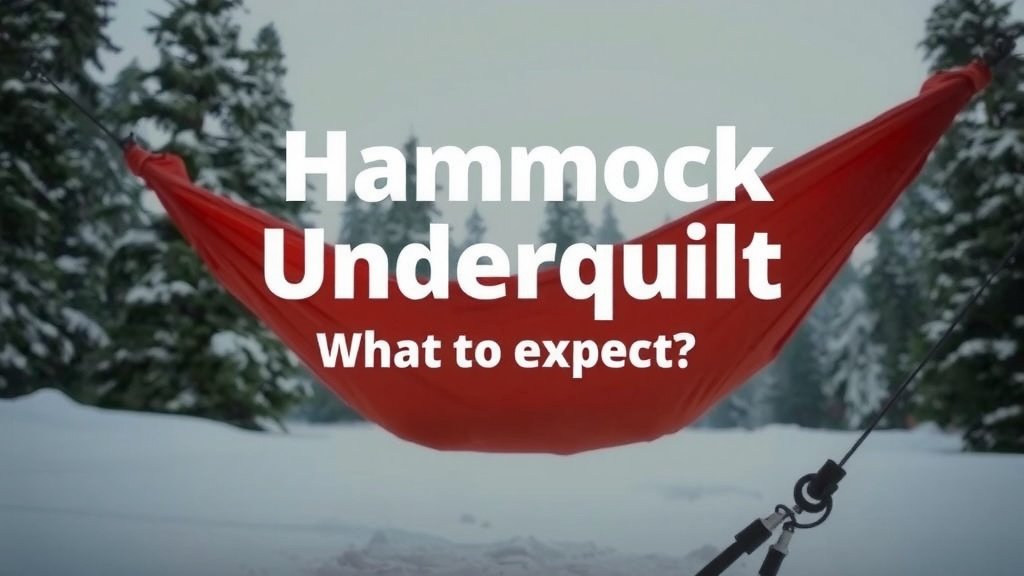
Hammock Underquilt Warmth: What to Expect
A hammock underquilt’s warmth depends heavily on its temperature rating and fill material. Generally, they are designed to keep you comfortable in a wide range of conditions, from cool evenings to freezing nights. You’ll find underquilts rated for anything from 50°F down to -20°F, with down and synthetic fills offering different levels of insulation.
When choosing an underquilt, consider where you’ll be camping. A lightweight synthetic might be perfect for summer, while a high-loft down model is better for serious winter adventures. The amount of loft, or puffiness, directly relates to how much warm air it can trap around you. Think of it like a cozy sleeping bag that wraps your hammock.
- Underquilt warmth is based on its temperature rating and fill.
- Ratings can range from mild 50°F down to extreme -20°F.
- Down offers excellent warmth-to-weight but can be pricey.
- Synthetic fills perform better when damp and are more budget-friendly.
- Loft (puffiness) is key to trapping your body heat effectively.
Ready to dive deeper? Below, we break down exactly how to understand underquilt warmth and choose the right one for your adventures.
So, how warm is a hammock underquilt, really? It’s not just about the fabric; it’s all about how well it traps your body heat. Think of it as your personal microclimate in the wild. The warmth comes down to a few key factors working together to keep you snug.
The main job of an underquilt is to prevent cold air from circulating beneath you. Unlike a sleeping bag on the ground, your hammock sags, creating gaps. An underquilt fills those gaps. We found that a well-chosen underquilt can make the difference between a cozy night’s sleep and a shivery one.
The most straightforward way to gauge an underquilt’s warmth is by its temperature rating. These ratings are usually estimates, helping you choose the right gear for expected conditions. Many manufacturers test their underquilts to provide these guidelines.
Interpreting the Numbers
You’ll see ratings like 40°F, 20°F, 0°F, or even lower. A 40°F underquilt is good for mild nights. If you’re heading out in cooler weather, say around freezing, a 20°F or 0°F rating is more appropriate. These ratings are often based on a “comfort limit.”
Many experts suggest the comfort limit is where an average person sleeps soundly. Your personal comfort level might vary. Factors like metabolism, what you wear to bed, and even how well-hydrated you are play a role. We recommend picking an underquilt with a rating a bit lower than your absolute coldest expected temperature.
The Comfort Factor: What’s Your Chill Threshold?
Your body is a heat-generating machine. The underquilt’s job is to insulate that heat. What feels warm to one person might feel cool to another. Consider your own past camping experiences. Have you always run hot or cold?
If you tend to get cold easily, you might want to select an underquilt with a lower temperature rating than recommended. It’s easier to vent a little heat than to try and generate more when you’re already shivering. This is a common piece of advice from seasoned hammock campers.
The material inside your underquilt is what truly provides the insulation. There are two main types: down and synthetic. Each has its own strengths and weaknesses when it comes to warmth and performance.
Down Fill: Lightweight Warmth Champion
Down fill, typically from ducks or geese, is renowned for its incredible warmth-to-weight ratio. It’s incredibly light and compresses down small for packing. This makes it a favorite for backpackers who need to save every ounce.
We found that down traps air extremely well, creating tiny pockets of warmth around you. The higher the “fill power” of the down (like 800 or 900 fill power), the more loft and insulation you get for its weight. Down is fantastic for dry, cold conditions.
Down’s Achilles’ Heel: Moisture
The main drawback of down is its performance when wet. Once down gets damp, it loses much of its loft and insulating power. It also takes a very long time to dry out. This means that if you anticipate rain or high humidity, down might not be your best friend.
However, many modern down underquilts use treated down that offers some water resistance. Still, it’s not a substitute for proper rain protection. Many guidelines suggest keeping down gear as dry as possible (CDC).
Synthetic Fill: The Reliable All-Rounder
Synthetic fills are made from polyester fibers designed to mimic the loft of down. They are often more affordable than down. Plus, they have a significant advantage: they insulate even when damp.
This makes synthetic underquilts an excellent choice for humid climates or for campers who prioritize reliability over the absolute lightest weight. We found that synthetic fills are also generally easier to clean and maintain. They are a solid option for beginners or those on a budget.
Synthetic vs. Down: A Quick Comparison
Here’s a simple way to look at it:
| Feature | Down | Synthetic |
|---|---|---|
| Warmth-to-Weight | Excellent | Good |
| Performance When Wet | Poor | Good |
| Compressibility | Excellent | Good |
| Cost | Higher | Lower |
| Durability | Very Good | Good |
Beyond the temperature rating and fill type, the actual construction of the underquilt plays a big role. This includes how much “loft” it has and its overall design.
The Magic of Loft
Loft refers to the puffiness of the insulation. The more loft your underquilt has, the more air it can trap. This trapped air is what keeps you warm. Think of it like wearing a really puffy winter coat versus a thin windbreaker.
We found that underquilts with higher loft tend to be warmer. This is why down, which naturally creates a lot of loft, is so effective. Synthetic fills are also engineered to maximize loft. More loft means more dead air space, and dead air is an excellent insulator.
Underquilt Coverage and Draft Collars
Underquilts come in different lengths to cover varying amounts of your hammock. A full-length underquilt offers the most warmth. Some campers opt for a 3/4 length to save weight, but you might need to add extra insulation for your feet.
Many underquilts also feature draft collars. These are like elasticized cuffs at the ends. They help to seal out drafts and keep your warm air inside. This simple design element can make a surprising difference on a chilly night. Many hammock camping guides highlight their importance.
So, how warm is your underquilt going to be? It’s a combination of its rating, the fill, and how well it’s designed. Here’s a quick checklist to help you decide:
- Consider your typical camping temperatures.
- Think about whether you sleep hot or cold.
- Decide between the lightweight luxury of down or the reliable versatility of synthetic.
- Check the loft – more puffiness usually means more warmth.
- Look at the coverage length and features like draft collars.
- Always aim for a slightly warmer rating than you think you’ll need.
Conclusion
Understanding how warm your hammock underquilt will be boils down to a few key factors. You’ve learned that the temperature rating is your primary guide, but don’t forget your personal comfort level. We’ve seen how both down and synthetic fills offer unique advantages, with down providing superior warmth-to-weight and synthetics shining when damp. Finally, remember that the loft and design, like draft collars, play a huge role in trapping your body heat.
Now that you’re equipped with this knowledge, your next step is to match these factors to your typical camping conditions and personal preferences. Choose wisely, and you’ll be set for cozy nights under the stars!
Frequently Asked Questions
How can I tell if an underquilt will be warm enough for my trip?
You should look closely at the temperature rating. Manufacturers provide these as a guideline for expected conditions. We recommend choosing an underquilt rated about 10-15 degrees Fahrenheit colder than the lowest temperature you anticipate.
Does the fill power of down really matter for warmth?
Yes, fill power is very important for down. Higher fill power, like 800 or 900, means the down is more voluminous and traps more air. This results in better insulation for a given weight, making it warmer and more compressible.
Will a synthetic underquilt keep me as warm as a down one?
Generally, a down underquilt will offer more warmth for its weight than a synthetic one. However, synthetics perform much better when they get damp, and modern synthetics are very warm. For most campers, a good synthetic will provide ample warmth.
Is a full-length underquilt always warmer than a 3/4 length?
Yes, a full-length underquilt will provide more consistent warmth because it covers your entire body. A 3/4 length saves weight but leaves your feet exposed, which can lead to heat loss if not managed with other gear.
How does sleeping hot or cold affect my underquilt choice?
If you tend to sleep cold, you should select an underquilt with a lower temperature rating than what’s recommended for the conditions. It’s always easier to vent a little extra warmth than to try and generate more when you’re already chilled.