What Is a Macrame Hammock Chair? A Complete Guide
A macrame hammock chair is a hanging swing chair made from knotted cotton rope, designed to suspend from a ceiling hook, stand, or sturdy tree branch. It gives you a cozy, cradling seat that sways gently while you read, nap, or scroll your phone. Think of it as a hammock and a chair that decided to team up.
These chairs come in all sorts of styles and sizes, from simple cotton rope designs to versions with wooden spreader bars and cushioned seats. We researched dozens of options and found they work great on porches, bedrooms, balconies, and even indoors if you have a solid ceiling anchor. Many experts say the knotting style also adds a relaxed, boho touch to any room.
Quick rundown of what’s ahead:
- What a macrame hammock chair actually is and how it’s made
- Where you can hang one (inside and out)
- What materials and designs to look for
- Weight limits and safety basics you shouldn’t skip
- Simple tips for picking the right one for your space
Below, we break down everything you need to know about macrame hammock chairs, step by step. By the end, you’ll know exactly whether one belongs in your favorite corner.
Getting to Know the Macrame Hammock Chair
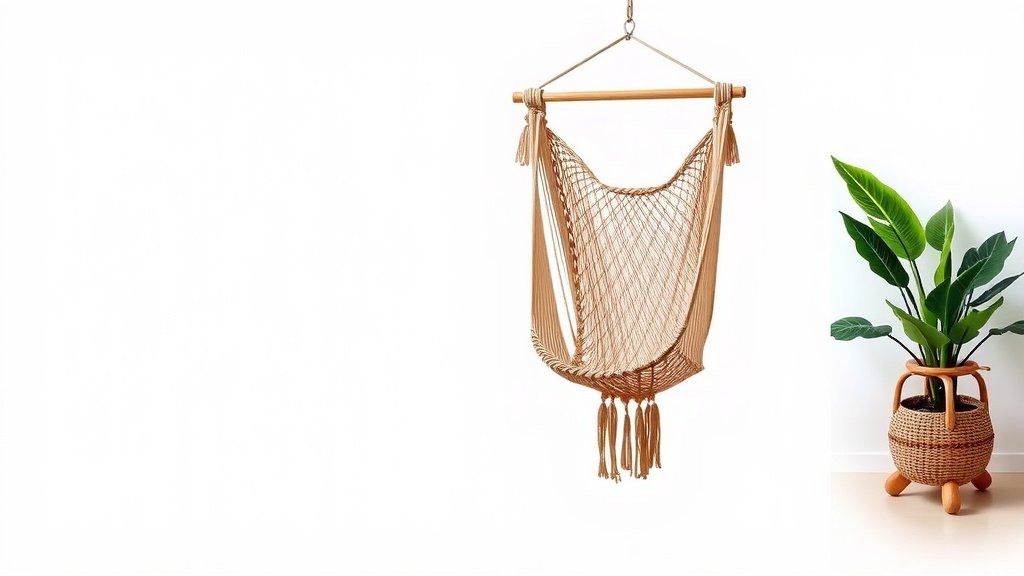
A macrame hammock chair is a hanging seat built from knotted cotton rope. Instead of fabric, cords and knots hold you up. The knots create a flexible net that molds to your body.
Macrame itself is an old craft. Sailors and artisans used knotting techniques centuries ago to make everything from nets to decorative fringes. Today, that same craft gives you a chair that’s part furniture, part art piece.
How It’s Actually Made
Most chairs start with a cotton rope hung from a metal ring at the top. Crafters tie rows of square knots, spiral knots, and half knots down the length of the rope to form the seat and back.
The result looks delicate, but good knotting is surprisingly strong. Many designs also include wooden bars at the top or bottom to keep the shape steady.
Common Knot Patterns You’ll See
- Square knots for the main body and seat
- Spiral knots for decorative fringe and side details
- Lark’s head knots to attach cords to the top ring
- Gathering wraps at the bottom to bundle cords neatly
Macrame vs. Fabric Hammock Chairs
Wondering how these compare to the classic cloth swing? Here’s a quick side-by-side we put together.
| Feature | Macrame Chair | Fabric Chair |
|---|---|---|
| Feel | Breathable, flexes with you | Soft, pouch-like |
| Look | Boho, textured | Simple, casual |
| Care | Spot clean, knots can snag | Often machine washable |
| Comfort | Best with a cushion added | Comfortable as-is |
Where You Can Hang One
The short answer: almost anywhere you can find a solid anchor point. Location matters more than style, so start with the spot, then pick the chair.
Indoor Options
Bedrooms and living room corners are the most popular indoor spots. You’ll need to attach a hook to a ceiling joist or beam, never just drywall. A stud finder costs a few dollars and saves you a very loud lesson in gravity.
Outdoor Options
Porches, patios, and balconies are natural fits. Hang from a sturdy beam, pergola, or mature tree branch that’s at least 6 to 8 inches thick. If you rent, a freestanding hammock chair stand works without drilling a single hole.
Materials and Design Details That Matter
Not all rope is equal, and your comfort depends on it. Most quality chairs use natural cotton rope because it’s soft, flexible, and kind to skin.
Rope and Frame Materials
- Cotton rope: softest and most common; fades outdoors over time
- Polyester or blended rope: better for weather exposure
- Hardwood bars: add stability and a polished look
- Metal rings and hardware: check for welded, rust-resistant steel
Cushions and Extras
Many macrame chairs come without padding. We found that adding a seat cushion or folded throw makes a huge difference, especially for longer reading sessions. Some brands sell matching cushions; any firm 18- to 20-inch cushion usually works.
Weight Limits and Safety Basics
Safety comes before style, always. Most macrame hammock chairs support 250 to 330 pounds, but you should verify the rating before you buy, not after you sit.
Experts and safety guidelines consistently point to the same rule: the anchor point is the weakest link (CPSC). A strong chair hung from a weak hook is still a fall waiting to happen. When in doubt, have a handyperson install the hardware.
A Quick Pre-Hang Checklist
- Confirm the weight rating covers everyone who’ll use it
- Drill into a joist, beam, or branch — never drywall alone
- Use a rated eye bolt or hammock hook, not a screw-in cup hook
- Test gently by leaning in with one hand before full sitting
- Recheck hardware every few months for looseness or rust
How to Pick the Right Chair for Your Space
Start with three questions: Where will it hang? Who will sit in it? And how much sway do you want? A roomy chair with a wooden bar swings more; a snug rope-only design barely moves.
Measure your space before ordering. Allow at least 2 feet of clearance on all sides so knees and elbows stay happy. Ceiling height matters too — most chairs need 7 to 9 feet of vertical hang space to sit at a comfortable level.
Matching Style to Your Room
Macrame chairs lean boho, but they’re flexible. Natural cream cotton suits a minimalist bedroom, while dyed or fringed versions pop in an eclectic space. Pick a neutral if you’re unsure — it ages better than a trend color.
Budget Reality Check
You’ll find decent options from about $30 to $150. Handmade or large two-person designs can run higher. We found that mid-range chairs tend to offer the best balance of rope quality and hardware, while the cheapest ones often skimp on the anchor ring.
Conclusion
A macrame hammock chair is part seating, part statement piece. You now know how the knotted cotton construction works, where you can safely hang one, and what separates a quality chair from a cheap one. We found the biggest wins come from planning first: find your anchor point, check the weight rating, measure your space, and add a cushion for comfort. Whether you pick a simple rope design or a fringed showstopper, the right chair can turn an unused corner into your favorite seat in the house. Ready to hang yours? Start by locating a solid joist or beam, then choose a chair that fits that spot. Your future reading nook is waiting.
Frequently Asked Questions
Can I leave a macrame hammock chair outside year-round?
We recommend bringing it indoors during bad weather. Cotton rope absorbs moisture and can weaken or grow mildew over time. If your chair stays outside, look for polyester rope and cover or store it when it rains.
Can I hang a macrame chair without drilling into my ceiling?
Yes. A freestanding hammock chair stand is the easiest solution for renters or anyone avoiding drills. Just check the stand’s weight rating and place it on level ground so it won’t tip.
Do macrame hammock chairs stretch over time?
They can, especially with cotton rope. Most chairs settle an inch or two in the first few weeks of use. If your chair hangs lower than expected, simply re-tie the top knot or adjust the hardware.
How do I clean a macrame hammock chair?
Spot cleaning is safest. Use a mild soap and damp cloth on small stains, then air dry completely before use. Never machine wash or put it in the dryer, since that can distort the knots and wooden bars.
Are macrame hammock chairs safe for kids?
They can be, with supervision and a low hang height. Check that the weight rating covers your child comfortably and keep the seat close to the floor to reduce fall distance. Always test the anchor point before each use.