

How to Hang a Child’s Hammock Swing Safely: Step-by-Step
The easiest way to hang a hammock swing for your child is to find a solid ceiling joist or sturdy beam, install a heavy-duty eye bolt with a swing hanger, and attach the hammock with strong rope or carabiners. The whole setup usually takes under an hour. Do it right, and your kiddo gets a cozy spot to swing, read, or daydream.
Before you grab a drill, though, you need to think about a few things. We researched this topic and found that weight limits, mounting hardware, and hanging height matter more than most parents realize. Pick the wrong anchor point, and that dreamy swing turns into a trip to the ER. Not fun for anyone.
- Find a ceiling joist — never hang from drywall alone.
- Use rated hardware that holds at least 500 pounds.
- Hang the swing low to the floor with soft landing space underneath.
- Check all knots, bolts, and ropes before every use.
- Supervise young kids, especially the first few rides.
Below, we break down everything you need to know about hanging a hammock swing safely, step by step. Let’s get your little one swinging!
Hanging a Child’s Hammock Swing the Safe Way
The safest setup starts with one word: structure. You need something solid behind the surface, not just the surface itself. We researched common installation mistakes, and skipping this step tops the list.
Think of it like hanging a heavy picture. You’d never trust drywall alone, right? A hammock swing with a wiggly kid on it puts even more dynamic force on that anchor point.
Find Your Ceiling Joist or Beam
Joists run across your ceiling, usually 16 or 24 inches apart. A stud finder makes this easy. Tap the ceiling and listen — a solid “thunk” means wood, a hollow sound means empty space.
Basement ceilings and covered porches often have exposed beams. Those are gold. If you’re installing outside on a tree branch, many experts say the branch should be at least 8 inches thick and healthy (U.S. Forest Service tree-safety guidance supports inspecting branches for rot before loading them).
Check the Weight Rating Twice
Here’s a number that surprises parents: the swing should hold at least 500 pounds, even though your child weighs 40. Why? Swinging creates a twisting, yanking force far beyond body weight.
Look for hardware labeled with a working load limit. We found that cheap spring hooks from the bargain bin rarely list ratings — and that’s your cue to walk away.
Tools and Hardware You’ll Need
Good news: you probably own most of this. Grab it before you start so you’re not wandering to the garage mid-project with a drill in hand.
- Stud finder — to locate the joist
- Drill and bits — sized to your hardware
- Eye bolt with swing hanger — rated 500+ pounds
- Rope or carabiners — marine-grade rope lasts longest
- Tape measure — for height and spacing
- Level — nobody loves a lopsided swing
Swing Hangers vs. Plain Eye Bolts
A swing hanger rotates freely, which keeps rope from twisting and fraying. Plain eye bolts work, but the rope rubs in one spot. Many playground-safety guidelines recommend rotating hangers for exactly this reason (U.S. Consumer Product Safety Commission playground guidance).
We found that a quality hanger costs about the same as a pizza. That’s a deal worth making.
Step-by-Step Installation Guide
Ready to drill? Follow this order and you’ll be done in under an hour.
Step 1: Mark and Pre-Drill
Find the center of your joist and mark it. Pre-drill a pilot hole slightly smaller than your bolt’s threads. This keeps the wood from splitting — splitting wood is like a cracked cookie jar, weaker at the worst spot.
Step 2: Install the Hardware
Screw the eye bolt in until the threads are fully seated, then attach the swing hanger. Give it a hard yank. If anything shifts, start over with a fresh spot. Our guide to attaching a hammock to a wall covers eye bolt hardware and mounting in more detail.
Step 3: Attach and Adjust the Swing
Tie the rope with a bowline knot — sailors call it the king of knots because it never slips under load. Clip a carabiner if your swing has loops. Then adjust the height.
How High Should the Swing Hang?
Keep the seat 10 to 12 inches off the floor for young kids. Their feet should touch the ground while sitting. This makes getting on and off easy and lowers the fall distance.
The CDC’s injury data shows falls are a leading cause of playground injuries at home, so every inch of height you skip is a win.
Clearing the Swing Zone
Look around the swing’s path. Kids twist and spin — plan for it.
- Keep at least 3 feet of clearance on all sides
- Move furniture and sharp corners out of range
- Lay a rug, foam mat, or pad underneath
- Keep cords, blinds, and strings well away
- Check overhead for lights or fans
That last one matters more than you’d think. Ceiling fans and swings should never share airspace.
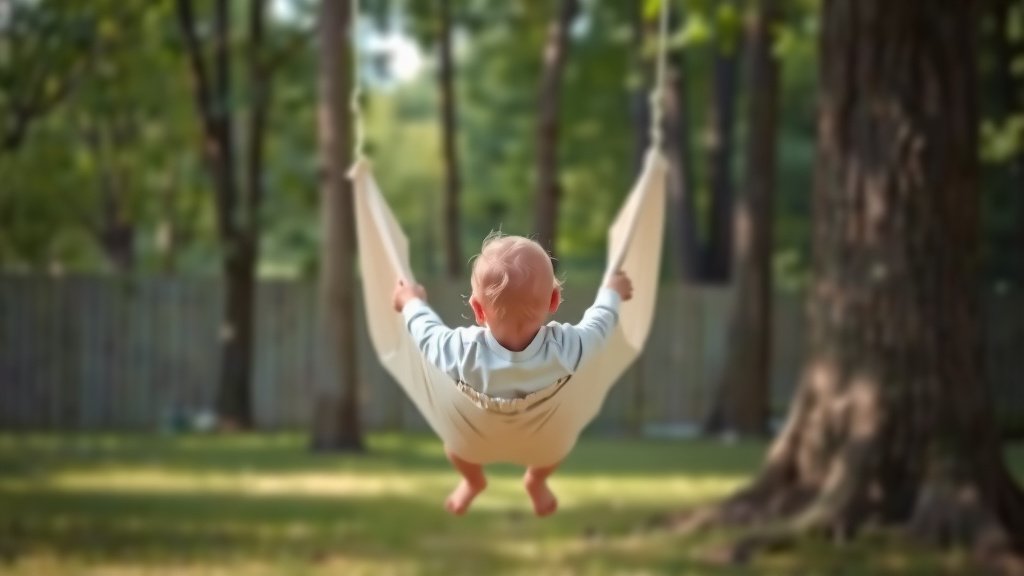
Indoor vs. Outdoor Installation
The basics stay the same. The hardware changes a bit.
| Factor | Indoor | Outdoor |
|---|---|---|
| Anchor | Ceiling joist or beam | Thick tree branch or porch beam |
| Rope | Standard nylon or polyester | Marine-grade, weather-resistant |
| Hardware | Steel eye bolt with hanger | Stainless steel to resist rust |
| Upkeep | Check monthly | Check before every use |
Weather is the big difference maker. Sun and rain wear out rope fast, so outdoor setups need more frequent checks.
Safety Checklist Before Every Ride
Spend 30 seconds on this. It’s the cheapest insurance you’ll ever buy.
- Tug test the anchor — no wiggling allowed
- Inspect ropes for frays and wear
- Confirm knots are tight and untangled
- Check the seat fabric for tears or thin spots
- Verify hardware hasn’t loosened
- Clear the landing zone of toys and clutter
Supervision Tips for Younger Kids
Stick around for the first several rides — and honestly, for kids under 5, every ride. Gentle rocking only at first. Spinning can twist ropes and make little stomachs unhappy anyway.
Many experts suggest modeling slow, calm swinging before letting kids go wild (Mayo Clinic’s guidance on child fall prevention emphasizes low heights and soft surfaces). Set the tone early, and the safe habits stick.
Common Mistakes to Avoid
We researched the most frequent parent slip-ups so you can sidestep them.
Mistake 1: Trusting Drywall or Ceiling Anchors Alone
Toggle bolts hold heavy pictures. They do not hold a swinging child. Always hit wood.
Mistake 2: Underestimating Swing Force
A 40-pound child swinging hard can briefly load the anchor with several times that force. Buy hardware rated well beyond body weight — it’s the whole reason for the 500-pound rule.
Mistake 3: Skipping the Re-Check
Bolts loosen. Ropes stretch. Wood settles. A quick check before use takes half a minute and catches problems while they’re still small.
When to Call a Professional
Sometimes DIY isn’t the right call, and that’s okay.
- Your ceiling has metal framing or unusual materials
- You can’t confidently locate a joist
- The mounting spot has cracks or water damage
- You want a swing mounted to concrete or masonry
A handyman can handle most installs for a modest fee. Consider it buying peace of mind — and maybe a little extra time to sip your coffee while someone else drills.
Conclusion
Hanging a hammock swing for your child comes down to a few smart choices. Find a real joist or beam, use hardware rated for 500 pounds or more, and keep the seat low with soft padding underneath. Add a quick 30-second safety check before each ride, and you’ve covered every base that matters. We researched the common mistakes, and they’re all avoidable with a little patience and the right gear. Your reward? A kiddo who has a favorite spot to swing, read, and unwind for years. So grab your stud finder, pick a weekend afternoon, and get that swing up. Once you hear your child giggling in it, you’ll wonder why you waited so long.
Frequently Asked Questions
Can I hang a hammock swing from a door frame?
We don’t recommend it for a child’s swing. Door frames rarely have the structural strength to handle the twisting force of swinging, and many are hollow or thin trim. If you want a doorway option, look for a purpose-built doorway swing kit with a top-mounted bar, and follow its weight limits closely.
How do I know if my ceiling joist runs the right direction?
Use a stud finder in several spots and mark where it beeps. Joists run in one consistent direction, so your marks should line up in a straight row across the ceiling. If you’re unsure, check your attic or basement ceiling for visible joist ends, or ask a handyman to confirm before you drill.
What age is appropriate for a hammock swing?
Most manufacturers design hammock swings for kids aged 3 and up, but it depends on your child and the swing’s seat design. Toddlers should always ride with an adult nearby and stay at the lowest hanging height. Check the swing’s label for the manufacturer’s age and weight recommendations before the first ride.
Can I hang two hammock swings from the same joist?
Yes, as long as you space them at least 3 feet apart and attach each one to its own hardware at a solid joist section. Two swinging kids can collide, so keep the clearance generous. Also confirm the combined weight stays well under what the joist and hardware can handle.
How often should I replace the rope on a hammock swing?
There’s no fixed schedule — it depends on use and weather. Indoor rope can last a couple of years with regular checks, while outdoor rope may need replacing after a single season of sun and rain. Replace it the moment you see fraying, stiff spots, or fading that suggests the fibers are breaking down.