How to Childproof a Hammock Area: A Parent Safety Guide
To childproof a hammock area, mount the hammock low to the ground, clear all hard objects from the fall zone, and never leave young kids unattended in or near it. Add soft ground cover like mulch or rubber mats underneath, and check every strap and hook before each use. That’s the core of it — now let’s make sure you get the details right.
Hammocks are wonderful, but they come with real risks for little ones. Kids can tangle in the strings, fall from a few feet up, or flip the whole thing over while climbing in. Many experts say the biggest dangers come from setup mistakes, not the hammock itself. So a few smart choices on your end can prevent most mishaps before they happen. Our guide to why hammocks flip explains the setup mistakes behind most tip-overs.
Here’s the quick version before we dig in:
- Hang it low — no more than 18 inches off the ground where kids play.
- Clear the landing zone — grass, mulch, or mats beat concrete every time.
- Inspect all hardware — check straps, hooks, and tree branches regularly.
- Set house rules — one child at a time, no jumping, no swinging wild.
- Stay close — supervision is the one safety step you can’t skip.
Below, we walk you through each step in detail, from picking the right spot to teaching your kids safe hammock habits. Let’s make your backyard the fun and safe place it should be.
Making Your Hammock Space Kid-Safe: A Step-by-Step Guide
The safest hammock setup keeps the bed close to the ground, cushions the fall zone, and puts an adult within arm’s reach. Do those three things and you’ve handled most of the risk right there. Below, we break down the rest — from choosing the spot to teaching your kids the rules.
We found that most hammock injuries happen during climbing in and out, not while relaxing. That’s why setup matters so much. Let’s start with location.
Picking the Right Spot for Your Hammock
Where you hang it shapes everything else. Choose a spot that’s flat, open, and easy to see from your patio or kitchen window. If you can watch it while doing dishes, you’re already winning.
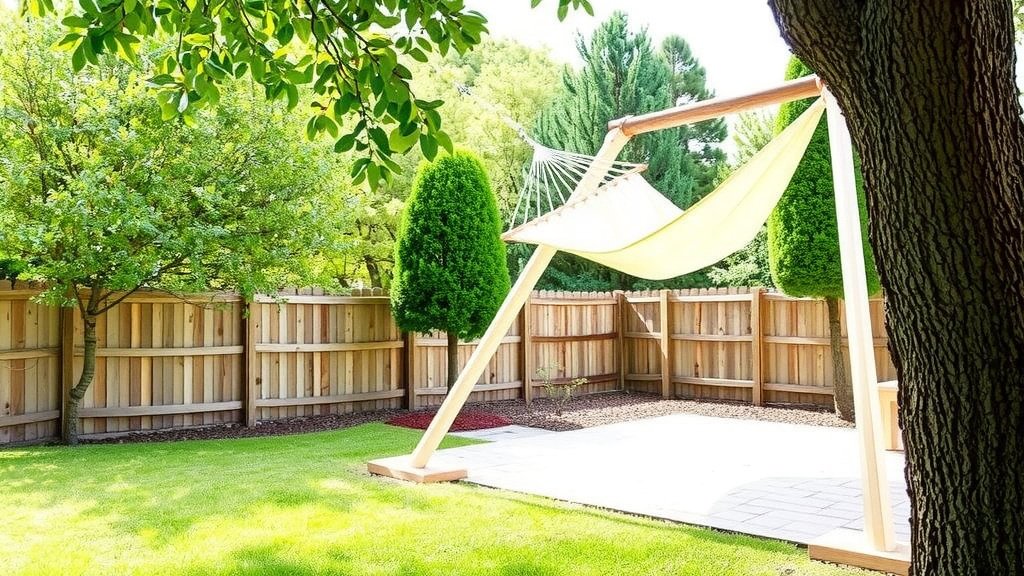
Keep the hammock away from patio furniture, garden tools, fences, and low branches. A six-foot buffer of clear space around all sides works well. Think of it like a moat — nothing hard or sharp inside, soft landing outside.
Hidden Hazards to Scope Out First
Walk the area before you commit. Look down and around, not just at the trees or stand.
- Check for exposed roots, rocks, or uneven ground near the fall zone.
- Look up for dead branches that could drop during wind.
- Spot sprinkler heads, garden hoses, or dog toys that create trip hazards.
- Note drainpipes, playset frames, or brick edges a falling child could hit.
Why Trees Need a Second Look
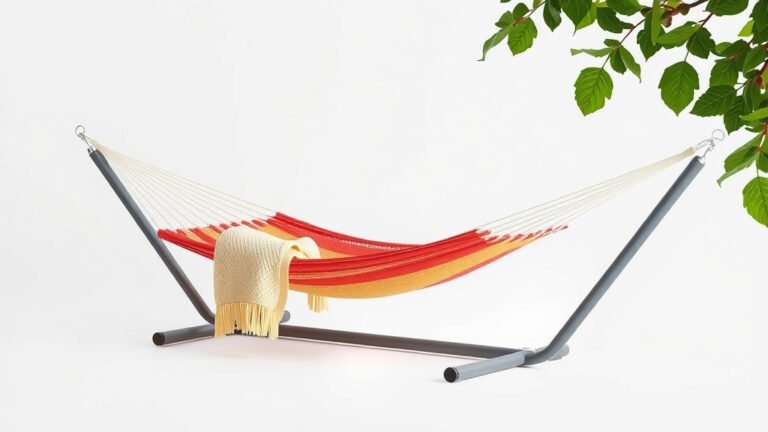
Healthy hardwood trunks handle straps fine, but many safety guides warn against attaching to cracked or dead limbs. A branch that snaps mid-nap is nobody’s idea of fun. When in doubt, use a freestanding hammock stand instead.
Getting the Hanging Height Right
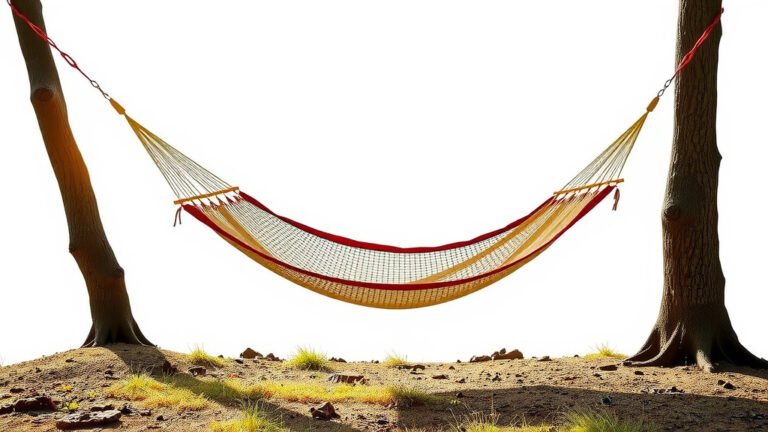
Height is your biggest lever. The underside of the hammock should sit 18 inches or less off the ground in areas where kids play. A lower hammock means a lower fall, and that’s simple physics working in your favor.
For rope-style hammocks, also mind the gaps. Strings wider than a child’s wrist can catch small arms and legs. Tighter weave or fabric styles cut that tangle risk down a lot.
Choosing and Inspecting Your Hardware
Hammocks don’t fail often, but when they do, it’s usually the connection points. Many experts say you should check every strap, hook, and knot before each use — and we found that takes about 60 seconds once it becomes a habit.
What to Check and How Often
| Component | What to Look For | How Often |
|---|---|---|
| Straps or ropes | Fraying, cuts, sun fading | Before every use |
| Carabiners and S-hooks | Bends, rust, cracked gates | Weekly |
| Tree straps | Slippage, bark damage | Weekly |
| Stand legs and joints | Loose bolts, wobble, cracks | Monthly |
| Fabric bed | Tears, stretched strings | Monthly |
One more thing: weight limits are real. Many hammocks max out around 250 pounds, and two kids plus a dog can sneak past that fast. Post the limit on a tag near the hammock if it helps your crew remember.
Softening the Ground Underneath
Kids fall. It’s practically their hobby. So give them something forgiving to land on — not concrete, not brick pavers.
Safety researchers have long noted that protective surfaces reduce injury severity in play areas, and the same logic applies here (Consumer Product Safety Commission guidance on playground surfacing makes this point repeatedly). Even a thick layer of mulch beats hard-packed dirt.
Best Ground Cover Options
- Rubber mats or tiles — best shock absorption, easy to clean.
- Wood mulch or engineered wood fiber — affordable, needs topping up.
- Fine sand — soft landing, but cats love it too.
- Thick, healthy grass — okay for low-height setups only.
- Pea gravel — better than concrete, worse than mats.
Avoid concrete, decks, and flagstone entirely. Also skip areas where the sprinkler keeps things slick — wet grass and bare feet are a slip-and-fall combo.
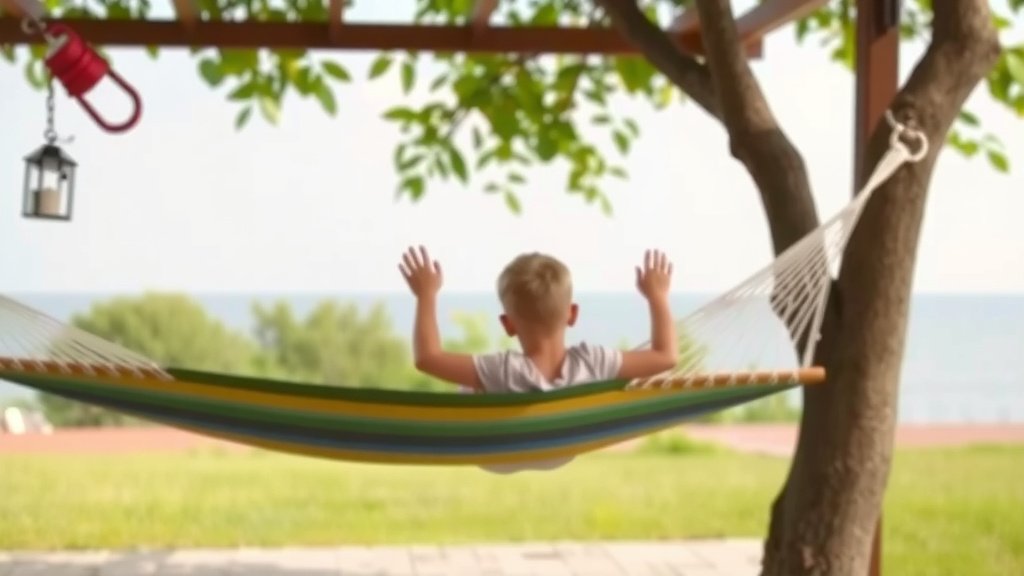
Hammock Features That Help (or Hurt) With Kids
Not all hammocks are equal for little ones. Fabric styles with a tight weave have fewer snag points than classic rope. Double hammocks, despite the name, shouldn’t double as two-kid rides — the swinging motion makes flips more likely.
Hammock chairs can be a smart middle ground for toddlers. They sit higher off the fabric but lower to the ground, and there are no strings to tangle in. Some parents we’ve read about swear by them for this exact reason.
Baby Swings vs. Hammocks: A Quick Note
Keep infant hammocks and baby swings separate from your backyard setup. Pediatric guidance, including safe-sleep recommendations from the American Academy of Pediatrics, warns against inclined or fabric sleep surfaces for babies under one. A regular hammock is not a nap spot for an infant, no matter how cozy it looks.
Setting Rules Your Kids Will Actually Follow
Rules work best when they’re few, clear, and repeated. Ours fit on one hand — literally.
- One child on the hammock at a time.
- Sit down slow, swing gentle, never stand.
- No jumping into or off the hammock.
- No playing underneath a hammock someone is using.
- Ask an adult before climbing in.
- Entry and exit always from the side, never the end.
Talk through each rule with your kids and have them repeat it back. Turns out “teach it back” sticks way better than “listen up.”
Supervision: The Non-Negotiable Step
Falls remain a leading cause of injury for young children, and the CDC notes that falls send hundreds of thousands of kids to emergency rooms each year. No ground cover or low hang fully replaces a watching adult.
For kids under five, stay within arm’s reach. For older kids, keep them in eyesight. Treat the hammock like a pool ladder, not a couch — same vibe, different stakes.
Ongoing Maintenance Through the Seasons
Your setup isn’t done after day one. Weather wears down straps and fabric faster than most people expect.
- Bring fabric hammocks indoors during storms and winter.
- Rinse off mud and sunscreen, which weaken fibers over time.
- Re-tighten stand bolts each spring after freeze-thaw cycles.
- Replace any strap that looks faded, stiff, or fuzzy.
- Refresh mulch or reposition mats as they shift.
Five minutes a month keeps your setup solid. And honestly, it’s a nice excuse to sit in the hammock and test it yourself. We recommend that part — strictly for research purposes, of course.
Conclusion
Childproofing a hammock area comes down to a handful of smart moves: hang it low, cushion the ground below, inspect your hardware, set simple rules, and stay close while kids climb in and out. We found that most injuries trace back to setup mistakes and skipped checklists — things you can fix in an afternoon. Pick your spot, walk the area for hazards, and commit to that 60-second hardware check before every use. Then grab your kids, walk them through the rules, and let them repeat it back to you. Your backyard hammock can absolutely be a safe, happy spot for the whole crew.
Frequently Asked Questions
What age is safe for kids to use a hammock alone?
Most safety guidance suggests kids under five stay within arm’s reach, and many parents wait until around age eight before allowing solo use. It depends on your child’s coordination and how well they follow the rules. When in doubt, keep supervising — a few more months of oversight costs you nothing.
Can I hang a hammock from a patio cover or pergola?
Only if the structure was built to carry that kind of load, which most aren’t. Patio beams and pergola slats can crack or pull loose under swinging weight. A freestanding hammock stand is the safer bet for setups near your house.
Is a rope hammock or fabric hammock better for kids?
Fabric hammocks with a tight weave are generally the better pick. Rope styles have gaps that can catch small arms, legs, and fingers. We found fabric styles also tend to feel more stable, which helps nervous first-timers relax.
How much weight can a typical backyard hammock hold?
Many models max out around 250 pounds, but you should always check the tag on your specific hammock. Remember that counts everything on the bed at once — kids, pets, and adults combined. Staying well under the limit keeps straps and hardware from wearing out early.
Should I take my hammock down when I’m not around?
If you have toddlers or neighborhood kids who wander through your yard, taking it down or storing it out of reach is a smart habit. An unsupervised hammock is an open invitation to climb. Some parents simply unclip one end and hang the bed on a nearby hook.