The Ideal Hammock Hang: Your Ultimate Guide
The ideal hammock hang is about finding the sweet spot for comfort and relaxation. For most people, this means a hang angle of about 30 degrees and a sag of roughly 10-15% of the total suspension length. Getting this right means your hammock feels like a comfortable bed, not a taut clothesline. You want to feel cradled, not stretched.
Achieving the perfect hang isn’t just about aesthetics; it’s key to a stable and enjoyable experience. We found that when the sag is too tight, it’s hard to get in and out and can feel restrictive. Too loose, and you risk sliding around or having the ends too high. Many hammock campers agree that a little bit of curve is your friend for ultimate lounging.
- Ideal Angle: Aim for a gentle curve, around 30 degrees.
- Sag Depth: Roughly 10-15% of your suspension length works best.
- Comfort is Key: A good hang cradles you, rather than stretching you flat.
- Easy Entry/Exit: Proper sag makes getting in and out much smoother.
Ready to ditch the hammock sag struggles? Let’s walk through exactly how to achieve that perfect, cozy hang every time.
Mastering the Cozy Hammock Hang: Finding Your Perfect Comfort Zone
Getting your hammock just right is more art than science. You want that perfect, cradling embrace. We found that most people achieve this with a specific setup. It’s all about the angle and the sag. This balance is your ticket to pure relaxation. Let’s get you lounging.
Understanding Hammock Suspension Basics
Before we talk angles, let’s cover the ropes. Your hammock hangs from suspension systems. These can be straps, ropes, or carabiners. They connect your hammock ends to sturdy anchor points. Think trees, posts, or a hammock stand. The length of these suspensions matters a lot. It directly affects how much sag you can achieve.
Straps vs. Ropes: What’s the Difference?
Hammock straps are often preferred by campers. They are usually wide and distribute pressure well. This protects trees from damage. Ropes can work too, but you need to be careful. Many people use carabiners to attach their hammock to the suspension. This makes setup quicker.
Anchor Points: The Foundation of Your Hang
Your anchor points need to be strong. We’re talking about trees that are at least 6 inches in diameter. Or sturdy, well-built posts. The distance between your anchors is also key. Most hammocks work best between 10 and 15 feet apart. This range gives you room to adjust your hang.
The Magic of the 30-Degree Angle
So, what’s the secret sauce? Many hammock enthusiasts agree on a sweet spot. This is often around a 30-degree angle. Imagine your suspension line. Now imagine a line from where it meets the anchor point down to the hammock. That angle should be about 30 degrees. This angle helps create that perfect, gentle curve.
Why 30 degrees? This angle is wide enough to prevent your hammock from feeling too tight. It’s also not so loose that you feel like you’re falling out. It creates a stable, comforting shape. Think of it like a cozy, fabric hug. We found that anything much steeper can feel like a clothesline.
Calculating the Right Sag for Comfort
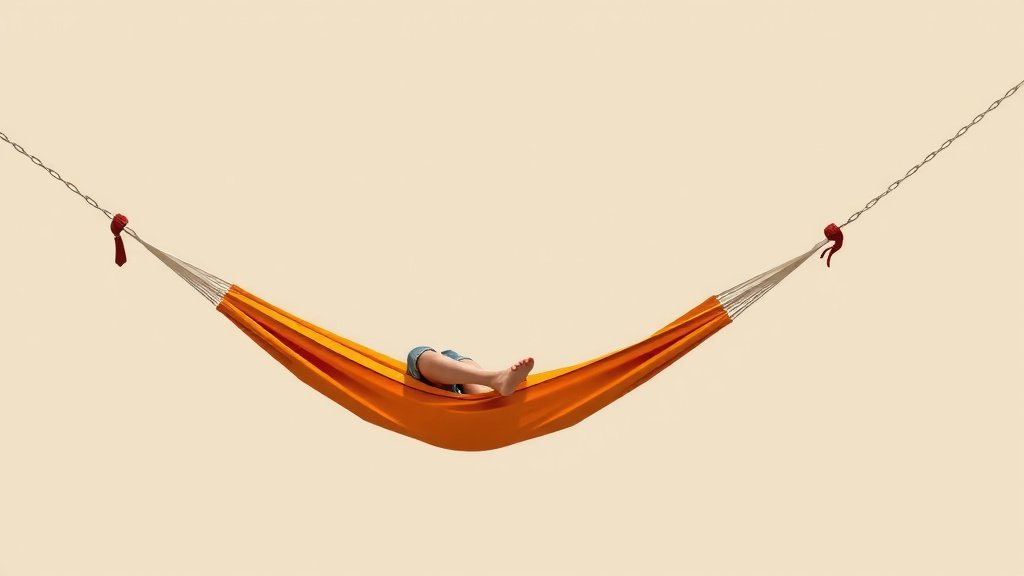
The sag is how much your hammock dips in the middle. It’s the depth of that gentle curve. A good rule of thumb is 10-15% of your total suspension length. So, if your total suspension is 20 feet, aim for 2 to 3 feet of sag. This is a starting point, of course.
Let’s break that down a bit. If you’re using 15-foot straps on each side, that’s 30 feet total. A 10% sag would be about 3 feet. A 15% sag would be about 4.5 feet. You can measure this from the anchor point down to the lowest point of the sag. We found this range provides a great balance.
What Happens with Too Little Sag?
If your hammock is too tight, it’s no fun. You’ll feel stretched out. Getting in and out becomes a challenge. It can also put more stress on your suspension. Many users report feeling like they’re sleeping on a drum. Not exactly relaxing, is it?
What Happens with Too Much Sag?
On the flip side, too much sag can be an issue too. Your hammock might feel like a deep pocket. You could slide towards the middle. The ends of your hammock might also sit too high. This can make it difficult to get comfortable. You might end up feeling swallowed by the fabric.
Putting It All Together: Your First Perfect Hang
Ready to try it out? Here’s a simple checklist:
- Find two sturdy anchor points. Ensure they are 10-15 feet apart.
- Wrap your suspension straps or ropes around the anchors.
- Attach your hammock to the suspension. Use carabiners or knots.
- Adjust the suspension length. Aim for that 30-degree angle.
- Check the sag. Does it look like a gentle smile?
- Gently get in and test for comfort. You want to feel cradled.
Fine-Tuning for Your Personal Preference
Remember, these are guidelines. Your body shape and weight matter. Your personal comfort is the ultimate judge. What feels perfect for one person might be slightly off for another. Don’t be afraid to tweak things.
If it feels too tight, lengthen the suspension a bit. If it feels too loose, shorten it. Small adjustments can make a big difference. We found that taking a few minutes to dial in your hang pays off. You’ll enjoy your hammock much more.
Common Hammock Hang Scenarios and Solutions
Let’s look at a quick comparison table. It shows common issues and what to look for:
| Symptom | Potential Cause | Solution |
|---|---|---|
| Feels like a tight clothesline | Angle too steep; Sag too little | Lengthen suspension; Lower anchor points |
| Feels like a deep pocket, sliding to middle | Angle too shallow; Sag too much | Shorten suspension; Raise anchor points |
| Ends of hammock too high | Sag too little | Lengthen suspension |
| Hard to get in and out | Sag too little; Angle too steep | Lengthen suspension; Lower anchor points |
The Importance of a Good Hang for Sleep and Relaxation
Why go through all this trouble? A proper hang is essential for **serious comfort**. When you’re properly suspended, your body weight is distributed evenly. This reduces pressure points. It’s much better than lying flat on a mattress for some people. Many studies suggest sleeping in a hammock can help with **sleep quality** (NCBI). It can promote deeper sleep.
Beyond sleep, a good hang is key for **pure relaxation**. Whether you’re reading a book or just napping, you want to feel secure and supported. A well-hung hammock allows your muscles to truly relax. It’s a gentle way to de-stress. We found that spending a little time perfecting your setup enhances the entire experience. It’s your personal slice of outdoor heaven.

Conclusion
You’ve learned that the ideal hammock hang is all about finding your personal comfort zone. It’s the perfect balance of a 30-degree angle and a 10-15% sag in your suspension. This setup cradles you, making it easy to get in and out while providing a stable, relaxing experience. Remember, these are starting points. Your own comfort is the ultimate guide.
Take these tips, go outside, and adjust your hang until it feels just right for you. Your perfect nap awaits!
Frequently Asked Questions
Can I use a single anchor point for my hammock?
While you can technically hang a hammock with one anchor point, it’s not recommended for comfort or stability. Hammocks are designed to be suspended between two points. This allows for the natural curve and sag needed for a relaxing hang. A single point often results in a restrictive, upright position.
How do I know if my anchor points are strong enough?
For trees, aim for a diameter of at least 6 inches. Avoid trees that look unhealthy, rotten, or have shallow roots. If you’re using posts, ensure they are well-secured in the ground and made of sturdy material. When in doubt, it’s always better to err on the side of caution and choose a more robust anchor.
What’s the best way to adjust the sag if it’s not quite right?
Adjusting the sag typically involves changing the length of your suspension system. If your hammock feels too tight, lengthen your straps or ropes. If it feels too loose or deep, shorten them. Small, incremental adjustments are key. You’ll quickly learn how much to tweak based on your feel.
Do I need a special type of hammock for achieving this ideal hang?
Most gathered-end camping hammocks are designed to work with this ideal hang. The key is the suspension system you use with it. Whether you use straps, ropes, or a combination, ensure it allows for sufficient adjustability to create that 30-degree angle and proper sag. The hammock material itself is less critical than the hang.
Is it okay if my hammock touches the ground slightly when I’m in it?
Ideally, your hammock shouldn’t touch the ground when you’re lying in it. A slight dip is good, but if the ends are dragging, your suspension is likely too long or your anchor points are too close together. This can make getting in and out difficult and affect the overall comfort of your hang.