

Your Hammock Hang Calculator Explained for Perfect Comfort
A hammock hang calculator helps you find the perfect hang angle for your hammock. It uses your hammock’s length, your suspension’s length, and the distance between your anchor points. This ensures a comfortable, saggy hang, not a tight, flat one. A hammock hang calculator helps you find the perfect hang angle for your hammock.
Getting the right tension prevents you from feeling like you’re sleeping in a banana. It’s all about the ideal sag for maximum comfort and support. Many beginners overlook this, leading to less-than-ideal hammock experiences. This tool takes the guesswork out for you.
- A hammock hang calculator finds your best hammock angle.
- It uses your hammock, suspension, and anchor point measurements.
- The goal is a comfortable, saggy hang, not a tight one.
- Proper sag prevents discomfort and ensures good support.
- This tool makes achieving a great hang easy.
Below, we’ll break down how to use a hammock hang calculator so you can get the most comfortable hang possible for your next outdoor adventure.
Understanding Your Ideal Hammock Angle
So, you’ve got a hammock and you’re ready to relax. But how do you get that perfect, cozy sag? It’s not just about tying ropes to trees. You need to consider a few key measurements. This is where a hammock hang calculator becomes your best friend.
What Measurements Does the Calculator Need?
A hammock hang calculator takes the guesswork out of setting up your hammock. It asks for three main pieces of information. These are:
- Your hammock’s total length.
- The length of your suspension system (like whoopie slings or tree straps).
- The distance between your anchor points (usually trees).
With these numbers, the calculator helps you figure out the optimal angle for a comfortable hang. You want a nice curve, not a straight line.
Why Is the Angle So Important?
Getting the angle right is key to comfort. Imagine trying to sleep on a tight, flat sheet. It’s not going to be comfortable, right? Your hammock is similar. A good sag means your body is properly supported. It prevents pressure points and allows you to lie at a diagonal, which is often the most comfortable position in a hammock.
Research into hammock ergonomics suggests that a relaxed hang allows for better weight distribution. This can reduce strain on your back and hips. Many users report finding that a slight diagonal lay within the hammock is more restful than lying straight on.
How a Hammock Hang Calculator Works
Think of the calculator as a smart assistant for your hammock setup. It uses a simple formula to guide you. You input your measurements, and it gives you a target hang angle or tension setting. This takes the trial and error out of the process.
The Math Behind the Magic (Simplified!)
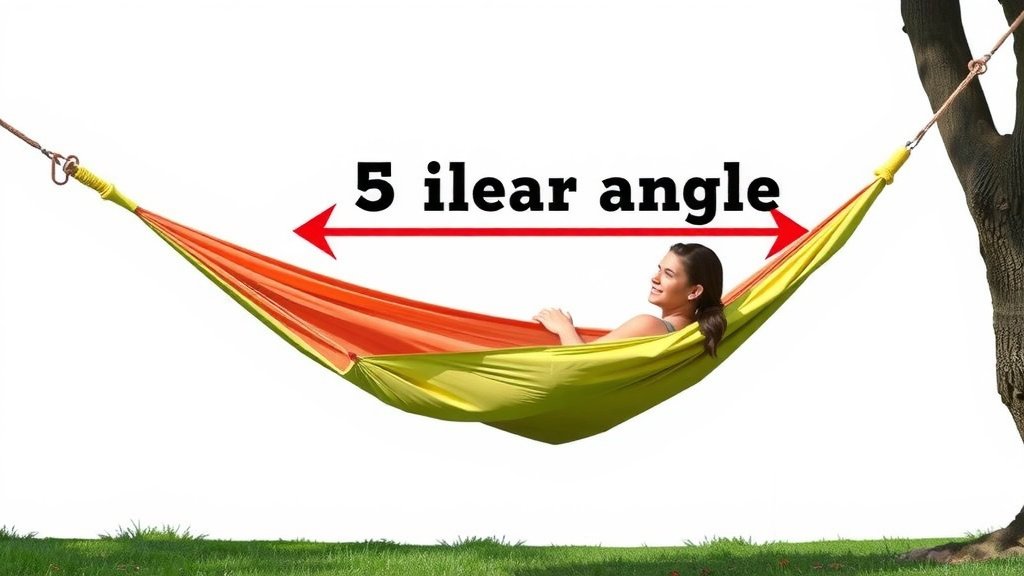
At its core, the calculator is solving for the right amount of sag. A common guideline for a good hammock hang is the “25-degree rule.” This rule suggests that your suspension lines should form an angle of about 25 degrees with the horizontal. The calculator helps you achieve this angle.
Let’s break it down a little. Your hammock’s length is pretty straightforward. Your suspension length is the total length of the straps or ropes you use to attach your hammock to the anchors. The distance between trees is just that – how far apart they are. The calculator uses these to figure out how much slack you need.
Example Scenario
Say your hammock is 10 feet long. You’re using 15 feet of suspension on each side. And your trees are 20 feet apart. You’d plug these numbers in. The calculator might then tell you, “Aim for your straps to hang at about a 25-degree angle,” or it might give you a specific length of suspension to use.
Common Calculator Outputs
Most online calculators will give you a target angle. Some might suggest a specific amount of suspension to let out. Others might even tell you how far down your hammock should hang from the anchor points. The goal is always the same: a comfortable, tensioned sag.
Achieving the Perfect Sag: Step-by-Step
Using the calculator is easy. Once you have your measurements, it’s a simple matter of setting up your hammock. Follow these steps for a great experience:
1. Gather Your Measurements
First, know your gear.
- Measure your hammock from end loop to end loop.
- Measure your total suspension length (both sides combined if they are equal).
- Measure the distance between your anchor points accurately.
2. Input the Data
Head to an online hammock hang calculator. Many websites offer free tools. You’ll see fields for your hammock length, suspension length, and anchor distance. Carefully enter the numbers you just gathered. Double-check them to be sure.
3. Interpret the Results
The calculator will provide a recommendation. This might be a specific angle, a desired sag depth, or a suggestion for your suspension length. It’s usually presented very clearly. Don’t be intimidated if it mentions angles; they translate directly to how much slack you leave.
4. Set Up Your Hammock
Now, head to your chosen camping spot or backyard. Attach your suspension to your anchor points. Adjust the suspension so that the resulting angle or sag matches the calculator’s recommendation. If it suggests a 25-degree angle, adjust your straps until they look about right.
A Practical Checklist
Here’s a quick checklist to ensure you nail your hammock hang:
- Measure twice: Confirm your hammock, suspension, and anchor distances.
- Use a calculator: Find a reputable online tool.
- Enter data carefully: Double-check your inputs.
- Understand the output: Know what the calculator is asking for.
- Adjust suspension: Aim for the recommended angle or sag.
- Test it out: Lie down and see how it feels!
Fine-Tuning for Comfort
Sometimes, the calculator gives you a great starting point. You might still need to make small adjustments. Lie in your hammock. Does it feel too tight? Let out a little more suspension. Does it feel too saggy, like you’re in a U? Tighten it up slightly. Small tweaks can make a big difference in your overall comfort.
Common Hammock Hang Mistakes to Avoid
Even with a calculator, some common pitfalls can lead to a less-than-ideal hang. Being aware of these can save you some frustration.
Mistake 1: A Too-Tight Hang
This is the most frequent error. People often tie their hammocks too taut. It looks like a straight line between two trees. This makes for a very uncomfortable sleeping surface. You’ll feel like you’re constantly sliding downwards. It also puts more stress on your suspension and anchor points. Remember, a hammock is meant to sag and cradle you.
Mistake 2: Not Account for Hammock Stretch
Some hammock materials will stretch a bit over time or when you get in. If you set it up perfectly tight based on initial measurements, it might become too saggy once you’re in it. It’s better to start with a slight bit of sag already present, knowing it will deepen. Many hammock manufacturers provide guidelines for their specific models.
Mistake 3: Ignoring Suspension Length
Your suspension system is just as important as the hammock itself. Using ropes that are too short or too long can make achieving the right angle difficult. If your trees are far apart, you’ll need longer suspension. If they are close, you’ll need shorter suspension. A calculator helps you understand the relationship between all three.
Mistake 4: Using the Wrong Anchor Points
Always ensure your anchor points (trees, posts, etc.) are strong enough. For trees, look for healthy ones that are at least 6-8 inches in diameter. Avoid dead trees or those with signs of rot. The safety of your hang depends on the strength of your anchors, not just the angle.
Conclusion
You now have the knowledge to find your perfect hammock hang! Understanding how a hammock hang calculator works removes the guesswork. It ensures you achieve that comforting, supportive sag. Remember, the key is balancing your hammock’s length, suspension, and anchor point distance. This simple tool helps you avoid the common pitfall of a too-tight hang. So, grab your gear, find a calculator online, and get ready to experience unparalleled relaxation. Your next nap in the trees awaits!
Frequently Asked Questions
How far apart should my trees be for a hammock?
The ideal distance between your anchor points depends on your hammock and suspension length. A hammock hang calculator will use this measurement along with your other gear specs. It helps determine the correct sag for that specific distance.
What’s the difference between hammock length and suspension length?
Your hammock length is the total measurement of the fabric, from end loop to end loop. The suspension length refers to the straps, ropes, or whoopie slings that connect your hammock to the trees or anchor points.
Can I use a hammock hang calculator if my anchor points aren’t trees?
Absolutely! While trees are common, you can use a calculator for any sturdy anchor points. Just measure the distance between them accurately. This ensures you get the right calculations for your setup.
My hammock feels too tight. What should I do?
If your hammock feels too tight, you likely need more sag. This means adjusting your suspension to be looser. Most calculators aim for a 25-degree hang angle, which provides a comfortable curve.
How often should I check my hammock hang?
It’s a good practice to check your hammock hang each time you set it up. Materials can stretch or settle. Making small adjustments based on the calculator’s guidance or how it feels when you lie in it will ensure consistent comfort.