
How to Wash Your Hammock in a Washing Machine Safely
Yes, you absolutely can wash many hammocks in a washing machine! It’s a quick and easy way to get your hammock clean. Just be sure to check the care label first to confirm it’s machine washable.
Washing your hammock regularly helps keep it looking great and smelling fresh. We found that machine washing is much simpler than hand-washing for most fabric hammocks. Just follow a few simple steps, and you’ll be ready for relaxation in no time.
- Check your hammock’s care tag for washing instructions.
- Use a gentle cycle with cold water and mild detergent.
- Avoid bleach and fabric softener.
- Air dry your hammock completely.
Ready to get your hammock sparkling? Let’s walk through exactly how to get it done safely and effectively.
Giving Your Hammock a Good Wash in the Machine
You’re probably wondering if your favorite hammock can handle a spin in the washing machine. The short answer is yes, many can! It’s a fantastic way to refresh your hammock and get it ready for its next adventure. Before you toss it in, though, a quick peek at the care tag is your best friend. This little label holds all the secrets to keeping your hammock in top shape.
Understanding Your Hammock’s Material
Most fabric hammocks are designed for easy care. Cotton, polyester, and nylon are common materials. These fabrics tend to be quite durable. You’ll find that hammocks made from these are generally safe for machine washing. However, always double-check that label! Some delicate fabrics or hammocks with special embellishments might need a gentler touch.
The Importance of the Care Label
Think of the care label as your hammock’s personal instruction manual. It tells you exactly what your hammock likes and dislikes. You’ll find symbols or text that indicate washing temperature, drying methods, and whether it can be machine washed at all. Ignoring this could lead to shrinking, stretching, or damage. We found that hammocks with wooden spreader bars often have removable fabric sleeves that can be washed separately. Always remove hardware like spreader bars if possible.
Preparing Your Hammock for the Wash
Getting your hammock ready is simple. First, you’ll want to shake out any loose debris. Think dirt, leaves, twigs, and maybe even some forgotten snacks from last summer. A good shake outside usually does the trick. This prevents larger particles from clogging your washing machine or getting stuck in the fabric.
Pre-Treating Stains
Got a stubborn stain? Don’t let it get you down! Most common stains, like grass or dirt, can be tackled with a little pre-treatment. You can use a mild stain remover or even a dab of liquid laundry detergent. Gently rub the stained area before washing. Let it sit for about 15-30 minutes. This step can make a huge difference in the final result.
Protecting Your Hammock and Machine
To keep your hammock from getting tangled or snagged, it’s a good idea to place it in a mesh laundry bag. These bags are inexpensive and widely available. They act like a gentle shield for your hammock. This is especially helpful for hammocks with fringe or delicate stitching. It also helps protect your washing machine drum from any rougher parts of the hammock.
The Washing Process: Step-by-Step
Now for the main event! Washing your hammock is quite straightforward. We found the gentlest approach yields the best results. Let’s break it down.
Choosing the Right Wash Cycle and Temperature
When setting up your washing machine, aim for the gentlest settings available. A “delicate” or “gentle” cycle is perfect. For water temperature, always choose cold water. Hot water can cause fabrics to shrink or fade. Research from textile experts consistently recommends cold water for most synthetic and natural fibers to preserve their integrity (University of Hohenstein).
Detergent Dos and Don’ts
Use a mild laundry detergent. A small amount is all you need. Avoid harsh chemicals, bleach, or fabric softeners. Bleach can weaken the fabric fibers and cause discoloration. Fabric softeners can coat the fibers, making them less breathable and potentially weaker over time. A simple, dye-free, and fragrance-free detergent is usually the safest bet.
What About the Spin Cycle?
Opt for a low spin speed. A high-speed spin can put a lot of stress on the hammock’s fabric and stitching. This can lead to stretching or even tears. A gentle spin will remove excess water without being too harsh. Your hammock will still be damp, but ready for drying.
Drying Your Hammock Correctly
Drying is just as important as washing. The absolute best way to dry your hammock is by air drying. Never, ever put your hammock in a machine dryer. The intense heat can cause shrinkage, melt synthetic fibers, and severely damage your hammock. This is a rule most manufacturers strongly advise against (REI).
Best Practices for Air Drying
Find a place to hang your hammock where it can get good air circulation. Outdoors, on a sunny but not scorching hot day, is ideal. You can hang it over a clothesline, a sturdy railing, or even between two trees. Ensure it’s completely dry before storing it. Storing a damp hammock can lead to mildew and unpleasant odors. We found that rotating or flipping it occasionally helps it dry more evenly.
Avoiding Direct Sunlight for Extended Periods
While a bit of sun helps it dry, prolonged, intense direct sunlight can fade colors and weaken fabric over time. It’s like a sunburn for your hammock! Hang it in a spot that gets sun but also some shade, or bring it in once it’s mostly dry.
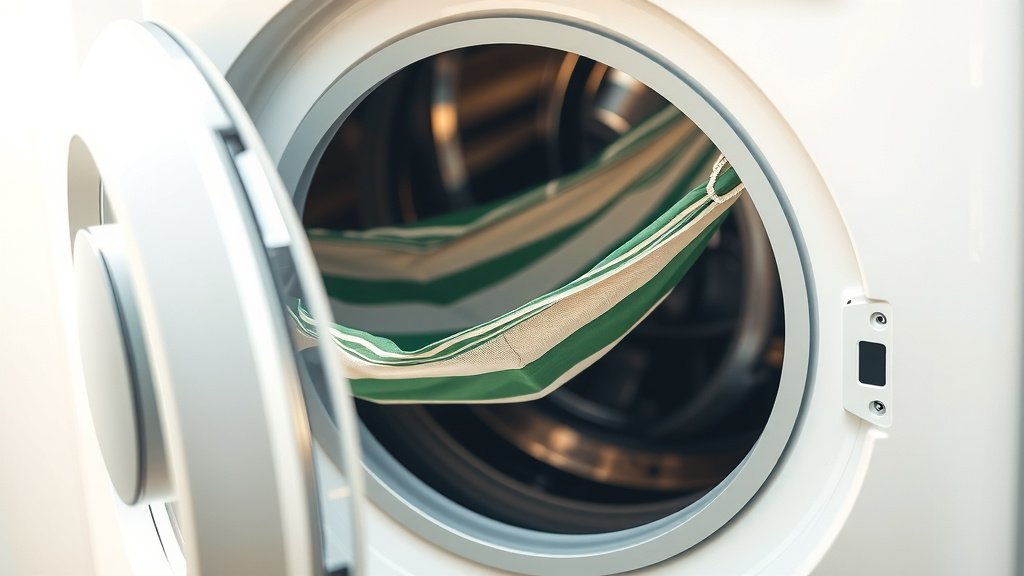
A Quick Checklist for Hammock Washing
Ready to give your hammock a refresh? Here’s a quick rundown to ensure you don’t miss a step:
- Check the care tag for specific instructions.
- Shake out loose dirt and debris.
- Pre-treat any noticeable stains.
- Place hammock in a mesh laundry bag.
- Wash on a gentle cycle with cold water and mild detergent.
- Air dry completely, away from intense heat or prolonged direct sun.
When Machine Washing Might Not Be the Best Option
While machine washing is convenient, it’s not for every hammock. Hammocks made from natural fibers like very fine silk or certain types of wool might require hand washing. Hammocks with intricate beadwork, embroidery, or delicate hand-tied knots are also best cleaned by hand. If your hammock has wooden or metal spreader bars that cannot be removed, machine washing is also a no-go. For these, spot cleaning or gentle hand washing is the way to go.
Conclusion
Washing your hammock in a machine is a great way to keep it fresh and ready for your next outdoor escape. We’ve seen that with a little preparation and the right settings, you can easily clean most fabric hammocks. Always remember to check that care label first, use a gentle cycle with cold water, and air dry completely. By following these steps, you’ll ensure your hammock stays comfortable and inviting for countless relaxation sessions to come. So, go ahead and give it a wash – your hammock will thank you!
Frequently Asked Questions
How often should I wash my hammock?
You don’t need to wash your hammock after every use. A good rule of thumb is to wash it once or twice a season, or whenever it looks visibly dirty or smells less than fresh. Over-washing can sometimes wear down the fabric faster.
Can I wash a hammock with a spreader bar?
Generally, you should only machine wash hammocks with removable fabric sleeves that go over spreader bars. Always remove the spreader bars themselves before washing, as they can damage the fabric and your machine. If the fabric isn’t separate, hand washing or spot cleaning is a better bet.
My hammock has fringe – can I still machine wash it?
Hammocks with fringe can usually be machine washed, but it’s highly recommended to use a mesh laundry bag. This protects the fringe from tangling and snagging during the wash and spin cycles, helping to keep it looking neat.
What if I don’t have a mesh laundry bag?
If you don’t have a mesh laundry bag, you can still try machine washing your hammock, but be extra cautious. Ensure you use a very gentle cycle, cold water, and a low spin speed. You might also consider tying the ends of the hammock loosely to prevent excessive tangling, though a bag is always the safest option.
Is it okay to spot clean small stains instead of washing the whole hammock?
Absolutely! For minor dirt marks or small spills, spot cleaning is an excellent way to maintain your hammock without a full wash. Use a mild soap and water solution on a cloth, gently rub the stain, and then rinse the area with clean water. Always let the spot-treated area air dry thoroughly.