Leaving Your Hammock Out in the Rain: What Happens
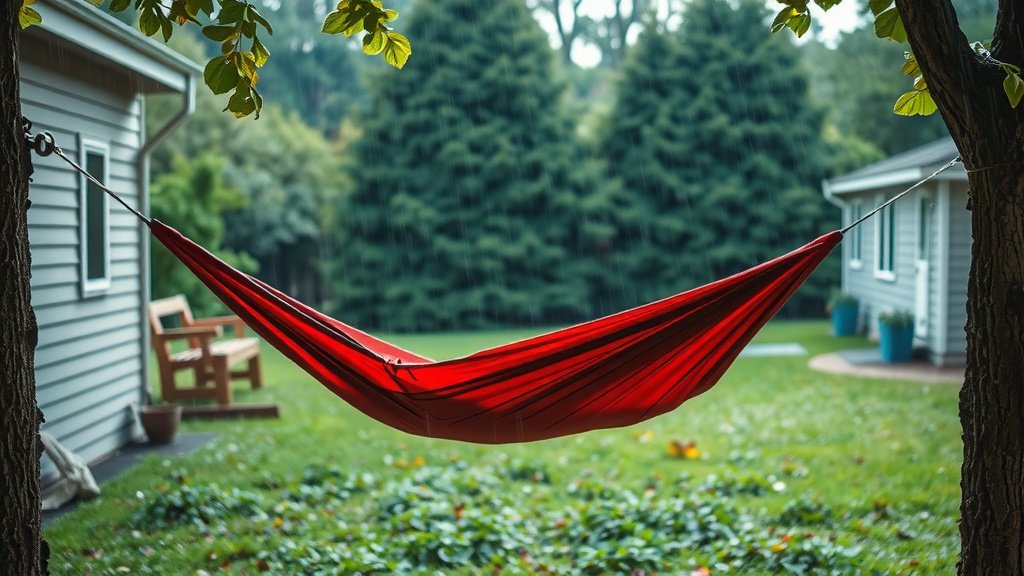
Yes, you can leave a hammock out in the rain, but it’s generally not recommended for long periods. While most modern hammocks are made from materials that can handle some moisture, prolonged exposure to rain can lead to mildew, reduced lifespan, and potential damage.
Leaving your hammock outside constantly means it will face more than just rain. You’ll also deal with harsh sun, dew, and temperature changes. These factors can wear down the fabric and cords over time, making your hammock less sturdy and comfortable.
- Rain is okay in short bursts, but not for days on end.
- Moisture can cause mildew and rot on hammock fabrics and ropes.
- Sun exposure also weakens hammock materials over time.
- Storing your hammock indoors prolongs its life and keeps it looking great.
Let’s walk through what happens when your hammock gets wet and how to best care for it so you can enjoy those lazy hammock days for years to come.
What Happens When Your Hammock Meets the Rain?
So, you’re wondering if it’s okay to let your hammock take a splash. The short answer is, it depends on how much and how often. A quick shower might not be a big deal. But leaving it out for days on end? That’s where you can run into trouble.
Modern hammocks are pretty tough. They’re made from materials designed to handle a lot. Still, water is water, and it can cause issues over time. Think of it like leaving your favorite sweater out in a drizzle for a week. It might survive, but it won’t be in top shape.
The Downsides of a Damp Hammock
When your hammock stays wet, it creates a perfect breeding ground for unwelcome guests. We’re talking about mildew and mold Leaving a hammock out in the rain can lead to mildew and mold; learn how to clean your hammock.. These little fungi love damp, dark places, and your hammock can become their next vacation spot.
Mildew and Rot: The Unseen Enemies
You might not see them at first, but mildew and mold can start to grow within the fabric. This isn’t just unsightly; it actually weakens the fibers. Over time, this can lead to tears and a reduced lifespan for your hammock. Nobody wants a hammock that falls apart mid-relaxation!
Rope and cordage are especially vulnerable. If your hammock has cotton ropes, they can become saturated and start to rot. Even synthetic ropes can degrade faster when constantly exposed to moisture and the elements. Many hammock manufacturers suggest avoiding prolonged exposure to wet conditions (REI).
Sun and Rain: A Double Whammy
Rain isn’t the only thing your hammock will face if left outdoors. The sun is another major factor. UV rays can break down the fabric, making it brittle and faded. When you combine constant sun exposure with regular rain, your hammock is essentially getting a double dose of wear and tear.
Materials Matter: What’s Your Hammock Made Of?
The type of material your hammock is made from plays a huge role. Some fabrics handle moisture much better than others. It’s like comparing a raincoat to a cotton t-shirt when it starts to pour.
Synthetics: The Water-Resistant Champs
Hammocks made from nylon, polyester, or parachute fabric tend to fare better in damp conditions. These materials are often quick-drying and more resistant to mildew. Parachute nylon, for example, is designed to be lightweight, strong, and relatively water-repellent. You’ll find many high-quality camping hammocks use this material.
Cotton and Natural Fibers: The Sensitive Souls
Hammocks made from cotton or other natural fibers are generally more susceptible to moisture damage. Cotton absorbs water like a sponge. This makes it heavy when wet and much more prone to developing mildew and rot. If you have a cotton hammock, you’ll definitely want to bring it inside after use.
Hardware: Metal vs. Plastic
Don’t forget the hardware! If your hammock has metal parts like carabiners or suspension rings, leaving them out can lead to rust. Rust can stain the fabric and, over time, weaken the metal components. Plastic hardware is generally more rust-resistant but can become brittle with prolonged sun exposure.
How to Protect Your Hammock from the Elements
Want to keep your hammock comfy and safe, rain or shine? A little bit of effort goes a long way. It’s all about smart storage and quick clean-ups.
The Golden Rule: Bring It Inside!
This is the simplest and most effective method. When you’re done relaxing, take a few moments to unhook and store your hammock indoors. A closet, a shed, or even a large bin will do the trick. This protects it from rain, dew, harsh sun, and curious critters.
Quick Dry, Happy Hammock
If your hammock does get caught in a shower, don’t just leave it. The key is to dry it out as quickly as possible. Shake off excess water. Then, hang it up in a well-ventilated area, like under a porch roof or in a garage. Avoid direct, intense sunlight for drying, as this can degrade the fabric faster. You want it to be completely dry before storing it.
Consider a Hammock Cover or Tarp
If bringing your hammock inside every single time isn’t feasible, a waterproof hammock cover can be a good option. Alternatively, you can set up a dedicated tarp over your hammock spot. This provides a dry haven for your hammock when it’s set up. Just make sure there’s still good airflow to prevent moisture buildup underneath.

Common Hammock Materials and Their Rain Tolerance
Let’s break down what you’re likely dealing with:
| Material | Rain Tolerance | Pros | Cons |
|---|---|---|---|
| Parachute Nylon/Ripstop Nylon | High | Quick-drying, lightweight, mildew-resistant, strong | Can be slippery when wet, can degrade with prolonged UV exposure |
| Polyester | Medium-High | Durable, good UV resistance, dries relatively quickly | Can be slightly heavier than nylon, less breathable |
| Cotton | Low | Soft, comfortable, breathable | Absorbs water, slow to dry, prone to mildew and rot, can stretch when wet |
| Olefin (Polypropylene) | High | Excellent stain and mildew resistance, UV resistant, quick-drying | Can feel less soft than other materials |
Quick Checklist for Hammock Care in Wet Weather
Here’s a simple way to remember how to keep your hammock in top shape:
- Shake it off after a shower.
- Hang it to dry completely in a breezy spot.
- Check for dampness before storing.
- Inspect for mildew regularly.
- Store indoors when not in use for extended periods.
- Consider a tarp or cover for added protection.
By following these simple steps, you can ensure your hammock stays a comfortable and reliable spot for relaxation, no matter what the weather decides to do.
Conclusion
So, can your hammock brave the rain? A brief shower is usually fine, but consistent dampness is your hammock’s enemy. Leaving it out means you risk mildew, rot, and faster wear from sun and moisture combined. Your best bet for a long-lasting, comfy hammock is to treat it with a little care. Always aim to bring it inside after use or at least ensure it dries thoroughly and quickly after any rain exposure. This simple habit will keep your hammock ready for your next relaxing escape for years to come.
Frequently Asked Questions
How often should I dry my hammock if it gets rained on?
If your hammock gets wet, it’s best to dry it out as soon as possible. Shake off excess water and hang it in a well-ventilated area until completely dry. Prompt drying prevents mildew growth and fabric damage.
Will leaving my hammock out in the rain void the warranty?
Many manufacturers specify that prolonged exposure to the elements, including rain, can void warranties. It’s always wise to check your specific hammock’s warranty details regarding outdoor storage and weather exposure.
Can I use a hammock made of cotton in humid weather?
Hammocks made from cotton are generally not recommended for humid or rainy environments. Cotton absorbs moisture easily, making it heavy, slow to dry, and highly susceptible to mildew and rot.
What’s the quickest way to dry a hammock after it rains?
The quickest way is to shake off excess water and hang it in a breezy, shaded area. Direct, intense sunlight can degrade fabric faster, so a covered porch or a spot with good air circulation is ideal for complete drying.
Are there specific hammock materials that are better for rainy climates?
Yes, synthetic materials like parachute nylon, ripstop nylon, polyester, and olefin are much better for rainy climates. These fabrics are quick-drying, mildew-resistant, and more durable in damp conditions compared to cotton.