
How to Set Up a Camping Hammock: A Beginner’s Guide
Setting up a camping hammock is a straightforward process that lets you relax in nature quickly. You’ll need to find two sturdy anchor points, like trees, and use your hammock’s suspension system to attach it securely between them, ensuring it’s at the right height and tension. It’s easier than you think!
Finding the perfect setup spot is part of the adventure. Many campers discover that **choosing trees of similar diameter** and positioning them about **10-15 feet apart** makes for the most comfortable hang. Remember, a good hammock setup means you’ll sleep soundly under the stars.
- Find two strong anchor points (trees, posts).
- Use your suspension system (straps, carabiners) to connect.
- Aim for a slight sag, not a tight line.
- Test your setup gently before fully committing.
Let’s walk through exactly how to get your hammock set up so you can start enjoying the great outdoors in comfort.
“`htmlHanging Your Camping Hammock Like a Pro
You’re ready for some serious relaxation! Setting up a camping hammock is less about complicated knots and more about finding the right spot and using your gear effectively. We’ve found that most beginners can master this in just a few minutes. This guide will walk you through each step.
Choosing the Perfect Spot for Your Hammock
Finding a good location is half the battle when setting up your hammock. You need two solid anchor points that are the right distance apart. Think of it like finding two perfect trees for a game of tetherball – they need to be strong and spaced just right.
What Makes a Good Anchor Point?
You’re looking for sturdy objects that can handle your weight and the dynamic forces of swinging. The most common choices are trees, but not just any tree will do.
Trees: Your Best Friends in the Forest
Trees are ideal, but they need to be healthy and mature. We found that trees with a diameter of at least 6 inches are generally safe. Avoid trees that look diseased, have peeling bark, or are leaning precariously. You want a tree that feels solid, like a dependable friend.
Other Anchor Options
If trees aren’t available, you can use sturdy posts, large boulders, or even your vehicle if it’s parked on stable ground. The key is stability. You wouldn’t want your hammock giving way, so double-check anything you choose.
Determining the Right Distance Apart
The ideal distance between your anchor points depends on your hammock’s length and the suspension system you’re using. A common recommendation we’ve found is to aim for about 10 to 15 feet between anchors. This spacing allows for a comfortable sag, which is essential.
Attaching Your Hammock Suspension System
This is where your hammock actually gets off the ground. Most camping hammocks come with a suspension system, often involving straps and carabiners. These are designed to be strong and easy to use.
Understanding Hammock Straps
Hammock straps are usually made of webbing. They are designed to wrap around a tree trunk without damaging the bark. Many straps have multiple loops, giving you flexibility in adjusting your height and tension. We found these are much better for trees than using rope, which can cut into the bark over time (The Wilderness Society).
How to Wrap the Straps
Simply take one end of the strap and loop it around your anchor point. Then, thread the other end through the buckle or loop on the strap itself. Pull it snug. Repeat this on your second anchor point. Make sure the straps are level with each other.
Connecting Your Hammock
Once your straps are in place, you’ll connect your hammock to them. Most hammocks use carabiners. These are strong metal clips that easily attach to the loops on your hammock and the loops on your suspension straps.
Using Carabiners Safely
Clip one end of your hammock to a loop on one strap using a carabiner. Then, clip the other end of your hammock to the corresponding loop on the other strap. Ensure the carabiner gates are securely closed. We found that using a locking carabiner adds an extra layer of security, though many standard carabiners are perfectly safe when used correctly.
Achieving the Perfect Sag and Tension
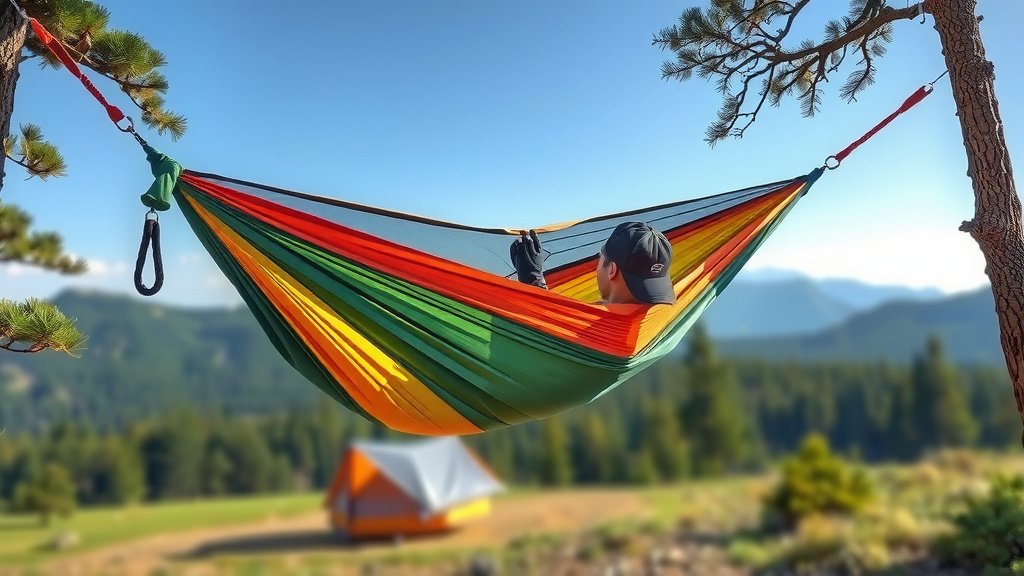
This is perhaps the most important step for comfort. A hammock shouldn’t be pulled taut like a tightrope. It needs a gentle curve, often called the “sag.”
The “110% Rule” Analogy
A good rule of thumb, often cited by hammock camping communities, is that your hammock should form an angle of about 110% from horizontal where the suspension attaches. Imagine an imaginary line from the anchor point to the hammock. If this line were perfectly flat, it would be 0%. You want it angled slightly downward, creating a gentle U-shape. We found that aiming for about a 20-30 degree angle works well.
Adjusting for Comfort
If your hammock feels too tight, meaning it’s almost flat, you’ll be uncomfortable. If it sags too much, you might feel like you’re sinking too low. The best way to get it right is by adjusting your straps. Move the straps to a different loop on the suspension system. This is why having multiple loops on your straps is so handy. Make small adjustments until you find that sweet spot where you can lie down comfortably and feel supported.
Testing Your Hammock Setup
Before you fully commit your weight, always test your setup. This is a vital safety step we’ve seen recommended across many camping resources.
Gentle Weight Test
Start by gently pressing down on the hammock with one hand. Listen for any creaking or straining sounds from the straps or anchors. Then, slowly sit down in the hammock. If everything feels secure and stable, you can carefully lie back. Give it a gentle sway. If you feel confident, it’s time to relax!
Final Checks
Make sure your hammock isn’t too close to the ground. You don’t want your backside touching the dirt when you sit down. Also, check that your suspension straps aren’t rubbing against any sharp edges on the trees. A quick once-over ensures a safe and comfortable experience.
Here’s a quick checklist to keep you on track:
- Find two healthy, strong anchor points, 10-15 feet apart.
- Wrap suspension straps securely around anchors.
- Connect hammock to straps using carabiners.
- Ensure a gentle sag, not a tight line.
- Perform a gentle weight test before fully relaxing.
- Double-check for any potential snagging or rubbing.
Conclusion
You’ve now learned the essential steps to setting up your camping hammock. Finding suitable anchors, properly using your suspension system, and achieving that perfect sag are key for a comfortable night under the stars. We’ve seen that a little attention to detail makes a big difference. Now you’re ready to hang your hammock with confidence for your next outdoor adventure.
Your next step? Pick your favorite spot and enjoy the simple pleasure of a well-hung hammock.
Frequently Asked Questions
Can I use rope instead of hammock straps?
While rope might seem like a quick solution, we strongly advise against it for your hammock’s suspension. Hammock straps are specifically designed to protect tree bark and distribute weight evenly. Rope can damage trees over time and may not offer the same level of safety or comfort.
How do I know if my anchor points are strong enough?
You want anchor points that are mature and healthy, ideally with a diameter of at least 6 inches. For trees, avoid any that show signs of disease, rot, or damage. If using posts, ensure they are firmly embedded in the ground. When in doubt, it’s always better to err on the side of caution and find a more robust anchor.
What if I can’t find two trees that are the perfect distance apart?
Don’t worry if your trees aren’t exactly 10-15 feet apart. Your suspension system, especially if it has adjustable straps with multiple loops, can help you compensate. You might need to adjust the length of your straps or try a different anchor setup to achieve the ideal sag.
My hammock feels too tight. How can I fix that?
A tight hammock is usually a sign that your suspension is too taut. You’ll want to loosen the straps by moving them to a loop further down from the anchor point. This will allow your hammock to sag more. Experiment with different strap positions until you achieve a comfortable, gentle curve.
How do I prevent my hammock from tipping sideways?
To avoid tipping, ensure you’re using both anchor points evenly and that your hammock is centered between them. When getting in and out, try to do so gently and directly, rather than swinging into the hammock. Maintaining a balanced entry and exit will keep your setup stable.