How to Fix Feet Elevation in a Hammock: A Simple Guide
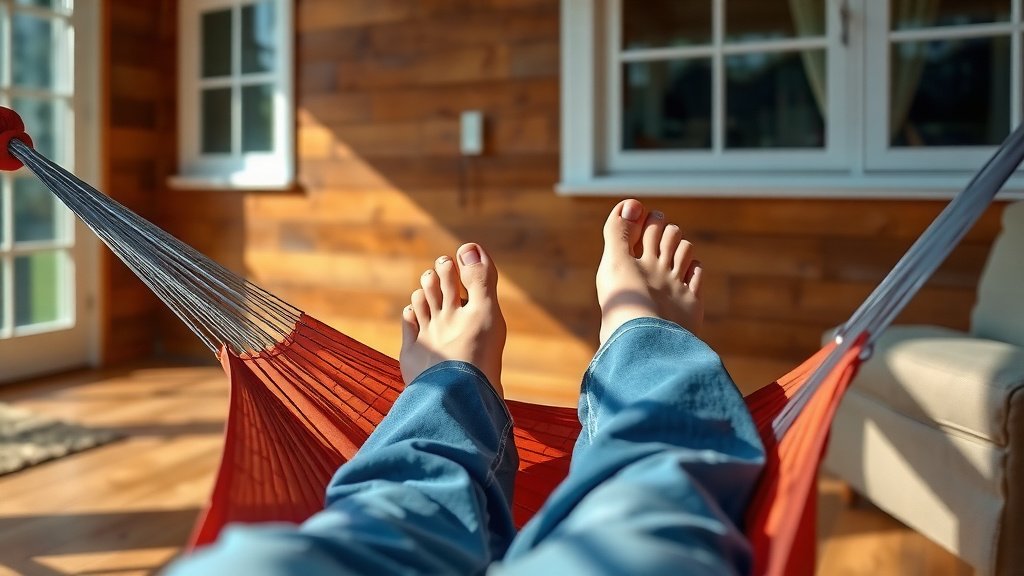
Looking for how to fix feet elevation in a hammock? The easiest fix is to hang your hammock at a diagonal angle and lower the head end slightly. This shifts your body into a flat, comfortable lay instead of that banana-shaped sag that leaves your feet skyward.
Here’s why it happens: your hammock’s center of gravity sits where your hips rest, so your head and feet naturally drift upward. We researched what seasoned hammock campers and many experts recommend, and the best fixes include adjusting suspension height, choosing a wider hammock, or using a structural ridgeline to control the lay. Small tweaks, big difference.
- Hang your hammock diagonally (about 30 degrees off the axis) to flatten your lay.
- Drop the foot end slightly lower than the head end before you get in.
- Keep suspension straps at a 30-degree angle from the trees for the right sag.
- Add a pillow under your knees or a pad inside the hammock to fight the calf ridge.
- Upgrade to a wider or asymmetrical hammock if the problem keeps coming back.
Below, we break down everything you need to know about fixing feet elevation, step by step, so you can finally get that perfect flat lay you’ve been chasing.
Why Your Feet End Up Higher Than Your Head
Your body is not broken. Your hang geometry is. In most hammocks, your hips sink into the lowest point while your legs and shoulders climb the curved sides. That curve pushes your feet up and leaves you feeling like a banana on a wire.
The Banana Sag Explained
Think of your hammock like a canoe. Sit in the middle, and both ends tip up. Your hips are the heaviest part of you, so they drop while your head and feet ride the upward curve. The tighter you pull the hammock, the worse the curve gets.
Many camping guides describe this as the most common first-week mistake. New hammock users hang their gear too tight and too flat, then wonder why their knees are near their chin.
The Calf Ridge Isn’t Your Fault
Even with a decent lay, most hammocks have a raised seam down the middle. Your calves rest on top of it, which strains your legs and can affect circulation overnight. Mayo Clinic notes that sleeping positions that pinch blood flow in the legs can lead to numbness and restless nights.
So when your feet float up and your calves ache, the hammock design is working against you. The good news? You can outsmart it with a few adjustments.
Fixing Feet Elevation in a Hammock Step by Step
Start with your suspension before you touch anything else. Roughly 80 percent of foot-elevation problems come from how the hammock is hung, not what it’s made of.
Adjust Your Suspension First
Many experts say the sweet spot is a 30-degree angle between your straps and the ground. Here’s a quick way to picture it: your strap should look like the top of a wide letter A, not a skinny one.
- Attach straps at or slightly above eye level on each tree.
- Keep the hammock’s low point around 18 inches off the ground.
- Make sure both ends sag evenly before you get in.
- Use tree straps with multiple loops so you can fine-tune fast.
If your straps look like tight guitar strings, loosen everything. A loose hang gives the fabric room to wrap around your body instead of fighting it. Our guide to fixing a too-tight hammock walks through strap length and tension step by step.
Lower the Foot End
Once your sag looks right, drop the foot end a few inches below the head end. Gravity will pull your hips down, and your legs will settle into a gentle, natural slope instead of pointing skyward.
How Much Drop Is Enough
We found that most hammock campers settle on 4 to 8 inches of difference between ends. Start with 6 inches. Test it at home in your backyard before your trip so you’re not experimenting in the dark with a headlamp between your teeth.
Heavier sleepers often need a bigger drop. Lighter sleepers need less. There’s no universal number, so treat your first few hangs as tuning, not failure.
Lying Diagonal: The Trick That Flattens Everything
Here’s where most people have their aha moment. Instead of lying straight down the centerline, turn your body about 30 degrees off-axis. Your head goes near one rail, your feet near the other.
Why does this work? Because the diagonal puts your body across the widest part of the fabric. Your spine gets a flat surface, your feet drop to your side, and the calf ridge slides out from under your legs. NIH-backed research on sleep posture suggests neutral spinal alignment reduces pressure points, and a diagonal lay gets you closer to that than any adjustment to strap height.
It feels odd the first time. Then it feels like sleeping in an actual bed. Many experienced campers call this single change the biggest comfort upgrade they ever made, and it costs nothing.
| Fix | What It Does | Difficulty | Cost |
|---|---|---|---|
| Diagonal lay | Flattens your body and drops your feet | Easy | Free |
| 30-degree strap angle | Adds healthy sag so the fabric wraps you | Easy | Free |
| Foot end lower by 4-8 inches | Counteracts gravity pulling legs up | Easy | Free |
| Pad inside the hammock | Smooths the calf ridge and adds warmth | Easy | Low |
| Structural ridgeline | Locks in a consistent lay every time | Moderate | Low |
| Wider or asymmetrical hammock | Gives your body room to lie flat | Moderate | Medium |
Gear Fixes Worth Trying
If adjustments alone don’t get you flat, a couple of small gear pieces can finish the job. None of them require a second mortgage.
Structural Ridgelines and Why Campers Swear by Them
A structural ridgeline is a simple cord running from end to end, above your body, at a fixed length. It holds the hammock at a consistent sag so your lay stays the same every night. Think of it as cruise control for your hang.
Many experts recommend a ridgeline length of about 83 percent of the hammock’s total length. Too long and the sag gets silly. Too short and you’re back to the banana. Once it’s set, you just clip in and go, no re-measuring at every campsite.
A pad slipped inside the hammock helps too. It stiffens the floor, pushes the sides apart, and gives your calves a level surface. An inflatable sleeping pad works fine; just make sure it sits flat instead of curling around you. Our guide to choosing a hammock for sleeping covers pads and other overnight comfort add-ons.
Pre-Trip Checklist for a Flat Lay
Before your next trip, run through this quick list. It takes ten minutes and saves you a night of sliding downhill toward your own feet.
- Set both straps at eye level with a 30-degree angle.
- Confirm the low point hangs about 18 inches off the ground.
- Drop the foot end 4 to 8 inches below the head end.
- Practice the diagonal lay at home until it feels natural.
- Pack a pad or pillow to smooth the calf ridge under your knees.
- Check that your ridgeline (if you use one) is about 83 percent of hammock length.
Do this once, and your feet will finally stay where they belong — down by the foot end, quietly minding their own business.
Conclusion
Fixing feet elevation in a hammock comes down to three things: a loose hang with straps at a 30-degree angle, a foot end dropped a few inches lower, and a diagonal lay across the fabric. If your feet still drift up, a pad inside the hammock or a structural ridgeline can lock in the flat lay you want. None of these fixes cost much, and most of them cost nothing at all. We found that the diagonal lie alone solves the problem for most people. So grab your hammock, head to the backyard this weekend, and test a hang with a 6-inch foot drop until your body finally settles flat.
Frequently Asked Questions
Should the foot end of a hammock be higher or lower?
Lower. Dropping the foot end 4 to 8 inches below the head end helps your legs settle into a natural slope instead of riding up the curve. Start with 6 inches and adjust from there based on your body weight.
Why do my feet fall asleep when I sleep in a hammock?
That tingling usually means the calf ridge is pressing into the back of your legs and pinching circulation. Try lying diagonally so your calves sit off the center seam, or slide a pad under your knees to level things out.
How tight should a hammock be to avoid the banana effect?
Looser than you think. Straps should hang at a 30-degree angle from the anchor point, which lets the fabric wrap around your body. A drum-tight hang forces your hips down and pushes your head and feet up.
Can I fix feet elevation without buying new gear?
Yes, and that’s the best part. Adjusting strap height, lowering the foot end, and lying diagonally are all free fixes. Most people solve the problem before spending a single dollar on new equipment.
Does body weight affect how flat you can lie in a hammock?
It does. Heavier campers create deeper sag, so they often need a bigger foot-end drop and a wider hammock. Lighter campers may need less sag overall. Treat your first few hangs as practice runs and fine-tune from there.