How to Set Up a Hammock in Heavy Rain: 7 Expert Tips
The easiest way to set up a hammock in heavy rain is to hang it under a tarp first, pitch the tarp lower and tighter than usual, and keep your ridgeline angled so water runs off instead of pooling. Do this before the downpour hits, and you’ll stay dry all night.
But here’s the thing most campers learn the hard way: the hammock isn’t your real problem. Water runoff pooling under you, wet gear, and a sagging tarp are what actually ruin the night. We researched what seasoned hammock campers do differently, and it mostly comes down to site choice, tarp angle, and a few cheap tricks like a drip line.
So what exactly should you do before the sky opens up? Here’s the quick version:
- Pick high ground, never a low spot or a wash path
- Hang your tarp low and tight before rain starts
- Add a drip line on your suspension to stop water travel
- Keep gear in dry bags or a tarp-protected area under you
- Angle your tarp into the wind so rain sheets off one side
Below, we break down exactly how to pull this off step by step — so your next rainy night in the trees feels more cozy than chaotic.
Setting Up Your Hammock When Rain Is Coming Down Hard
Start with the tarp. Always the tarp. Get it pitched before anything else touches a tree, because once rain soaks your suspension straps, everything gets slippery and slower.
Many experienced campers we researched follow the same order: tarp first, ridgeline second, hammock third. It sounds backwards, but it works. Your shelter matters more than your bed when the sky is dumping.
Choosing the Right Spot Before the Storm Hits
Site choice makes or breaks a rainy night. Look up, look down, and look around before you tie a single knot.
We found that most soggy-hammock disasters come from bad ground, not bad gear. Water always moves downhill, so give it a path around you.
Scan the Ground and Sky First
Look up for dead branches, called widowmakers, that wind and rain can bring down. Then look at the ground. Soft dirt, mud, or a dry creek bed means water has been there before, and it will come back. Our guide to choosing safe hammock trees walks through what to look for before you tie a single strap.
Pick a spot on a slight rise, ideally with trees a few feet apart. Standing water under your hammock is miserable, and hypothermia risk climbs fast when you’re wet and cold (CDC).
Think About Wind Direction Too
Rain rarely falls straight down. Check which way the wind is pushing the storm and face the narrow end of your tarp into it. That gives the rain less surface to hit.
If the wind shifts overnight, don’t panic. A tarp pitched low on both ends handles most angles just fine.
Pitching a Tarp That Actually Keeps You Dry
Lower and tighter is the golden rule for heavy rain. A tarp pitched high in fair weather becomes a umbrella in a storm, and not in a good way.
We found that dropping your ridgline a foot or two lower than usual helps rain sheet off instead of pooling. Tighten every guy line until the fabric feels drum-tight.
Get the Angle Right
Aim for a steep side profile, roughly 30 degrees or more on the ends. Steeper angles shed water faster. If your tarp sags mid-storm, it’s usually a loose guy line, so check them after the first heavy burst.
Dealing With Saggy Fabric
Nylon tarps stretch when they get wet. Retension your lines once the rain starts, even if they felt tight in the dry. Five minutes of work saves you a midnight drip bath.
Size Your Tarp for Real Coverage
Your tarp should extend at least a foot past both ends of your hammock. Bigger is better here. A small tarp that covers only your body leaves your gear and suspension exposed.
Stop Water From Traveling Down Your Straps
Here’s the sneaky one: rain runs down your tree straps like a slide, straight toward your hammock. The fix costs almost nothing.
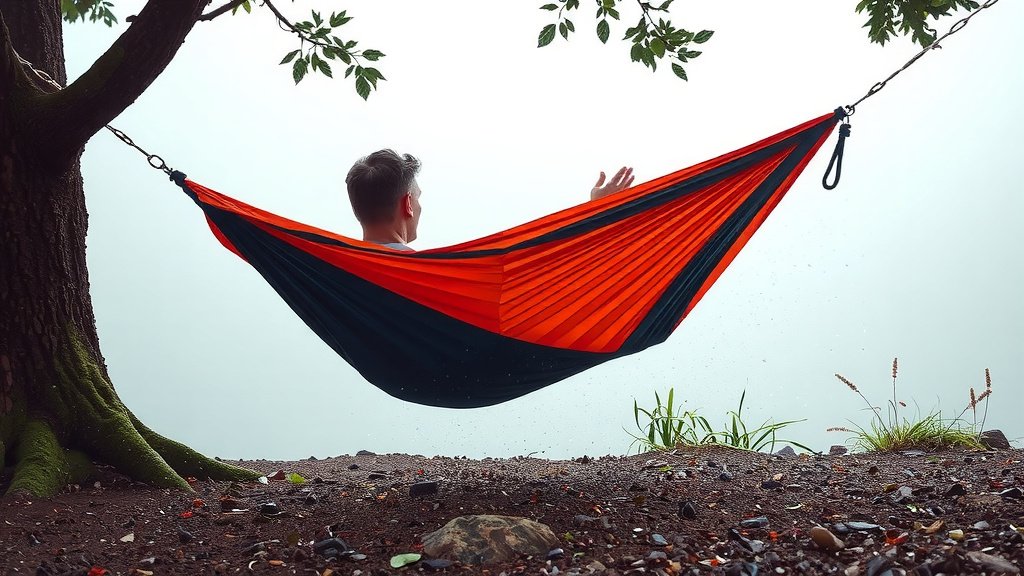
Tie a small cord or even a rubber band around each strap a few inches from the hammock, letting it dangle below. Water hits the knot and drips to the ground instead of wicking into your bed. Campers call this a drip line, and it’s the cheapest upgrade you’ll ever make.
Keeping Your Gear Dry While You Sleep
Your hammock is only half the battle. Everything else you own is sitting on wet ground.
- Use dry bags for anything that absolutely cannot get wet, like your sleeping bag and spare clothes
- Hang a gear line under your tarp for damp items you want to air out
- Keep your pack at the edge of the tarp, under a flap or upside down on top
- Stuff dry socks in a ziplock inside your sleeping bag so morning-you thanks night-you
Many experts suggest treating your sleeping insulation like gold. Once a down bag gets soaked, it barely insulates, and rewarming a hypothermic camper is no joke (Mayo Clinic).

Water Under You: The Problem Nobody Talks About
You’re off the ground, so you’re safe, right? Not quite. Heavy rain can turn the ground below you into a shallow river in under an hour.
Dig a small trench on the uphill side if you’re on a slope, and never camp where you see worn mud channels. Those are nature’s “water runs here” signs. We found that raised ground with loose, sandy soil drains best.
Rainy Setup Checklist: Do These in Order
Print this in your brain before your next trip:
- Check trees for dead limbs and ground for drainage paths
- Pitch the tarp low, tight, and angled into the wind
- Retension guy lines after the first downpour
- Add drip lines to both suspension straps
- Bag your insulation and electronics before dark
- Set headlamp and rain jacket inside the hammock with you
Quick Gear Table: What Helps Most in Heavy Rain
| Item | Why It Matters | Budget Pick |
|---|---|---|
| Silnylon or Dyneema tarp | Sheds water and won’t stretch as much | Basic 10×10 silnylon tarp |
| Drip lines | Stops water travel down straps | Paracord scraps or rubber bands |
| Dry bags | Protects insulation and electronics | Ziplocks and trash compactor bags |
| Wide tree straps | Grip better when wet | 1-inch polyester straps |
| Underquilt or pad | Blocks cold air and ground splash | Closed-cell foam pad under you |
What If the Rain Starts Before You’re Ready?
It happens. The sky doesn’t wait for your schedule. If you’re caught mid-setup, pitch the tarp over your pack and gear first, then work on the hammock beneath it.
Skip perfection. A crooked tarp beats no tarp. Get covered, then refine. And if you’re getting genuinely cold and wet, don’t tough it out, because wet clothing pulls heat from your body many times faster than dry clothing (CDC). Change into dry layers, then finish the job.
One last thing we found repeated across every forum and guide we read: practice your rainy setup once in the backyard. Ten minutes of practice at home saves an hour of fumbling in a storm.
Conclusion
Setting up a hammock in heavy rain comes down to doing the right things in the right order. Pitch your tarp first, keep it low and tight, pick high ground with good drainage, and add drip lines so water never slides down your straps. We found that most miserable nights trace back to soggy ground and loose guy lines, not the hammock itself. Toss in dry bags for your insulation, and you’re set for whatever the sky throws at you. Your next step? Grab some cord, pitch your tarp in the yard, and run through a wet-weather setup this weekend. When the real storm rolls in, you’ll be glad you practiced.
Frequently Asked Questions
Can you sleep in a hammock while it’s raining?
Yes, as long as you have a tarp pitched over you. The hammock itself can handle rain fine. What matters is keeping runoff off your suspension, staying off saturated ground, and protecting your insulation from moisture.
How high should a tarp be over a hammock in heavy rain?
In heavy rain, pitch your ridgeline lower than usual, often 3 to 4 feet above your hammock. We found that the steeper the sides, the faster water sheds. If storm winds pick up, drop it even lower before bed.
Do I need an underquilt when it rains?
You don’t strictly need one, but rain cools the air beneath you fast, and moving air strips body heat. An underquilt or a simple foam pad between you and the hammock fabric makes a big difference on wet nights. Our sleeping pad insulation guide explains when a pad or underquilt is worth packing for cooler conditions.
What kind of trees are safe for a rainy hammock hang?
Look for healthy, living trees with thick trunks and no dead branches overhead. Rain-soaked limbs are heavier and more likely to drop, so scanning for widowmakers is even more important in a storm than in dry weather.
How do I keep my hammock straps from getting soaked?
You can’t fully stop them from getting wet, but drip lines keep water from traveling down them into your hammock. Polyester straps also absorb less water than nylon, so they stay grippier on wet bark.