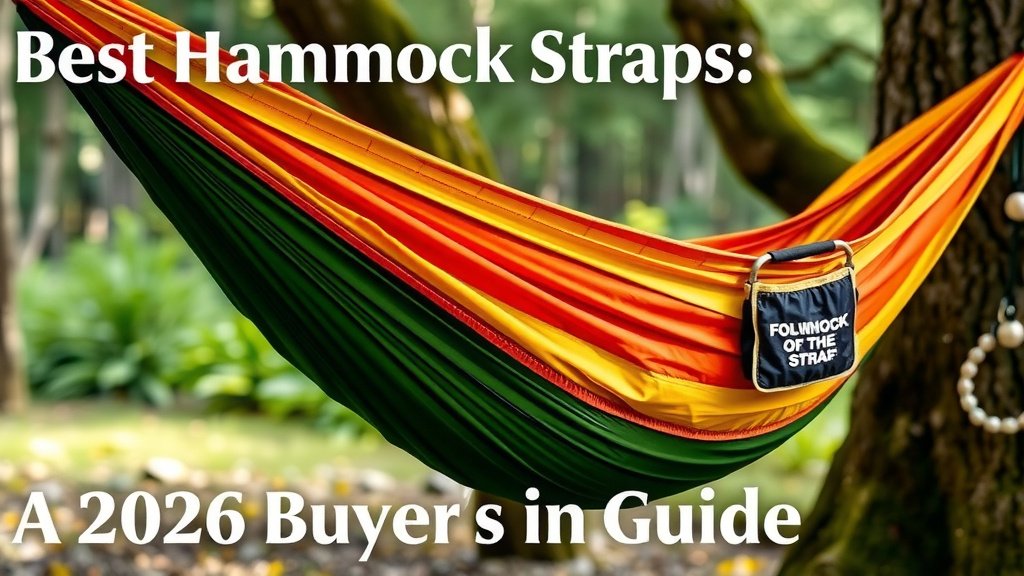
Best Hammock Straps: A 2026 Buyer’s Guide
Finding the best hammock straps really depends on what you’re looking for. For general use and quick setup, tree-friendly webbing straps are often the top choice. They distribute weight evenly, protecting trees and holding strong. Consider straps with multiple daisy chains for easy adjustment.
Your hammock setup can go from frustrating to fantastic with the right straps. We looked at what makes straps great for camping, backyard chilling, and backpacking. Factors like weight capacity, length, and ease of use are key. Getting this right means more relaxing and less fussing.
TL;DR:
- Webbing straps are great for most people.
- Look for tree-friendly designs.
- Daisy chains make adjusting easy.
- Check the weight limit before buying.
- Consider length for different setups.
Ready to find your perfect match? Let’s walk through the different types of hammock straps and help you pick the ones that will make your hammock time amazing.
Choosing the Right Hammock Straps for Your Adventures
Picking the best hammock straps can feel like a big decision, but it doesn’t have to be! We’ve done the research to help you find the perfect set. They are your hammock’s direct connection to nature, so getting them right means a more comfortable and secure hang. You want straps that are easy to use, kind to trees, and strong enough for your needs.
Understanding Hammock Strap Types
Most hammock straps fall into a few main categories. Each has its own pros and cons. Knowing these will guide you toward the best choice for your style of relaxing.
Webbing Straps: The All-Around Champion
These are the most popular for a reason. They’re usually made from strong polyester or nylon. Think of them like a super-duty seatbelt for your hammock. They spread the load nicely. This is great for keeping trees healthy.
Daisy chains are a common feature. These are loops sewn at intervals along the strap. They make adjusting your hammock height super easy. You just hook your carabiner into the loop that feels right. This means less fiddling and more relaxing.
Why Webbing Straps Shine
- Tree-friendly: They are wide enough to prevent damage to tree bark. Many guidelines suggest wider straps for tree health (US Forest Service).
- Durable: They hold up well against stretching and wear.
- Adjustable: Daisy chains offer quick and simple height adjustments.
- Versatile: Great for camping, parks, or your backyard.
Rope and Cord Straps: For the Lightweight Traveler
Some campers prefer rope or cord. These can be very lightweight. Think paracord or specialized hammock suspension ropes. They can be strong but require more know-how for a secure setup. Knots are often involved. Learning a few good knots is key here.
While light, rope can sometimes dig into trees more than webbing. This is especially true if the rope is thin. You might need to use extra padding or a specific knot to protect the bark. This adds a bit more setup time.
Rope & Cord Considerations
- Lightweight: Can save significant weight in your pack.
- Compact: Takes up very little space.
- Knot-dependent: Requires knowledge of secure knots.
- Potential Tree Impact: Thinner ropes can damage bark if not used carefully.
Key Features to Look For
Beyond the material, several features make a big difference. These details can turn a good strap into a great one. Let’s break them down.
Weight Capacity: Safety First!
This is non-negotiable. Always check the weight capacity. You need straps that can safely hold you, your hammock, and anything you bring into it. Many straps are rated for 400-1000 pounds. It’s smart to choose straps with a capacity well beyond your expected load. This gives you peace of mind.
Length Matters: Setting Up Anywhere
Hammock straps come in various lengths. Common lengths are 6 to 15 feet. Longer straps are more versatile. They let you hang your hammock between widely spaced trees. Shorter straps might limit your hanging options in certain areas. Think about where you usually set up your hammock. If you camp in dense forests, longer straps are a smart choice.
Ease of Use: Quick Setup is Key
Nobody wants to spend ages setting up their hammock. Look for straps that are intuitive. Daisy chains are excellent for this. Simple webbing straps are generally easier than ropes for beginners. You want to spend your time relaxing, not wrestling with your gear.
Durability and Weather Resistance
Your straps will face the elements. Look for materials that resist UV rays and moisture. Polyester and nylon are usually good choices. They don’t break down easily. Sturdy stitching and strong metal hardware (like carabiners or buckles) are also signs of quality.
Comparing Popular Strap Options
We’ve looked at many straps, and some stand out. Here’s a quick comparison to help you visualize:
| Feature | Webbing Straps (Daisy Chain) | Rope/Cord Straps |
|---|---|---|
| Ease of Use | Very High | Moderate (requires knot knowledge) |
| Tree Friendliness | High | Moderate (can require extra padding) |
| Weight Capacity | Typically High (check specs) | Varies (check specs) |
| Adjustability | Easy (daisy chains) | Requires knot re-tying |
| Packability | Good | Excellent |
Your Hammock Strap Checklist
Ready to make your pick? Here’s a quick rundown to ensure you don’t miss anything:
- Confirm the weight capacity is more than you need.
- Consider the length for your typical hang spots.
- Prefer tree-friendly materials like wide webbing.
- Look for easy adjustment systems like daisy chains.
- Check reviews for durability and common issues.
- Make sure any included hardware (carabiners) is strong.
Conclusion
You’re now equipped to choose the best hammock straps for your relaxation needs. We found that for most users, durable webbing straps with daisy chains offer the best blend of ease of use, tree protection, and reliable performance. Remember to always check the weight capacity and consider the strap length based on where you typically hang. Making an informed choice means you’ll spend less time setting up and more time enjoying your hammock.
Your next step? Grab a set that fits your adventure, find a couple of sturdy trees, and get ready to hang out!
Frequently Asked Questions
Are webbing straps really better for trees than rope?
Yes, generally webbing straps are considered more tree-friendly. Their wider surface area distributes your weight more evenly, reducing the risk of cutting into the bark. Thinner ropes can potentially cause more harm if not used with extra care or padding.
How long do hammock straps typically need to be?
Most common hammock straps range from 6 to 15 feet long. If you often find yourself needing to hang between widely spaced trees, especially when camping, longer straps (10-15 feet) offer more versatility. Shorter straps might limit your options in some natural settings.
What is the standard weight capacity I should look for in hammock straps?
Most quality hammock straps are rated to hold between 400 and 1000 pounds. It’s wise to choose straps with a weight capacity significantly higher than your expected load (you, your hammock, and any gear). This ensures safety and adds peace of mind during your hang.
Can I use regular rope instead of specialized hammock straps?
You can, but it’s not always ideal. Standard rope can be prone to stretching and might not be as kind to trees as wider webbing. You’ll also need to be confident in tying secure knots, which adds a learning curve and potential setup time compared to daisy chain systems.
How important are daisy chains on hammock straps?
Daisy chains are very important for ease of adjustment. They provide multiple loops, allowing you to quickly find the perfect height for your hammock without re-tying knots. This makes setup and adjustments much faster and simpler, especially for beginners.