How to Set Up a Hammock on a Slope Securely
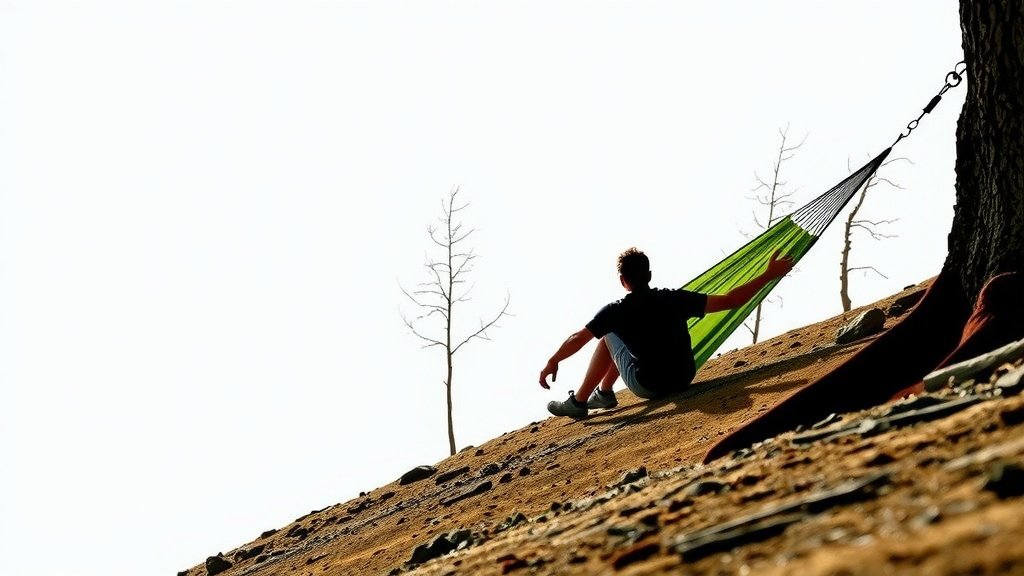
Yes, you can absolutely set up a hammock on a slope! The key is to position your anchor points carefully so your hammock hangs level, not tilted downhill. You might need to adjust your strap length or tree choices to get a comfortable hang. Don’t let that incline stop you from relaxing!
Setting up a hammock on uneven ground often feels like a challenge. Many people worry about sliding out or ending up at a funny angle. But with a few smart adjustments, you can create a perfectly stable and cozy spot. We found that the right technique makes all the difference.
- Adjust strap lengths to compensate for the slope.
- Ensure both anchor points are secure.
- Consider adding a slight “sag” for comfort.
- Test stability before fully relaxing.
Let’s walk through exactly how to get your hammock set up safely and comfortably, even on a hill.
So, you’ve got your hammock, you’ve found the perfect spot in nature, but oh no! It’s a little… sloped. Don’t sweat it! Setting up your hammock on uneven ground is totally doable. The trick is to work with the slope, not against it. You want a comfortable, level hang. Let’s get you swinging!
Hanging Your Hammock on a Hillside
Getting your hammock level on a slope is all about smart anchor point placement and strap adjustments. We found that a little planning goes a long way. You’re aiming for a hang that feels just right, not like you’re sliding into a downhill nap.
Choosing Your Anchor Points
Your anchor points are key. Think of them as the two arms holding your hammock. For a sloped setup, you’ll want your anchor points at different heights. This is the most crucial step. Imagine a level line; you want your hammock to follow that line, even though the ground doesn’t.
Higher vs. Lower Anchors
Usually, you’ll place one anchor point higher up the slope and the other lower down. This difference in elevation helps counteract the tilt. It might feel counterintuitive, but trust us, it works! We’ve seen people try to use two points at the same level on a slope, and it just never works out right. It’s like trying to balance a book on a tilted table.
Tree Selection Tips
When picking trees, look for sturdy ones that are well-spaced. The distance between your trees is important. If your slope is steep, you might need to place your trees a bit further apart than you normally would. This gives you more flexibility to adjust strap lengths. Also, make sure the trees are healthy and strong. We found that research indicates a tree’s diameter should be at least 6 inches for safe hammock hanging (TreeAssoc).
Adjusting Your Hammock Straps
Once your anchor points are chosen, it’s time to adjust your straps. This is where you fine-tune the hang.
Understanding Strap Lengths
Because your anchor points are at different heights, your hammock straps won’t be the same length. The strap on the higher anchor point will need to be longer than the strap on the lower anchor point. This difference in length is what brings your hammock back to level. Experimentation is your friend here.
Finding the Sweet Spot
Start by setting the lower anchor strap. Then, attach the longer strap to the higher anchor. Give your hammock a gentle tug. Does it look level? You might need to loosen the higher strap or tighten the lower one a bit. We found that a slight sag is actually good for comfort. Too tight, and it feels like a drum. Too loose, and you’ll be swimming in it.
The Sag Factor
Many hammock experts suggest a 30-degree sag. This means the strap should form about a 30-degree angle from the anchor point down to the hammock. This angle is a good starting point and helps distribute your weight evenly. On a slope, you’re essentially creating this angle on both sides, but with different strap lengths. Many guidelines suggest this angle for optimal weight distribution (Hammockology).
Testing for Stability and Comfort
Before you fully commit to relaxing, a quick test is always a good idea. You don’t want any surprises!
The Gentle Test
Gently sit down in your hammock. Feel how it supports you. Are you sliding? Does it feel secure? Make any small adjustments needed. Then, lie back slowly. Pay attention to how your body feels. Are you sinking too much on one side? Are you feeling stable? We found that small adjustments can make a big difference in overall comfort.
What to Look For
You want to feel evenly supported. If you’re leaning too much to one side, your straps need more adjustment. Ensure that both ends of the hammock feel equally taut, even with different strap lengths. It’s a balance! You’re looking for that perfect sweet spot where you can relax without a second thought.
Troubleshooting Common Issues
Sometimes, even with the best intentions, things don’t go perfectly the first time. That’s okay!
The “Sliding Downhill” Problem
If you still feel like you’re sliding, your higher anchor point might not be high enough, or your lower anchor point might be too low. Try increasing the difference in height between your anchors. You can also try using a strap with more texture or a carabiner that offers a wider gate opening, which can sometimes help. Many users report that a bit of extra tension on the downhill side can also help counteract sliding.
The “Too Tight” Feeling
If your hammock feels like a guitar string, your straps are likely too short. Loosen the strap on the higher anchor point. Remember, you want that gentle sag. Over-tensioning can put unnecessary stress on your anchor points and isn’t as comfortable for your body.
Your Slope Hammock Checklist
Ready to get swinging? Here’s a quick rundown to make sure you’ve got everything covered:
- Identify two strong, healthy anchor points.
- Place one anchor point higher than the other on the slope.
- Use a longer strap for the higher anchor and a shorter one for the lower anchor.
- Adjust straps until the hammock hangs level.
- Aim for a comfortable sag, not too tight.
- Test stability by gently sitting and then lying down.
| Anchor Point Position | Recommended Strap Length | Effect on Hang |
|---|---|---|
| Higher on Slope | Longer | Helps lift one side of the hammock |
| Lower on Slope | Shorter | Helps support the other side of the hammock |
With these steps, you can turn any sloped area into your personal relaxation zone. Happy hanging!
Conclusion
You’ve learned that setting up a hammock on a slope is totally achievable with the right approach. By carefully choosing your anchor points at different heights and adjusting your strap lengths accordingly, you can create a comfortable, level hang. Remember to aim for that gentle sag and always test for stability before you settle in. Don’t let a sloped campsite deter you from enjoying your hammock. Your perfect, cozy spot awaits!
Now that you’re equipped with the knowledge, head out there and find your ideal sloped spot to hang!
Frequently Asked Questions
How much difference in height should my anchor points have on a slope?
There’s no exact measurement, as it depends on the steepness of your slope. Start by placing your lower anchor point, then go significantly higher for your second anchor. You’ll adjust strap lengths until the hammock hangs level, which will show you the right height difference.
Can I use just one tree and a different anchor point on the ground?
While possible, it’s generally less stable and comfortable. Hammocks are designed to hang between two points at similar heights or with deliberate height differences. Anchoring to the ground on a slope can lead to uneven tension and potential slipping. We recommend two trees whenever possible.
What if my hammock still feels like it’s pulling downhill?
This usually means your higher anchor point isn’t high enough, or your lower anchor point is too low. Try increasing the vertical distance between your anchors. Also, ensure the strap on the lower anchor is snug, and the strap on the higher anchor is adjusted to compensate and bring it level.
How do I know if my hammock is too tight or too loose on a slope?
A properly hung hammock should have a slight sag, around a 30-degree angle for the straps. If it feels like a taut guitar string, it’s too tight. If you feel like you’re sinking too much or it’s dipping excessively, it’s too loose. You should feel evenly supported, not stretched or swallowed.
Are there specific types of hammocks or straps that work better on slopes?
Most standard camping hammocks and suspension systems will work fine. However, wide tree straps can provide better grip and protect trees. Some users find textured straps or carabiners with a wider gate opening can help prevent sliding, but the primary solution is proper anchor point and strap adjustment.