Choosing the Perfect Hammock Chair Stand
Choosing the right hammock chair stand is key to enjoying your hanging chair safely and comfortably. Look for stands made from durable materials like steel or heavy-duty wood, and ensure they have a sturdy base with a high weight capacity to match your chair. A good stand will provide stability and a secure way to hang your hammock chair, turning any spot into your personal relaxation zone.
Your hammock chair stand is more than just a hanger; it’s the foundation for your cozy nook. We found that considering the intended location—indoors or outdoors—is important. You’ll also want to think about the overall style of your space and the weight your stand can safely support. Getting these details right means more time spent swaying and less time worrying.
- Prioritize stands with a high weight capacity.
- Choose materials suitable for your indoor or outdoor use.
- Ensure the stand’s base is wide and stable.
- Match the stand’s style to your decor.
Ready to find the perfect perch? Let’s walk through exactly what to look for when choosing your hammock chair stand.
Selecting Your Ideal Hammock Chair Stand
Choosing the right hammock chair stand sets the stage for ultimate relaxation. You want a stand that’s not only safe but also complements your personal style. Let’s dive into what makes a stand a great fit for your hanging chair.
Considering Your Hammock Chair Stand’s Location
Where do you picture yourself swaying? Your hammock chair stand needs to be ready for its environment. This is a fundamental step in ensuring it lasts and stays safe.
Outdoor Use: Weathering the Elements
If your cozy spot will be outdoors, perhaps on a patio or deck, material choice is key. You need something that can stand up to sun, rain, and maybe even a little humidity. Research shows that certain finishes offer better protection against rust and decay.
Many experts recommend powder-coated steel for outdoor stands. This coating helps prevent corrosion. Natural wood can also work, but it needs to be properly sealed and maintained. Think of it like giving your stand a raincoat and sunscreen!
Indoor Use: Style and Space
Bringing your hammock chair inside? The considerations shift slightly. While durability is still important, you might focus more on aesthetics and how it fits your décor. Indoor stands often come in more finishes to match your furniture.
We found that indoor stands can be lighter but still need a robust design. Ensure it won’t scratch your floors. Some come with rubber feet for added protection. It’s all about creating that perfect indoor oasis without damaging your home.
Materials Matter: Durability and Design
The material of your hammock chair stand is the backbone of its strength and longevity. Different materials offer different benefits.
Steel Stands: The Reliable Workhorse
Steel is a popular choice for a reason. It’s incredibly strong and can support a lot of weight. Many steel stands are designed for both indoor and outdoor use. Look for ones with a good powder coating to resist rust.
We found that steel frames can often be assembled with just a few screws. This makes them relatively easy to set up. Their weight capacity is usually quite high, which is a big plus for safety. Many manufacturers specify a weight limit, so always check that!
Wood Stands: Natural Beauty and Strength
Wooden hammock chair stands offer a warm, natural aesthetic. They can look beautiful in a garden or a cozy living room. Hardwoods like oak or teak are strong and can last for years.
However, wood requires more maintenance, especially if used outdoors. You’ll need to reapply sealant periodically. Many wood stands are also quite heavy, which adds to their stability but makes them less portable. Research suggests that properly maintained wood can be as durable as metal.
Other Materials to Consider
You might also find stands made from heavy-duty plastic or even aluminum. Plastic stands can be lightweight and weather-resistant but might not always have the same weight capacity as steel or wood. Aluminum is rust-proof and lighter than steel but can sometimes be less sturdy.
We found that it’s always best to check the manufacturer’s specifications for any stand. They’ll detail the weight limit and recommended usage.
Stability and Safety Features
Safety is non-negotiable when it comes to hanging furniture. A wobbly stand is not only uncomfortable but potentially dangerous. Focus on the base and overall construction.
The Importance of a Wide Base
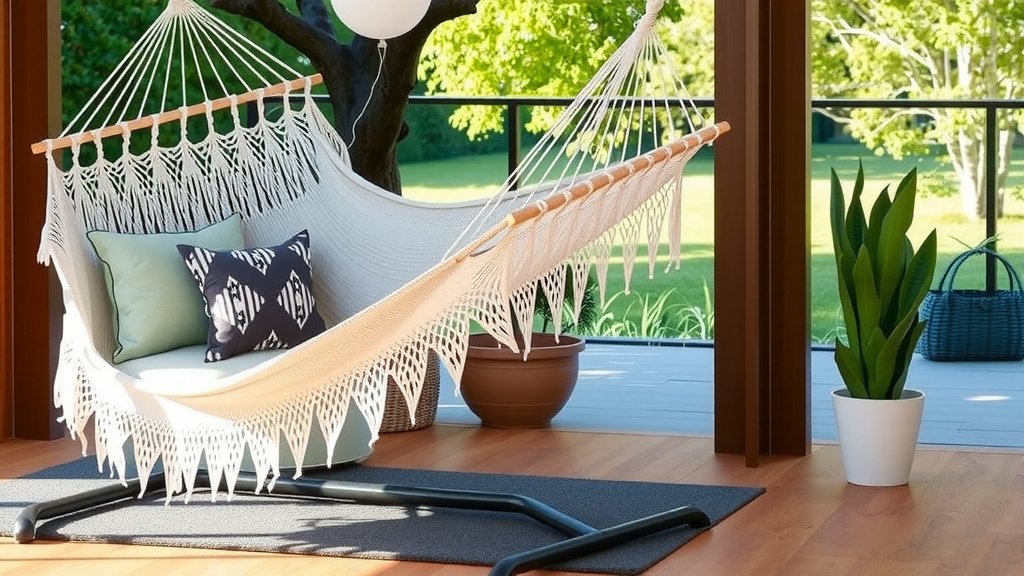
A hammock chair stand with a wide, stable base is essential. This prevents tipping, especially when you’re getting in or out of the chair. Think of it like the legs on a sturdy table – the wider they are, the less likely it is to wobble.
Many popular stands feature an ‘X’ or ‘C’ shaped base. These designs distribute weight evenly. We found that stands with circular bases can also be stable if they are sufficiently wide and heavy.
Weight Capacity: Know Your Limits
Every hammock chair stand has a maximum weight capacity. This is the absolute maximum weight it can safely hold. It’s crucial to know how much weight you’ll be putting on it – that’s you plus anyone else who might join you!
Many experts recommend choosing a stand with a weight capacity significantly higher than your estimated maximum load. For example, if you and your guest weigh 200 lbs combined, aim for a stand that can hold at least 300 lbs. This builds in a safety margin. Check the product details carefully – this is a critical safety feature.
Style and Aesthetics: Matching Your Space
Beyond safety and durability, your hammock chair stand should look good! It’s part of your décor, after all.
Coordinating with Your Décor
Do you have a modern, minimalist home? A sleek, powder-coated steel stand might fit perfectly. If your style is more bohemian or rustic, a natural wood stand could be ideal. Think about the colors and textures already present in the space.
We found that some stands come in a variety of colors, like black, white, bronze, or even vibrant hues. This gives you flexibility to match or contrast with your existing furniture and color scheme. Don’t be afraid to choose a stand that makes a statement!
Assembly and Portability
Consider how easy the stand is to put together and if you might need to move it.
Ease of Assembly
Most hammock chair stands are designed for simple assembly. Many require no tools, just interlocking parts. Others might need a few screws. Check reviews or product descriptions for assembly difficulty.
Portability Needs
Will you be moving your hammock chair from the living room to the patio? Or perhaps taking it camping? If portability is important, look for lighter-weight materials like aluminum or a steel stand that easily disassembles.
Quick Checklist for Your Hammock Chair Stand Search
Here’s a handy list to keep in mind as you shop:
- Weight Capacity: Is it high enough for your needs?
- Material: Does it suit your indoor/outdoor plans?
- Base Stability: Is the base wide and sturdy?
- Durability: Will it hold up over time?
- Style: Does it match your personal taste?
- Assembly: How easy is it to put together?
Conclusion
You’re now well-equipped to choose the perfect hammock chair stand! Remember, prioritizing a stable base and a high weight capacity is key for safety. Consider your chosen location—whether it’s for enduring the elements outdoors or complementing your indoor style. By matching the material and design to your needs and aesthetic, you’ll create a secure and inviting spot for relaxation. Now, go find that stand and get ready to unwind in comfort!
Frequently Asked Questions
How much weight can a typical hammock chair stand hold?
Most hammock chair stands are designed to hold between 250 to 350 pounds. However, this can vary greatly depending on the material and construction. Always check the manufacturer’s specified weight capacity to ensure it meets your needs for safe use.
Is a powder-coated steel stand better for outdoor use than a wooden one?
Powder-coated steel stands are generally excellent for outdoor use because the coating resists rust and corrosion. Wooden stands can also be used outdoors if they are made from weather-resistant hardwoods and properly sealed, but they typically require more maintenance.
Can I use a hammock chair stand on a carpeted floor indoors?
Yes, you can use a hammock chair stand on carpet indoors, but it’s wise to choose one with a wide, stable base. Some stands may also have rubberized feet or felt pads to prevent shifting and protect your carpet from excessive pressure.
What’s the difference between an ‘X’ base and a ‘C’ base stand?
An ‘X’ base typically offers four points of contact with the ground, distributing weight widely for great stability. A ‘C’ base often has a curved, wider footprint that also provides excellent stability by lowering the center of gravity.
Do I need to assemble my hammock chair stand, and is it difficult?
Most hammock chair stands are designed for relatively easy assembly, often requiring just a few bolts or interlocking parts. Many require no tools at all. We found that checking product reviews can give you a good idea of the assembly process before you buy.