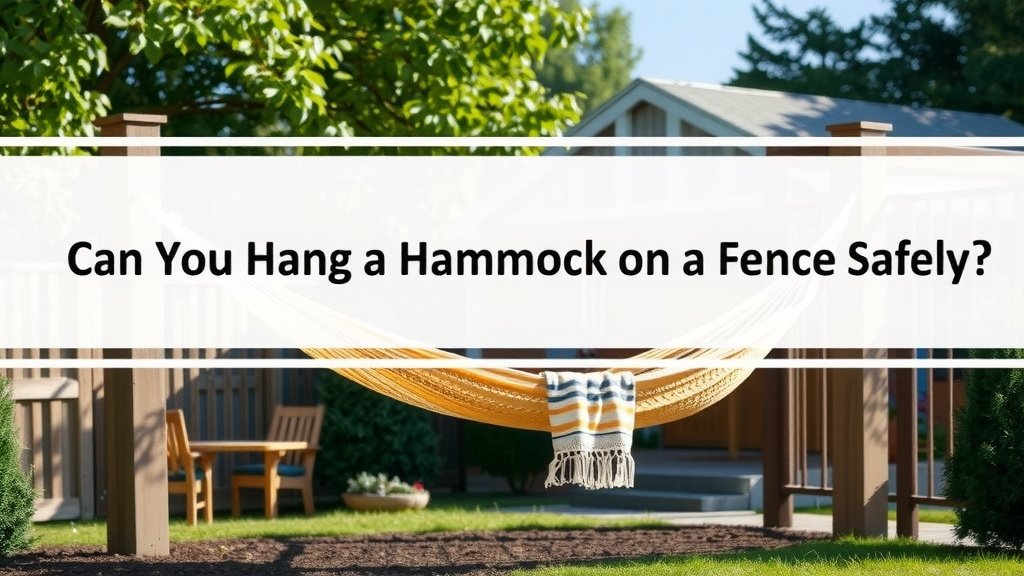
Can You Hang a Hammock on a Fence Safely
You absolutely can hang a hammock on a fence, but it’s not as simple as just tying it up. The key is ensuring your fence posts are sturdy and properly anchored to safely support your weight. Not all fences are built for this, so it’s important to check your fence’s structure first.
Hanging a hammock on a fence can offer a relaxing spot for your backyard oasis. However, doing so incorrectly could lead to a broken fence or an uncomfortable fall. We’ve looked into the best ways to make this happen safely and effectively, focusing on fence post strength and proper anchoring techniques.
- Yes, you can hang a hammock on a fence.
- Make sure your fence posts are strong and secure.
- Avoid attaching to weak or rotted posts.
- Consider extra support if needed.
Let’s walk through exactly how to determine if your fence is up for the task and how to hang your hammock safely.
Assessing Your Fence’s Fitness for Hammock Duty
So, you’re dreaming of lazy afternoons swaying gently in a hammock, your backyard fence acting as your trusty anchor. It’s a lovely thought! But before you get too far ahead of yourself, we need to have a little chat about your fence. Not every fence is ready for the job. Think of it like asking a flimsy noodle to hold up a bowling ball – it’s just not going to end well. Your fence needs to be strong, stable, and securely set.
The Foundation: Your Fence Posts are Key
The absolute most critical component here is your fence posts. These are the unsung heroes that bear the entire weight of the hammock and whoever is relaxing in it. If your posts are wobbly, leaning, or look like they’ve seen better days, they are not suitable anchors. We’re talking about a potential catastrophic fence failure if you try to use weak posts.
Signs of a Strong Post
What does a strong fence post look like? For starters, it should be firmly planted in the ground. When you give it a good shove, it shouldn’t budge. The material itself matters, too. Wood posts should be solid, without signs of rot or insect damage. Metal posts should be free of significant rust or bending.
Warning Signs to Watch For
On the flip side, be on the lookout for any of these red flags. Posts that are loose, tilting, or sinking into the ground are a no-go. Check for soft spots or crumbling wood near the base. For metal posts, extensive rust, especially near the ground, can weaken them considerably. Any doubt means finding another solution.
Understanding Fence Construction: What to Avoid
The way your fence was built also plays a huge role. Some fencing styles are inherently stronger than others. We’ve seen many fences that look perfectly fine from a distance but have some hidden structural weaknesses.
Vinyl and Chain-Link Fences: A Word of Caution
Fences made from vinyl or chain-link are often not the best candidates for hanging hammocks. While they look nice and require little maintenance, their posts are typically set in concrete just a few feet deep. This setup might be fine for containing a pet but is generally not strong enough to handle the dynamic forces of a swinging hammock. You risk pulling the posts right out of the ground. Many experts advise against using these for hammock support (Consumer Reports).
Wood and Metal Picket Fences: Potential Candidates
Sturdy wood fences with strong posts set deep in the ground can be excellent hammock anchors. The same applies to some heavier-duty metal fences. The key is always the depth and stability of the posts themselves. Ensure the posts are substantial, not thin pickets that are just attached to a frame.
Safely Attaching Your Hammock to a Fence
Alright, you’ve assessed your fence and determined that your posts are solid as a rock. Now comes the exciting part: actually hanging your hammock! It’s important to do this in a way that won’t damage your fence or, more importantly, put you at risk of falling.
Choosing the Right Attachment Points
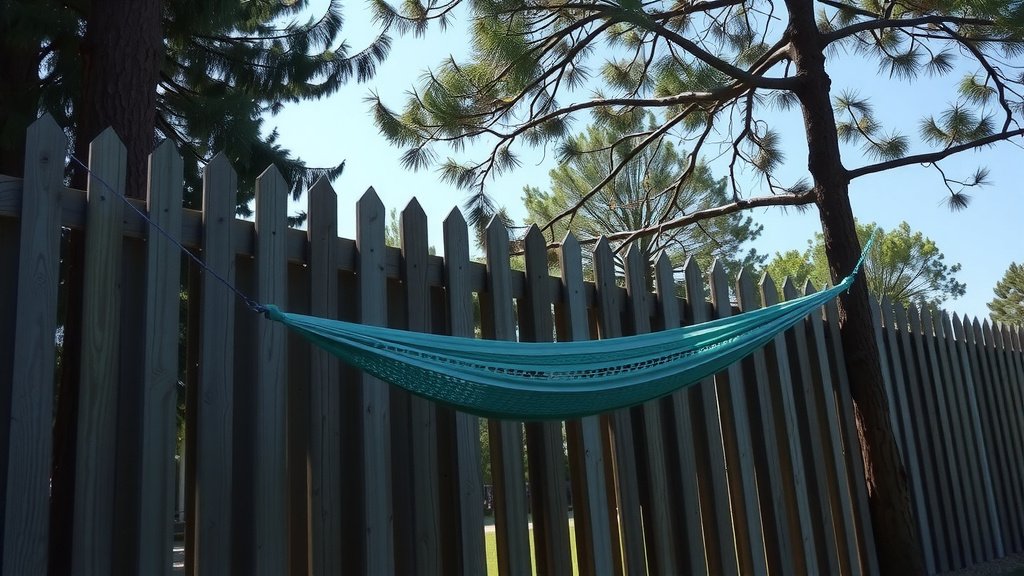
You need to attach your hammock straps or ropes to the fence posts, not the fence panels themselves. The panels are usually just decorative or designed to keep things out, not to bear weight. Attaching to the panels is a surefire way to end up with a broken fence section. You need to find the thickest, strongest part of the post.
Hammock Straps vs. Rope
Hammock straps are generally the preferred method. They are wide and distribute the pressure evenly, reducing the chance of damaging the fence post. Rope can work, but if it’s too thin or you tie it too tightly, it can cut into the wood. If you opt for rope, make sure it’s strong, rated for outdoor use, and consider padding the post where the rope will sit. Many hammock manufacturers recommend wide webbing straps for this very reason.
Height and Spacing Considerations
The ideal height for your hammock will depend on the specific hammock and your personal preference for how low you want it to hang. A general rule of thumb is to hang it about 6 feet off the ground. The distance between your anchor points should also be considered. Check your hammock’s instructions for the recommended span. Too close, and it will be too tight; too far, and it might sag too much.
Reinforcing Your Fence for Hammock Use (If Necessary)
What if your fence posts are okay but not exactly overkill? Maybe they’re a little shallow, or you just want that extra peace of mind. Fortunately, there are ways to add support. Think of it as giving your fence a little hug.
Adding Support Posts
You can install additional posts near your existing ones. Dig holes and set these new posts in concrete. Then, you can connect them to the existing posts with sturdy lumber, creating a much stronger anchor point. This is a great option if your fence is older or you plan on frequent hammock use.
Bracing Techniques
Another effective method is bracing. You can add diagonal braces from the existing fence posts to the ground. These braces act like stilts, taking some of the strain off the main posts and preventing them from leaning or buckling under weight. Many DIY guides show simple bracing methods that don’t require extensive construction.
Your Hammock Hanging Checklist
Before you commit to hanging, give this quick checklist a run-through:
- Are my fence posts set deep and stable in the ground?
- Are the posts free from rot, significant rust, or damage?
- Am I attaching to the posts themselves, not the fence panels?
- Are my hammock straps or ropes rated for the weight?
- Do I need to add any extra bracing or support?
- Is the area around the hammock clear of obstacles?
By taking these steps, you can significantly increase the chances of a safe and enjoyable hammock experience. It’s all about being a bit of a detective with your fence and giving it the support it needs.
Conclusion
So, can you hang a hammock on a fence? The answer is a resounding yes, but with important caveats! Your fence posts are the key to safety. Always assess their stability and condition before you even think about attaching straps. Avoid flimsy vinyl or chain-link, and focus on robust wood or metal posts that are firmly set. If your fence needs a little extra help, consider adding support posts or bracing. By following these guidelines, you can transform your fence into a secure anchor for your relaxing hammock retreat. Now go ahead and get ready to sway!
Frequently Asked Questions
What’s the minimum distance between fence posts to hang a hammock?
The ideal distance depends on your specific hammock’s length. Generally, you’ll want your fence posts to be about 10 to 15 feet apart for most standard hammocks. Always check your hammock’s manual for the manufacturer’s recommended span to ensure proper sag and comfort.
Can I hang a hammock on a fence panel instead of a post?
No, you absolutely should not hang a hammock on fence panels. Panels are not designed to bear significant weight and can break easily, leading to a fall. Always attach your hammock straps or ropes directly to the sturdy fence posts themselves.
What kind of damage can happen if I hang a hammock on a weak fence?
Hanging a hammock on a weak fence can result in the posts breaking or pulling out of the ground. This could cause the hammock to fall, potentially injuring you. It can also lead to costly repairs for your fence. Prioritizing post strength is essential for both safety and your fence’s integrity. Prioritizing post strength is essential for both safety and your fence’s integrity.
How deep should fence posts be for hammock support?
While there’s no single rule, fence posts that are sturdy enough for hammock support are typically set at least 2 feet deep in the ground, often more for taller fences or in areas with softer soil. They should feel solid and immovable when you push against them.
Can I use tree straps if I’m hanging a hammock on a fence?
While tree straps are designed for trees, the concept is similar. You’re looking for wide webbing to distribute pressure. However, many dedicated hammock straps are specifically designed for wider compatibility and might be a better choice. If you use tree straps, ensure they are rated for the weight and won’t damage the fence post material.