

Best Indoor Hammock Placement: Where To Hang Yours
You absolutely can hang a hammock indoors, and it’s a fantastic way to create a cozy relaxation spot! The trick is finding the right support system and location. Many people successfully hang hammocks from ceiling beams or use sturdy hammock stands for a setup that requires no permanent installation.
Turning a corner of your home into your personal hammock haven is easier than you might think. We found that with a little planning, you can enjoy the gentle sway of a hammock without damaging your walls or ceiling. It’s a great way to add a touch of vacation vibes to your everyday life, whether you choose a permanent fixture or a temporary solution.
- Hang hammocks from strong ceiling beams or joists.
- Use a hammock stand for a movable and non-permanent option.
- Ensure anchor points are securely mounted into wall studs for wall-mounted setups.
- Consider the space needed for comfortable swinging and entry/exit.
- Choose a spot that enhances your room’s ambiance and your relaxation needs.
Ready to find the perfect spot for your indoor hammock? Let’s walk through the best options and how to set them up safely.
Finding the Perfect Spot for Your Indoor Hammock Setup
You’re dreaming of a cozy hammock nook. Where can you actually hang it indoors? Many people successfully hang hammocks from strong ceiling structures. Others opt for freestanding hammock stands. Both are excellent choices. We’ve found that with the right approach, you can enjoy your hammock without causing damage.
Hanging Your Hammock from the Ceiling
Hanging a hammock from the ceiling is a popular method. It creates a wonderful, suspended oasis. This method requires careful planning and secure installation. You’ll want to ensure it’s done safely.
Locating Your Ceiling Joists
The key to a secure ceiling mount is finding ceiling joists. These are the sturdy beams that support your ceiling. They provide the necessary strength. Without them, your hammock could pull away from the ceiling. You can usually find joists using a stud finder. It’s a simple tool that detects changes in density. Mark the center of each joist you find.
Using a Stud Finder
A good quality stud finder is your best friend here. Most work by detecting the solid wood behind drywall. Follow the instructions carefully. You might need to make a few passes. Look for a consistent reading. This indicates you’ve located the center of a joist. Having a helper can make this process easier.
Alternative Methods for Finding Joists
If you don’t have a stud finder, you can try other methods. Sometimes, you can find joists by tapping on the ceiling. Listen for a solid sound versus a hollow one. You can also look for existing nail holes or fixtures. They often align with joist locations. Be patient; finding the exact center is important.
Choosing the Right Hardware
Once you’ve located your joists, you need the right hardware. Heavy-duty eye bolts or lag screws are typically recommended. Make sure they are long enough to penetrate well into the joist. You want at least an inch or two of the bolt embedded. We found that specialized hammock mounting kits are also available. They often come with all the necessary hardware and instructions.
Installation Steps for Ceiling Mounts
Drill a pilot hole first. This makes screwing in the eye bolt much easier. The pilot hole should be slightly smaller than the bolt’s diameter. Screw the eye bolt in securely. Ensure it feels very firm and doesn’t wiggle. Repeat this process for the second anchor point. The distance between anchors depends on your hammock’s length. Check your hammock’s manufacturer recommendations. You want it to hang with a gentle curve.
Mounting Your Hammock to the Walls
Wall mounting is another excellent option. This is especially useful if your ceiling joists aren’t conveniently located. It relies on anchoring into wall studs. These are vertical beams within your walls.
Identifying Wall Studs
Similar to ceiling joists, finding wall studs is crucial. Use your stud finder here too. Run it vertically along the wall. Mark the edges and then the center of each stud. Most studs are spaced 16 or 24 inches apart. Always verify. A missed stud means a weak anchor point.
Choosing Wall Anchors
You need strong anchors for wall mounts. Lag screws that go directly into studs are ideal. Avoid using standard drywall anchors. They are not designed for the weight a hammock can hold. If you’re unsure about finding studs, consider consulting a professional. They can ensure a safe installation.
Spacing and Angle Considerations
The spacing of your wall anchors is important. It usually mirrors the length of your hammock. You’ll also want to consider the angle. Anchors placed slightly higher on the wall can give your hammock a more comfortable hang. This prevents it from feeling too flat.
The Convenience of Hammock Stands
If drilling into your walls or ceiling feels daunting, a hammock stand is a fantastic solution. These stands require no permanent installation. They are perfect for renters or those who like to rearrange their space often. Stands come in various materials, like metal or wood.
Types of Hammock Stands
There are many types available. Some are simple A-frame designs. Others are more elaborate, offering curved aesthetics. You can find options designed for single or double hammocks. Always check the weight capacity of the stand. Ensure it’s suitable for the users.
Advantages of Freestanding Hammocks
The biggest advantage is portability. You can easily move your hammock to different rooms or even outdoors. It’s like having a piece of portable furniture. Setting them up is usually very straightforward. Many require just a few minutes and no tools.
Choosing the Right Location in Your Room
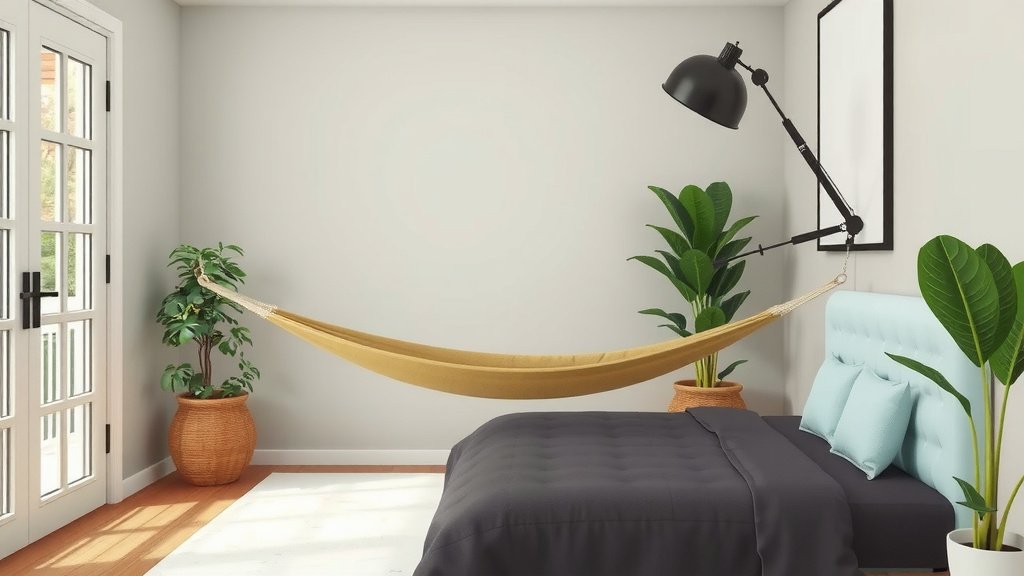
Beyond structural support, think about the ambiance and functionality. Where will your hammock best serve you? Consider a quiet corner for reading. Perhaps near a window for natural light. Make sure there’s enough space around it for comfortable entry and exit.
Space Requirements for Swinging
Hammocks need room to sway. A good rule of thumb is to ensure at least three feet of clearance on all sides. This prevents you from bumping into furniture or walls. Measure the intended space before you buy or install anything. You want a smooth, uninterrupted swing.
Considering Natural Light and Views
Positioning your hammock near a window can be very appealing. Enjoying a book or a nap with natural light can be wonderfully relaxing. A view of the outdoors can enhance the experience. Think about the time of day, too. Will the sun be too bright? You might need curtains or blinds.
Integrating with Your Decor
Your hammock should complement your room’s style. Choose a hammock and stand that match your existing decor. Many hammocks come in a variety of colors and patterns. A stylish stand can become a focal point. It can add a touch of bohemian charm or modern flair.
Safety First: Essential Installation Checklist
No matter your chosen method, safety is paramount. We’ve put together a quick checklist to guide you:
- Verify structural support (joists or studs) thoroughly.
- Use heavy-duty hardware rated for weight.
- Drill pilot holes for easier installation.
- Ensure all bolts and screws are tightly secured.
- Check the weight limit for your hammock and hardware.
- Allow adequate space for safe entry and exit.
Conclusion
You’ve learned that creating your indoor hammock sanctuary is totally achievable! Whether you’re opting for a secure ceiling mount into joists, a strong wall anchor into studs, or the easy convenience of a freestanding stand, the key is prioritizing safety and a good location. We’ve seen that with the right hardware and a bit of planning, you can add a wonderful spot for relaxation to your home without any damage. Now, take a moment to measure your space and pick the method that feels right for you. Your cozy hammock corner awaits!
Frequently Asked Questions
Can I hang a hammock indoors without drilling?
Yes, you absolutely can! A freestanding hammock stand is the perfect solution if you don’t want to drill into your walls or ceiling. These stands require no installation and are often portable, letting you move your hammock around your home with ease.
How far apart should hammock hooks be in the ceiling?
The ideal distance between ceiling hooks depends on your hammock’s length and how you want it to hang. Generally, the hooks should be spaced about 10-15 feet apart for most standard hammocks. Always check your hammock manufacturer’s recommendations for the best placement and sag.
What is the minimum ceiling height for an indoor hammock?
While there’s no strict minimum, a ceiling height of at least 8 feet is recommended for a comfortable indoor hammock experience. This allows for adequate clearance when you’re in the hammock and prevents it from feeling too low or cramped.
Can I hang a hammock from a single beam instead of two points?
Hanging from a single beam isn’t ideal for most hammocks, as it typically requires two anchor points for stability and proper hang. If you only have one sturdy beam, you might need to consider alternative methods like a hammock stand or carefully mounting two separate anchors into that beam, ensuring it’s strong enough.
How much weight can typical indoor hammock anchors support?
Heavy-duty eye bolts or lag screws installed directly into solid wood (like ceiling joists or wall studs) can often support between 300 to 500 pounds, sometimes more. Always use hardware specifically rated for overhead use and double-check the weight capacity of your hammock and any stand you use.