Easy Tree Straps for Your Hammock: A How-To Guide
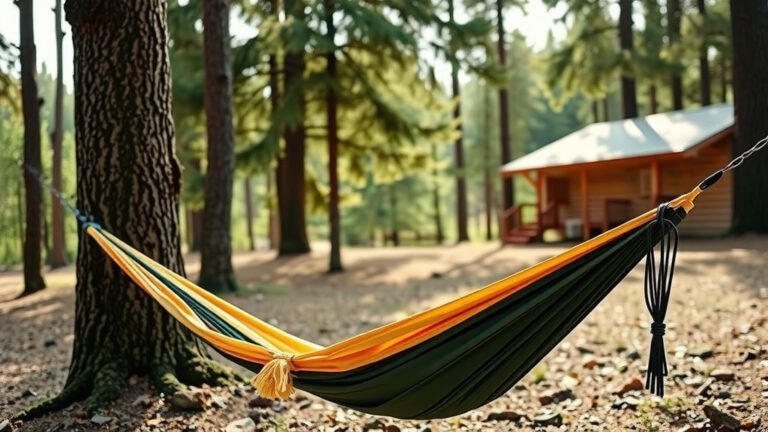
Using tree straps to hang your hammock is simple and safe when done correctly. You just loop them around a tree and attach your hammock using carabiners or S-hooks. This method protects the trees and keeps your hammock secure.
Tree straps are a popular choice because they distribute your weight evenly. This prevents damage to the tree’s bark, unlike ropes that can cut in. Many hammock brands recommend using straps for their longevity and tree-friendliness.
- Wrap straps around trees.
- Attach hammock to straps.
- Ensure straps are secure.
- Enjoy your relaxed hang.
Ready to get your hammock set up? Let’s walk through exactly how to use tree straps step by step.
## Setting Up Your Hammock Safely with Tree StrapsSo, you’ve got your hammock and you’re ready to hang it. Using tree straps is a fantastic way to do it. They’re gentle on trees and super effective. Let’s get your hammock ready for some serious relaxation!
Choosing the Right Tree and Location
Before you even think about straps, picking the right trees is key. You need two strong trees that are spaced apart correctly. Think of them as your hammock’s anchor points. They should be healthy and mature. Avoid young saplings or trees that look sick or damaged. We want a hang that’s both comfortable and secure.
Assessing Tree Health
How can you tell if a tree is up for the job? Look for signs of decay or rot. Are there large dead branches? Is the bark peeling off in huge chunks? These are red flags. You’re looking for trees with a solid trunk and no visible disease. The American Society of([(Am. Soc. of Arborists)]) recommends looking for a diameter of at least 6 inches for most hammock setups. This ensures the tree can handle the weight without harm.
Determining the Right Distance
The distance between your trees will dictate how your hammock hangs. A general rule is that the trees should be about 10-15 feet apart. This gives your hammock enough slack to create that perfect cozy curve. Too close, and your hammock will be too tight. Too far, and you might not have enough strap length or the tension will be off. Measure the distance before you start. It’s like planning your route before a road trip.
The Proper Way to Attach Tree Straps
Now, let’s get those straps onto the trees. This is where the magic happens. Tree straps are designed to spread your weight out. This prevents them from digging into the tree’s bark. It’s a win-win for you and the tree!
Wrapping the Straps
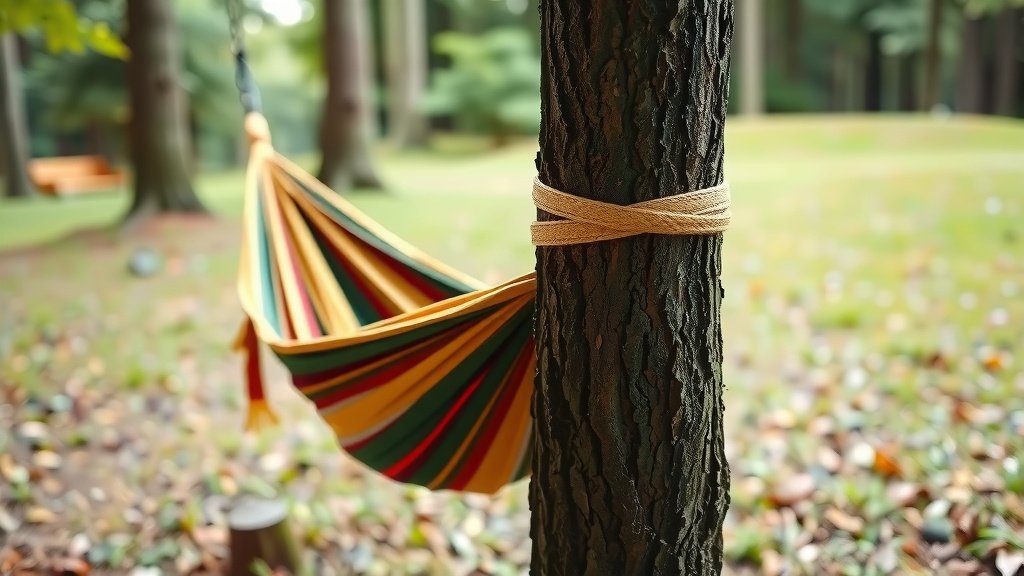
Take one tree strap and find the middle point. Loop this middle section around the trunk of your first tree. Bring the strap around so it hangs down. Make sure the strap isn’t twisted. A smooth, flat hang is what you’re aiming for. Most straps have multiple loops or stitching. These are your connection points for your hammock.
Securing the Strap
Once looped, you’ll usually feed one end of the strap through a loop on the other end. This creates a secure anchor. Think of it like threading a shoelace, but much stronger! Pull it snug. It shouldn’t slip down the tree trunk. Some straps might have a buckle system. Follow the instructions for your specific straps. The goal is a firm grip.
Repeating for the Second Tree
Now, do the exact same thing for your second tree. Wrap the second strap around the trunk. Feed the end through its loop and pull it tight. You should now have two straps hanging from your trees, ready to receive your hammock. Check that both straps are at a similar height. This will help your hammock hang level.
Connecting Your Hammock
With the straps securely in place, it’s time to connect your hammock. This is usually done with carabiners or S-hooks. These are the metal clips that come with many hammocks, or you can buy them separately.
Attaching to the Strap Loops
Look at your tree straps. You’ll see those reinforced loops we talked about. Choose the loop that gives you the desired height and tension for your hammock. Connect your carabiner or S-hook to this chosen loop. Then, clip the other end of the carabiner or hook to the suspension point on your hammock. This is typically a fabric loop at each end of the hammock.
Achieving the Right Sag
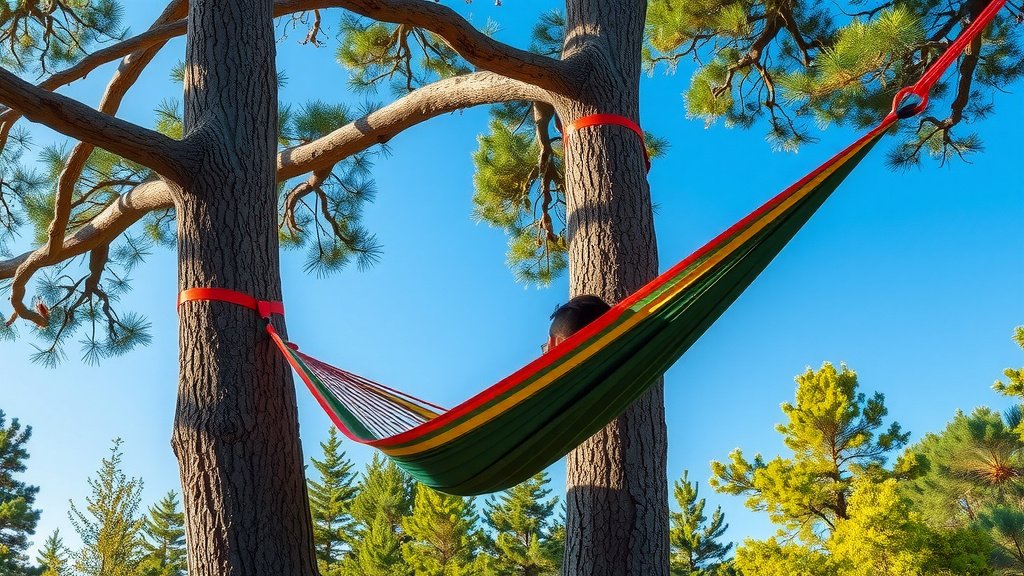
The way your hammock hangs is important for comfort. You want a nice, gentle curve. It shouldn’t be stretched out like a tight clothesline. Nor should it be so loose that you’re practically on the ground. Research suggests that a 30-degree angle from the suspension point to the hammock body is ideal for ergonomic comfort (Am. Acad. of Orthopaedic Surgeons). You might need to adjust which loop you use on the strap to get this perfect sag. Play around with it until it feels right.
Final Checks Before You Relax
Before you fully commit and lie down, a quick safety check is a must. It’s like looking both ways before crossing the street. You want to be sure everything is stable.
- Test the Tension: Gently put some weight into the hammock. Push on it with your hands. Listen for any creaking or slipping sounds.
- Inspect the Straps: Make sure the straps are still firmly around the trees. Check that they haven’t shifted or started to slide.
- Check Connections: Ensure your carabiners or hooks are properly closed and latched. Nothing should feel loose.
Once you’re confident everything is secure, you can carefully ease yourself into your hammock. Congratulations, you’ve successfully set up your hammock using tree straps!
Conclusion
You’ve learned how to safely and effectively hang your hammock using tree straps. Remember, choosing healthy trees spaced 10-15 feet apart is your first step. Properly wrapping and securing the straps prevents tree damage. Finally, connecting your hammock and checking for the ideal sag ensures a comfortable and secure experience. Now you’re ready to find your perfect spot and enjoy some well-deserved relaxation. Go ahead and hang it up – your adventure awaits!
Frequently Asked Questions
Can I use regular rope instead of tree straps?
While rope can hang a hammock, tree straps are highly recommended. Straps distribute weight better, preventing damage to the tree’s bark that rope can cause. Most hammock manufacturers suggest straps for protecting trees and ensuring hammock longevity.
How high should I hang my hammock using straps?
The ideal height depends on your preference and the hammock’s length. A good starting point is to have the suspension point about 6 feet off the ground. Aim for a sag that creates about a 30-degree angle with the hammock body for ergonomic comfort.
What if my trees are not perfectly spaced?
If your trees are a bit closer or further apart, you can often adjust. For closer trees, use a higher loop on the straps or a shorter strap set. For trees further apart, ensure your straps are long enough or consider using suspension extenders.
How do I know if my tree straps are secure enough?
Before getting in, always test the tension. Gently lean into the hammock and listen for any slipping sounds from the straps. Visually inspect that the straps are snug around the tree trunk and haven’t slid down.
What should I do if my hammock feels too tight or too loose?
You can easily adjust the tension by selecting different loops on your tree straps. For a tighter hang, move your connection point to a loop closer to the tree. For a looser hang, use a loop further away from the tree trunk.