Best Thread for Sewing a Hammock: A Guide
For sewing a hammock that’s built to last, you’ll want to use a strong, UV-resistant thread. Polyester or nylon threads are excellent choices because they are known for their durability and resistance to stretching, which is key for a hammock that will bear weight and face the elements.
Choosing the right thread is more than just picking a color. It’s about ensuring your handmade hammock can handle the strain and won’t degrade quickly from sun exposure. We’ve found that the best threads offer excellent abrasion resistance, preventing wear and tear over time.
- Use polyester or nylon thread for hammock sewing.
- Look for threads that are UV-resistant.
- Consider threads with good abrasion resistance.
- A thread with a slightly thicker denier is usually better.
Let’s dive into the specifics of what makes a thread perfect for your hammock-making project, ensuring it’s both comfortable and incredibly sturdy.
Selecting the Ideal Thread for Your Hammock Project
When you’re crafting a hammock, the thread you choose plays a starring role. It’s the unsung hero holding everything together, bearing your weight, and enduring sunny days and unexpected showers. We’ve researched what makes a thread truly great for this job, and it boils down to a few key properties.
You want a thread that’s not going to break under pressure or degrade when exposed to the sun. Think of it like choosing the right rope for a swing; it needs to be strong and dependable. A good thread ensures your hammock remains a safe and comfortable spot for years to come.
Why Material Matters for Hammock Thread
The type of fiber your thread is made from is the first big decision. Different materials have unique strengths that make them better suited for outdoor gear like hammocks.
Polyester: A Top Contender
Many experts point to polyester thread as a fantastic choice for sewing hammocks. It’s known for its excellent strength. Polyester doesn’t absorb much moisture, which is great for when your hammock gets left out in the rain. It also resists shrinking and stretching, keeping your stitches tight and secure.
Polyester is also quite resistant to UV rays, meaning it won’t break down as quickly when exposed to sunlight. This durability is key for a hammock that will likely spend a lot of time outdoors. We found that polyester offers a great balance of strength, flexibility, and longevity for this type of project.
Nylon: Another Strong Option
Nylon thread is another excellent material to consider. Like polyester, it boasts impressive strength and good resistance to abrasion. Nylon is also known for its elasticity, meaning it can stretch a bit without breaking. This can be beneficial for a hammock, as it allows for some give and flexibility.
However, nylon can absorb more moisture than polyester, which might be a slight drawback if your hammock is frequently exposed to wet conditions. It can also degrade faster under prolonged UV exposure compared to some specialized polyester threads. Still, for many applications, nylon provides the necessary toughness.
Nylon vs. Polyester: A Quick Look
When comparing the two, polyester often gets the nod for its superior UV resistance and lower moisture absorption. This makes it slightly more ideal for hammocks that will be used outdoors regularly. However, both are robust choices that will serve you well.
Other Materials to Consider (and Maybe Avoid)
While cotton thread is lovely for quilting or apparel, it’s generally not recommended for hammocks. Cotton absorbs water readily and can become heavy and prone to mildew. It also doesn’t hold up well to prolonged sun exposure and can weaken over time.
We also looked at specialty threads. Some high-performance threads might offer even greater UV or abrasion resistance, but they can also come with a higher price tag. For most DIY hammock projects, high-quality polyester or nylon will be more than sufficient.
Understanding Thread Strength: Denier and Tex
When you’re looking at thread, you’ll see terms like “denier” or “Tex.” These are ways to measure the thread’s thickness and strength. It’s important to pick a thread that’s substantial enough for the job.
What is Denier?
Denier is a measurement system used for fibers and yarns. It’s defined as the mass in grams per 9,000 meters of yarn. A higher denier number means a thicker, stronger thread. For sewing a hammock, you’ll want a thread with a decent denier, typically in the range of 60 to 100 denier.
Think of it this way: a finer thread, like one you might use for a delicate blouse, would have a very low denier. A heavy-duty thread for canvas tents or upholstery would have a much higher denier. For a hammock that needs to support weight, you need something in the mid-to-heavy range.
What is Tex?
Tex is another unit of linear density. It measures the mass in grams per 1,000 meters of yarn. Similar to denier, a higher Tex number indicates a thicker, stronger thread. If you see Tex numbers, look for something in the range of 6 to 10 Tex for your hammock project.
You might see thread labeled with either denier or Tex. It’s helpful to know what these mean so you can compare different threads and make an informed choice. We found that threads around 70-80 denier or 7-8 Tex are often a sweet spot for durability and ease of sewing.
The Importance of UV Resistance
Hammocks are often used outdoors, meaning they’ll be exposed to the sun’s powerful rays. Ultraviolet (UV) radiation can break down the fibers in thread, making them weak and brittle. This is why UV resistance is a non-negotiable feature.
Polyester generally offers good UV resistance. However, some polyester threads are specifically treated or engineered for even better performance in sunlight. If your hammock will be in direct sun for many hours a day, opting for a thread that explicitly states “UV-resistant” or “outdoor” is a wise move.
We found that threads designed for outdoor applications, such as marine or awning use, typically have superior UV protection. While they might cost a bit more, the extended lifespan of your hammock will likely justify the expense. It’s like choosing outdoor furniture cushions that won’t fade after one summer.
Abrasion Resistance: Battling Wear and Tear
Your hammock will likely rub against itself, suspension lines, or even the ground occasionally. This friction can wear down weaker threads over time. Abrasion resistance refers to a thread’s ability to withstand this rubbing and scraping without fraying or breaking.
Strong synthetic fibers like polyester and nylon are naturally quite resistant to abrasion. However, the way the thread is constructed also plays a role. Threads made with tightly twisted plies tend to be more durable. When you’re selecting your thread, look for descriptions that mention “high abrasion resistance”.
Imagine your hammock being used on a weekend camping trip, perhaps near some rocks or rough tree bark. A thread with good abrasion resistance will hold up much better to these kinds of encounters. It’s a key factor in ensuring your hammock doesn’t develop weak spots prematurely.
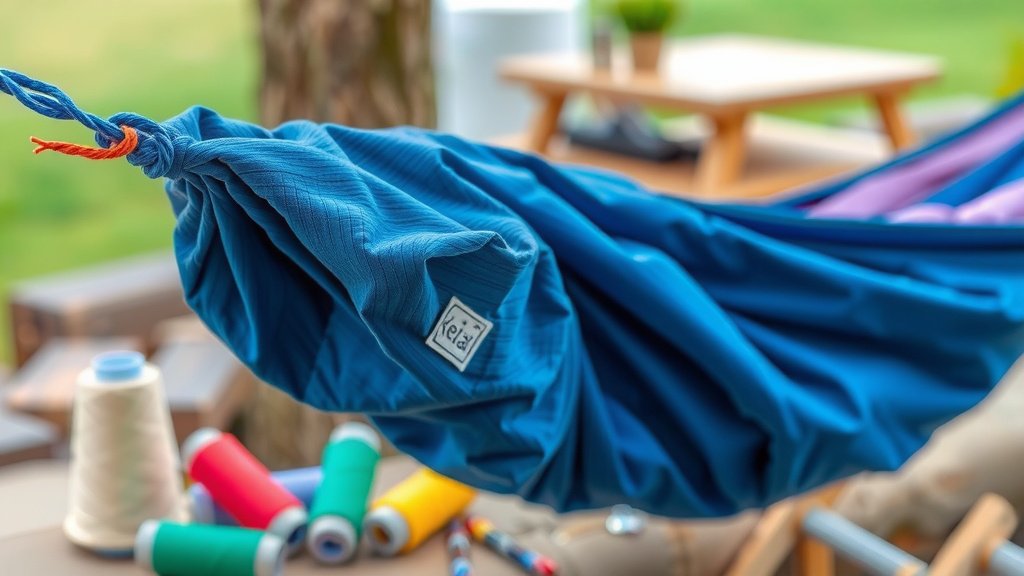
Color Choices and Thread Function
While color is often a matter of personal preference, it can sometimes hint at a thread’s properties. For instance, darker colors might absorb more heat, but this is usually a minor concern for the thread itself.
More importantly, some threads designed for outdoor use might have specific color treatments to enhance UV stability. However, don’t let color be the deciding factor. Always prioritize the material, denier/Tex, and resistance properties we’ve discussed.
We found that many manufacturers offer a good range of colors in their durable polyester and nylon threads, so you shouldn’t have to sacrifice aesthetics for performance. You can often find a color that perfectly complements your hammock fabric.
Matching Thread to Your Hammock Fabric
The type of fabric you use for your hammock also influences your thread choice. If you’re working with a heavy-duty canvas or ripstop nylon, you’ll need a correspondingly strong thread.
Heavy-Duty Fabrics
For materials like canvas, upholstery fabric, or thick ripstop nylon, a thread in the higher end of our recommended denier range (around 80-100 denier or 8-10 Tex) is a good idea. This ensures the thread can penetrate the fabric easily and create strong stitches that won’t pull through.
Lighter-Weight Fabrics
If your hammock is made from a lighter fabric, such as parachute nylon or a lighter-weight outdoor fabric, you might get away with a slightly lower denier thread (around 60-70 denier or 6-7 Tex). However, it’s generally better to err on the side of caution and use a robust thread.
The key is to ensure the thread’s strength matches or exceeds the fabric’s strength. You don’t want your stitches to be the weak link in your hammock’s construction. Many sewing machine manuals offer guidance on thread weight recommendations for different fabric types.
Quick Checklist for Choosing Hammock Thread
Before you head to the store or click “add to cart,” run through this quick checklist:
- Material: Is it polyester or nylon?
- Strength: Is the denier (60-100) or Tex (6-10) appropriate? Is the denier (60-100) or Tex (6-10) appropriate for your hammock project?
- UV Resistance: Is it rated for outdoor use or explicitly UV-resistant?
- Abrasion Resistance: Does the description mention it can handle wear and tear?
- Color: Does it come in a color you like (and is it from a reputable brand)?
By focusing on these points, you’re setting yourself up for success. You’ll create a hammock that not only looks great but is also incredibly sturdy and built to last through countless relaxing moments.
Conclusion
You’re now well-equipped to choose the perfect thread for your hammock project! Remember, the key is selecting a strong, durable thread made from polyester or nylon. Look for threads with good UV and abrasion resistance, and pay attention to the denier or Tex rating to ensure it’s thick enough to handle the weight. Your handmade hammock will thank you with years of comfortable relaxation. So, gather your materials and get ready to stitch together your very own cozy getaway!
Frequently Asked Questions
What’s the difference between polyester and nylon thread for hammocks?
Polyester thread generally offers better UV resistance and absorbs less moisture, making it ideal for hammocks left outdoors. Nylon is also very strong and has a bit more stretch, which can add flexibility.
Can I use regular sewing thread from a craft store for my hammock?
While some heavy-duty polyester or nylon threads from craft stores might work, it’s best to check their specifications. Threads designed for outdoor or marine use often have superior durability against sun and weather.
Does thread color affect its strength for hammock making?
Color itself usually doesn’t impact strength. However, some darker dyes might absorb more heat, and certain color treatments are used to enhance UV stability in outdoor threads. Always prioritize material and resistance properties over color.
How thick should thread be for sewing a hammock?
You’ll want a thread that’s substantial enough to support weight. We recommend a denier range of 60-100 or a Tex range of 6-10. This ensures your stitches are strong and won’t be the weak point.
Will my hammock thread break if it gets wet?
High-quality polyester and nylon threads are quite resistant to breaking when wet. Polyester is particularly good because it doesn’t absorb much moisture, so it won’t become heavy or significantly weaker when damp.