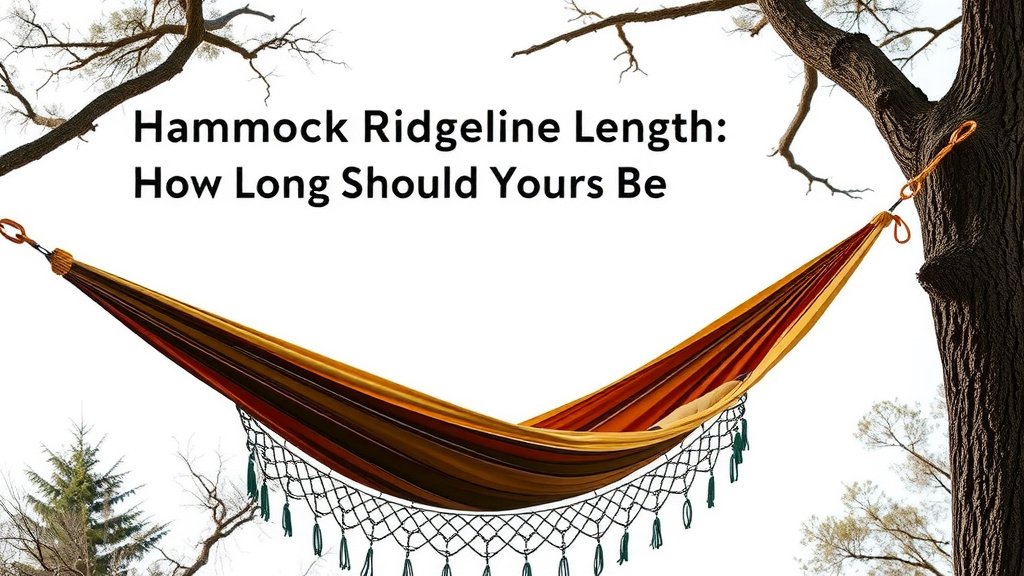
Hammock Ridgeline Length: How Long Should Yours Be
For most hammock setups, your ridgeline should be about 80-85% of the length of your hammock body. This provides a nice, comfortable sag without being too loose or too tight. A common sweet spot for a 10-foot hammock is a ridgeline around 8 to 8.5 feet long.
Getting the ridgeline length right is key to a happy hang. Too long, and your hammock might feel like a floppy noodle. Too short, and it can feel like a stiff board. Many campers find that a ridgeline helps create consistent hang angles, making setup much easier.
- The sweet spot is usually 80-85% of your hammock’s body length.
- For a 10-foot hammock, aim for an 8 to 8.5-foot ridgeline.
- A good ridgeline length prevents a saggy or overly tight hammock.
- It helps achieve consistent, comfortable hang angles every time.
- This makes setting up your hammock a breeze.
Let’s walk through exactly how to figure out the best ridgeline length for your specific hammock setup.
Finding Your Hammock’s Perfect Ridgeline Length
You’ve got your hammock, and you’re ready to hang it. But wait, what about that often-overlooked string? That’s your ridgeline, and its length is more important than you might think. Getting it just right means the difference between a cozy, tent-like shelter and a frustrating sag.
So, how long should this vital piece be? The general rule of thumb is to aim for a ridgeline that’s about 80% to 85% of your hammock’s body length. For example, if your hammock measures 10 feet from end to end, a ridgeline between 8 and 8.5 feet is a great starting point.
Why Ridgeline Length Matters So Much
Think of your ridgeline as the hammock’s backbone. It dictates how much sag you get when you lie in it. Too long, and it’s like trying to sleep in a hammock that’s too big for you – a floppy mess! Too short, and it feels stretched out, like a tight, uncomfortable guitar string. Neither is ideal for a good night’s sleep.
The Science of the Sag
A properly tensioned ridgeline creates a consistent hang angle. This angle is what gives your hammock that sweet, comfortable curve. Many hammock campers have found that a consistent angle feels more like a bed and less like a V-shape. This consistent angle is also key for hanging tarps and bug nets effectively.
The angle you achieve helps your tarp create better coverage. It also pulls your bug net away from your face. This prevents those annoying encounters with tiny critters during the night. Research on optimal hammock hang angles often points to around 30 degrees as a comfortable sweet spot. Your ridgeline helps you achieve this reliably.
Consistency is Key for Easy Setup
Ever set up your hammock and it just feels… off? That’s often a ridgeline issue. A fixed-length ridgeline means your hammock will always hang at the same angle, regardless of the tree spacing. This takes the guesswork out of setting up. You’re not constantly adjusting straps.
This is especially helpful when you’re setting up camp in the dark or in bad weather. Knowing your ridgeline length is dialed in means one less variable to worry about. It’s like having a cheat code for your campsite setup!
Calculating Your Ideal Ridgeline
Let’s get down to the numbers. You’ll need to know the length of your hammock body. Hammock manufacturers usually list this clearly. It’s typically measured from the very tip of one end to the very tip of the other. This measurement doesn’t include the suspension hardware like carabiners or whoopie slings.
The 80-85% Rule in Practice
As we’ve mentioned, the magic number is usually between 80% and 85% of your hammock body length. Let’s look at some common hammock sizes:
| Hammock Body Length | Ideal Ridgeline Length (80%) | Ideal Ridgeline Length (85%) |
|---|---|---|
| 9 feet (108 inches) | 7.2 feet (86 inches) | 7.65 feet (92 inches) |
| 10 feet (120 inches) | 8 feet (96 inches) | 8.5 feet (102 inches) |
| 11 feet (132 inches) | 8.8 feet (106 inches) | 9.35 feet (112 inches) |
You can see how a slight adjustment in ridgeline length can make a difference. For most campers, a ridgeline that’s 80% of the hammock length offers a great starting point for comfort and space.
Adjusting for Personal Preference
While 80-85% is a solid guideline, personal preference plays a role. Some people like a bit more sag, feeling it offers more of a “cocoon” effect. Others prefer a tighter hang, feeling it provides more headroom.
If you’re someone who likes to spend a lot of time sitting up in your hammock, you might prefer a slightly shorter ridgeline. This will keep the sides from collapsing too much around you. If you love to lounge and feel fully enveloped, a slightly longer ridgeline might be more your style.
Many experts suggest experimenting. Start with the 80-85% rule and see how it feels. You can always adjust. It’s like finding your favorite pair of jeans – it might take a try or two!
Factors That Can Influence Your Choice
While hammock length is the primary driver, a few other things can tweak your ideal ridgeline. Think of these as minor adjustments to your recipe.
Your Height and Weight
Taller individuals might find they benefit from a slightly longer ridgeline. This can help create more room inside the hammock. Similarly, if you carry a bit more weight, you might notice a bit more natural sag. You might choose a slightly shorter ridgeline to compensate. Tall individuals may need a slightly longer ridgeline for optimal comfort.
However, we found that for most people, the standard 80-85% rule provides enough flexibility. The hammock material and suspension system also play a role in how it behaves under load. It’s often more about the hammock’s dimensions than the person in it.
Hammock Material and Design
Different hammock materials have varying degrees of stretch. A stretchy nylon might sag more than a stiffer polyester. Manufacturers design their hammocks with specific materials in mind. The 80-85% rule generally accounts for these differences.
Some hammocks are also designed with specific shapes or spreader bars. These can affect how the ridgeline functions. Always check the manufacturer’s recommendations if they offer them. They know their product best!
Tips for Getting Your Ridgeline Right
Ready to dial in your perfect hang? Here are a few practical tips to make the process smooth:
- Measure Twice, Cut Once: If you’re making your own ridgeline, measure your hammock body accurately.
- Start with the Middle: Aim for the 80-85% rule as your starting point.
- Test and Adjust: Lie in your hammock. Does it feel too tight? Too loose? Make small adjustments.
- Consider Your Tarp: Ensure your ridgeline length works well with your tarp for good coverage.
- Mark Your Lines: Once you find your sweet spot, consider marking your suspension lines or using an adjustable ridgeline.
Having a ridgeline that’s the right length is more than just comfort; it’s about creating a reliable and enjoyable camping shelter. It transforms your hammock from a simple sling into a cozy, well-pitched home away from home.
Conclusion
You’ve learned that a hammock ridgeline length of 80-85% of your hammock’s body length is your magic number for a comfortable hang. This simple guideline helps you achieve the perfect sag, ensuring your hammock feels cozy, not like a floppy mess or a stiff board. It makes setting up your shelter easier every time, especially when you’re dealing with tricky trees or bad weather. Now you’re ready to measure your hammock and string up that ideal ridgeline for your next adventure. Go out there and enjoy your perfectly hung hammock!
Frequently Asked Questions
Can I use a ridgeline that’s too long?
Yes, a ridgeline that’s too long will create excessive sag. This can make your hammock feel overly loose and might reduce your headroom. It could also cause your tarp to sag in ways that reduce coverage, leaving you exposed.
What if my ridgeline is too short?
If your ridgeline is too short, your hammock will feel very tight and have little to no sag. This can lead to an uncomfortable, board-like experience. It also makes it difficult to achieve the optimal 30-degree hang angle for comfort and proper tarp setup.
Do I need a ridgeline if my hammock came with one?
Most hammocks sold for backpacking come with a fixed ridgeline. If yours has one, it’s likely designed to be around the 80-85% sweet spot. You can use it as is, or adjust it if you find the hang isn’t quite right for you.
How do I adjust my ridgeline length?
Many modern hammock suspension systems allow for easy adjustment. You can often use whoopie slings or adjustable toggles to change the ridgeline length. If you’re making your own, you can simply tie a new loop or adjust the knot.
Will my personal weight affect my ideal ridgeline length?
While your weight does add sag, the ridgeline length is primarily determined by the hammock’s body length. The 80-85% rule generally accounts for typical weight ranges. You can fine-tune slightly based on preference, but the hammock’s dimensions are the main factor.