Understanding Your Hammock Ridgeline: A Beginner’s Guide
A hammock ridgeline is a fixed-length suspension cord that connects the two ends of your hammock. It helps you achieve a consistent hang angle every time you set up camp. This means your hammock will always sag to the same comfortable depth. Think of it as a trusty guide for your cozy nighttime abode.
We found that many hammock campers rely on a ridgeline for predictable setup. It’s a simple yet brilliant addition for any hammock system. It ensures your tarp also hangs at the right height, creating a perfectly pitched shelter. Proper tensioning is key for a stable and enjoyable sleep.
- A hammock ridgeline is a cord.
- It connects both ends of your hammock.
- It ensures a consistent hang angle.
- This makes setup easier and faster.
Ready to make your hammock setup consistently perfect? Let’s walk through exactly what a ridgeline is and why you’ll want one.
“`htmlUnderstanding Your Hammock Ridgeline Setup
So, what exactly is a hammock ridgeline and why do so many campers swear by it? Simply put, it’s a sturdy cord running between the two suspension points of your hammock. Its main job is to control the sag of your hammock. This might sound small, but it makes a huge difference in comfort and shelter setup.
Think of your hammock like a piece of fabric. Without anything to stop it, it can sag too much or too little. A ridgeline sets a consistent length for this sag. This ensures your hammock always hangs at that perfect, cozy depth. We found that once you try it, you won’t want to go back. It truly levels up your hang.
The Purpose Behind the Ridgeline
The primary goal of a hammock ridgeline is to offer predictable comfort. Hammock camping is all about finding that sweet spot of relaxation, right? A ridgeline helps you achieve that every single time you set up camp. It takes the guesswork out of getting that perfect, comfortable curve.
Achieving the Perfect Hang Angle
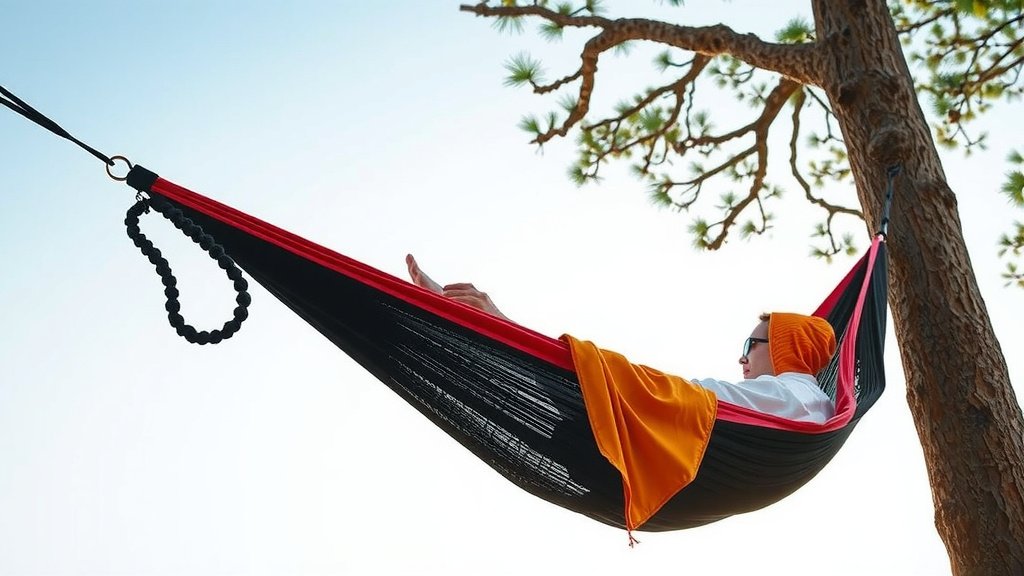
Your body weight naturally pulls your hammock down. How much it sags depends on how tight or loose your suspension is. A ridgeline acts as a fixed reference point. This means no matter where you tie your hammock off, the ridgeline ensures the same amount of sag. This consistent angle is key for your body’s alignment.
Many sources suggest that a hang angle between 15-30 degrees is ideal for comfort (Hammock Camping 101). Too steep, and it feels like you’re in a banana. Too flat, and you might feel like you’re sliding out. Your ridgeline helps you nail this angle without fiddling endlessly.
Simplifying Your Shelter Setup
This is where the ridgeline really shines for many hammock users. It doesn’t just affect your hammock; it directly influences your tarp setup. Most camping tarps are designed to be hung above your hammock. The ridgeline dictates the height of your tarp automatically.
When your ridgeline is at its set length, it holds your tarp up at a consistent height. This means your tarp will always offer the same amount of coverage. You get a reliable shelter every time. No more wrestling with your tarp to find the right tension. It just works.
How Does a Hammock Ridgeline Work?
It’s surprisingly simple. The ridgeline is a cord that connects the suspension loops on each end of your hammock. These loops are usually made of webbing or are reinforced sections of the hammock fabric.
Materials and Length
What kind of cord do you use? Most ridgelines are made from durable synthetic cordage. Think materials like Dyneema (often called “whoopie slings” in the hammock world) or strong nylon. These cords are lightweight, strong, and don’t stretch much.
The length of the ridgeline is usually determined by the hammock manufacturer or is based on common recommendations. For a standard 10-foot hammock, a ridgeline of around 80-90% of that length is typical. For example, a 10-foot hammock might use a 8-foot or 9-foot ridgeline. You can also purchase kits that come with adjustable ridgelines.
Attachment Methods
Attaching the ridgeline is straightforward. It typically uses a simple knot or a specialized hardware piece called a carabiner or toggles. You loop the ridgeline through the suspension point on one end of the hammock, then through the suspension point on the other end. The ends of the ridgeline are then connected to your main suspension system, which attaches to trees or poles.
Some systems use a fixed-length ridgeline, while others employ adjustable ones. Adjustable ridgelines often use a whoopie sling design. This lets you fine-tune the length if needed, though many campers prefer a fixed length for ultimate simplicity. Many experts recommend using a non-stretching cord like Dyneema for the best performance (Backpacking Light). It resists stretching even when wet, which is a big plus.
Benefits of Using a Ridgeline
Why go through the effort of adding a ridgeline? The advantages are numerous, especially for anyone who wants a hassle-free camping experience. It’s a small addition that offers big improvements.
Consistent Comfort
We touched on this, but it bears repeating. Your hammock will always feel the same. No more wondering why it feels too tight one night and too saggy the next. This predictable comfort allows you to relax faster and sleep better. Your body will thank you for the consistent support.
Faster Setup
This is a huge win for campers. Once your ridgeline is set to the correct length, setting up your hammock and tarp becomes much quicker. You tie off your main suspension, and the ridgeline dictates the rest. This means less time fussing with gear and more time enjoying the outdoors. Many found this alone made the addition worthwhile.
Optimal Tarp Placement
Your tarp is your rain and sun protection. A ridgeline ensures it’s always positioned correctly above your hammock. This gives you consistent coverage and protection from the elements. You’re less likely to get wet or have sun glare in your face. It creates a cozy, dry, and shaded personal space.
Shelter Consistency
This consistent tarp placement translates to a consistently pitched shelter. You know exactly what to expect, even in different locations or conditions. This reliability can be a major comfort factor when you’re sleeping outdoors. It adds a layer of confidence to your camping setup.

Setting Up Your Ridgeline: A Quick Checklist
Ready to add this game-changer to your setup? Here’s a simple way to think about it:
- Choose your cord: Select a durable, low-stretch cord like Dyneema or quality nylon.
- Determine the length: Aim for 80-90% of your hammock’s length, or use the manufacturer’s recommendation.
- Attach to hammock: Securely loop the cord through the end suspension points of your hammock.
- Connect to suspension: Attach the ridgeline ends to your main tree straps or suspension system.
- Test the tension: Ensure it’s taut enough to hold its shape but not overly tight, allowing for sag.
- Adjust as needed: Fine-tune the length or attachment points for your ideal comfort and tarp pitch.
Common Ridgeline Scenarios
Let’s look at how the ridgeline impacts different aspects of your setup.
Hammock Body Sag
The ridgeline sets the maximum sag your hammock can achieve. When you get in, your body weight will pull it down until it meets the ridgeline. If your ridgeline is too long, your hammock might sag too much, feeling like a U-shape. If it’s too short, it might feel too tight and less comfortable.
Tarp Height and Coverage
The ridgeline is like a plumb line for your tarp. It holds the peak of your tarp at a consistent height above you. This ensures that when you pitch your tarp using the corner tie-outs, you get predictable coverage from rain and wind. We found this makes a huge difference in staying dry.
| Feature | With Ridgeline | Without Ridgeline |
|---|---|---|
| Hammock Sag | Consistent and controlled | Variable, dependent on suspension |
| Tarp Setup | Predictable height and coverage | Requires more adjustment, variable |
| Setup Speed | Faster and simpler | Can be slower, more fiddly |
| Comfort | Reliably comfortable every time | Can vary, requires adjustment |
| Shelter Reliability | High, consistent protection | Lower, can be less predictable |
Adjustable vs. Fixed Length
Most ridgelines are fixed length. This means you set it once and it stays that way. This is great for simplicity and ensures consistency. However, some systems offer adjustable ridgelines, often using whoopie slings. These allow you to slightly change the length on the fly. While adjustable ones offer flexibility, many find the simplicity of a fixed ridgeline is its greatest strength. It removes another variable from your setup.
“`Conclusion
You’ve learned that a hammock ridgeline is your secret weapon for consistent hammock comfort. It’s a simple cord that ensures predictable sag and hang angle, making your setup faster and your shelter more reliable. No more guessing games about how your hammock should feel or how your tarp should pitch. By using a ridgeline, you take the guesswork out of your setup. You can now focus on enjoying your time outdoors. Ready to experience this yourself? Try adding a ridgeline to your gear for your next trip.
Frequently Asked Questions
How do I know what length ridgeline to buy?
A common recommendation is to make your ridgeline about 80-90% of your hammock’s total length. For example, a 10-foot hammock often pairs well with an 8 or 9-foot ridgeline. Some manufacturers provide specific recommendations for their hammocks, so check those first.
Can I use a regular paracord for a ridgeline?
While paracord might seem like an easy option, it’s generally not ideal because it stretches when wet or under load. For a consistent hang angle and reliable shelter, it’s best to use a low-stretch cord like Dyneema or specialized nylon cord designed for hammock suspension.
Will a ridgeline make my hammock feel tighter?
A properly sized ridgeline actually helps your hammock achieve a comfortable, consistent sag. If your ridgeline is too short, it can feel tight, but that’s an adjustment you can make. The goal is a relaxed curve, not a stiff line.
Do I need a ridgeline if I only camp in good weather?
Even in good weather, a ridgeline enhances your comfort and setup speed. It ensures your hammock always hangs just right for your body, and it simplifies pitching your tarp for shade. It’s a small addition that adds a lot to your overall camping experience.
How do I attach a ridgeline to my hammock?
You’ll typically attach the ridgeline to the suspension loops at each end of your hammock. This is often done with a simple knot or by threading it through the loop and connecting it to your main suspension system. Make sure it’s secure so it holds its position reliably.