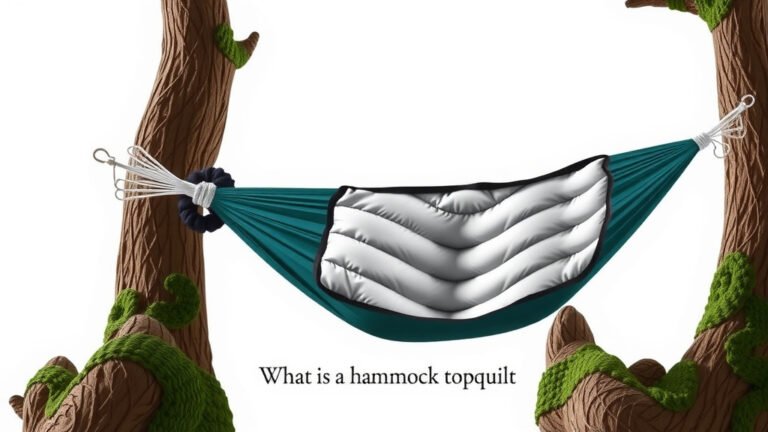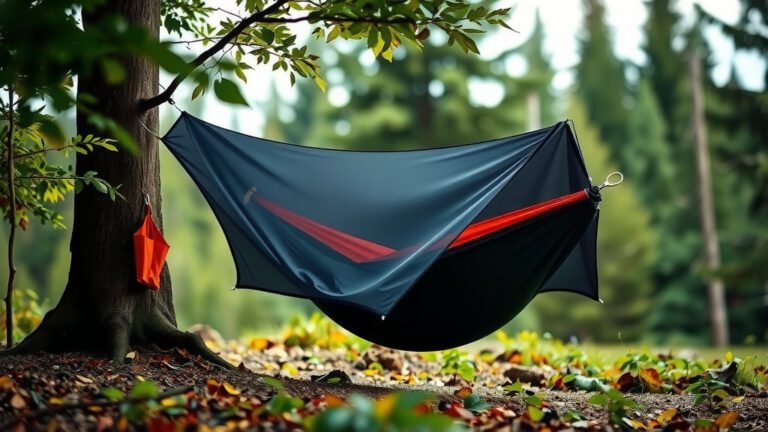
Master Hammock Camping: Your Sleeping Pad Guide
Yes, you absolutely can use a sleeping pad in your hammock! Doing so is the best way to stay warm and comfortable on your camping trips. Many hammock campers find this method offers superior insulation compared to other sleep systems.
The secret is creating an insulated layer against the chill that can creep up from below. Without it, you might find yourself shivering, even in mild temperatures. We found that the right setup makes all the difference for a cozy night’s sleep.
- Use a sleeping pad for warmth.
- It prevents heat loss to the air.
- Choose the right pad size and type.
- Secure it properly for comfort.
Ready to learn how to make your hammock the coziest spot in the campsite? Let’s walk through the simple steps to get your sleeping pad set up perfectly.
Your Guide to Hammock Sleeping Pad Setup
You’re probably wondering if your trusty sleeping pad can actually work inside a hammock. The answer is a resounding yes! It’s the secret weapon for staying warm and cozy when you’re sleeping suspended between trees. We’ve found that the right pad and setup make a huge difference. It’s all about creating a barrier between you and the cool air that seems to surround you in a hammock. Without this layer, you risk losing precious body heat. Let’s get your hammock ready for some seriously comfortable nights.
Understanding Hammock Insulation Needs
Hammocks present a unique insulation challenge. Unlike a traditional tent where your sleeping pad rests on the ground, a hammock suspends you. This means there’s air circulating all around and, crucially, underneath you. This constant airflow can wick away your body heat surprisingly fast. Researchers have shown that heat loss can be significantly higher when there’s no insulation from below (NCBI).
Why Your Body Heat Escapes
Think of your body like a tiny furnace. It’s constantly producing heat. When you lie on a sleeping pad on the ground, the ground acts as a slight insulator. But in a hammock, there’s less direct contact with solid matter and more exposure to moving air. This movement of air, called convection, carries your heat away. Without something to trap that heat, you’ll feel that cold seeping in. It’s why even mild nights can feel chilly in a hammock.
The Role of the Sleeping Pad
A sleeping pad, whether inflatable or foam, is designed to trap air. This trapped air becomes your personal insulation. When you place it inside your hammock, it creates a barrier. This barrier stops the convective heat loss. It prevents your warmth from escaping into the surrounding air. We found that the R-value of a sleeping pad is your best indicator of its insulating power. A higher R-value means better insulation. Aim for a pad with an R-value that matches your expected temperatures. For cool nights, a pad with an R-value of 2 or higher is often recommended.
Choosing the Right Sleeping Pad for Your Hammock
Not all sleeping pads are created equal when it comes to hammock comfort. You need a pad that fits well and offers sufficient warmth. Consider the size, shape, and insulation of the pad. This will ensure you have a good night’s sleep without feeling cramped.
Pad Size and Shape Matters
Most standard rectangular sleeping pads can work. However, some hammock campers prefer mummy-shaped or rectangular pads that are narrower. A pad that’s too wide can bunch up, creating uncomfortable pressure points. It can also push you towards the edges of the hammock, potentially exposing you to drafts. We found that a pad that’s roughly the length of your hammock is ideal. You don’t want it too short, or your feet will get cold. You also don’t want it excessively long, as it can be cumbersome.
R-Value: Your Warmth Indicator
The R-value tells you how well a pad resists heat flow. A higher number means better insulation. For summer camping, an R-value of 1-2 might be enough. For three-season use (spring, summer, fall), an R-value of 2-4 is usually good. If you plan to camp in colder weather, look for R-values of 4 or higher. Many experts suggest checking the manufacturer’s temperature rating as well. It’s a helpful guide, but remember your personal tolerance for cold plays a role (Cleveland Clinic).
Types of Sleeping Pads
Foam pads are durable and affordable. They can be cut to size if needed. However, they can be bulky. Inflatable pads offer more comfort and pack down smaller. They can also be warmer for their weight. Some inflatable pads have internal baffles that help prevent air from shifting too much. This can enhance insulation. For hammock use, some people find self-inflating pads offer a good balance of comfort and insulation. Others prefer lightweight, compressible inflatable pads.
| Temperature Range | Recommended R-Value |
|---|---|
| Summer Only | 1-2 |
| 3-Season (Spring, Summer, Fall) | 2-4 |
| Cold Weather (Winter) | 4+ |
Getting Your Sleeping Pad into the Hammock
This is where the magic happens. Properly positioning your pad is key to comfort and warmth. Don’t just toss it in and hope for the best. A little effort goes a long way.
The Standard Placement Method
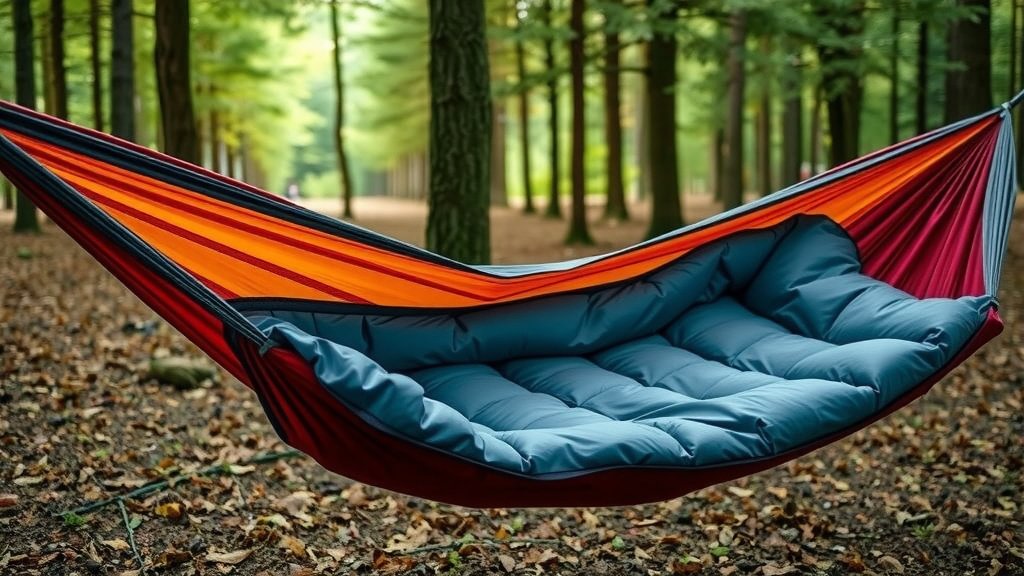
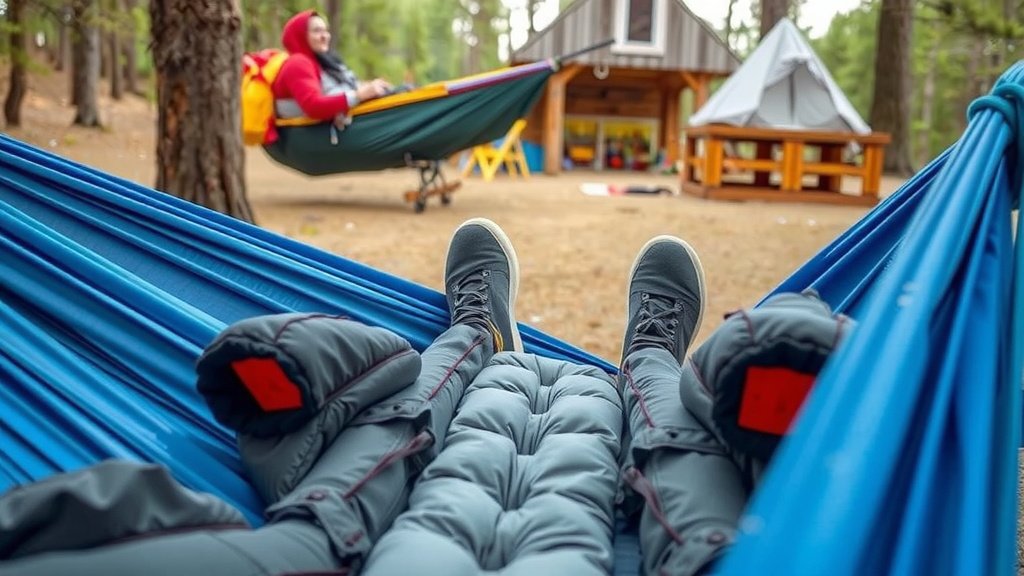
The most common way is to simply lay the pad inside the hammock. Once you’re in the hammock, lie down and let your weight settle it into place. The pad will naturally conform to the hammock’s shape. You want the pad to cradle you. It should cover your entire body, from your head to your toes. Make sure there are no gaps where cold air can sneak in. A common mistake is not pulling the pad up high enough under your head.
Preventing Pad Slips and Slides
This is the biggest annoyance for many hammock campers. Your pad can shift around as you move. This disrupts your insulation and comfort. We found a few tricks that help keep things in place.
Using Bungees or Straps
Some hammock campers attach small bungee cords or straps to their sleeping pad. These can then be looped around the hammock’s suspension or ridgeline. This anchors the pad. Others use cordage to create a simple tie-out system. You can attach small loops to the corners of your pad. Then, tie these loops to the hammock itself. This creates a more secure bedding system. Be sure not to overtighten, or it might feel restrictive.
DIY Pad Sleeves or Channels
A more involved but very effective method is creating a sleeve or channel for your pad. You can sew a fabric sleeve that runs along the bottom of your hammock. Your pad then slides inside this sleeve. This keeps it perfectly positioned all night. Some commercially made hammocks come with integrated pad straps or channels. If yours doesn’t, you can often add them yourself with a bit of sewing.
Adjusting for Comfort
Once your pad is in place, lie down and test it out. Does it feel right? Is it bunching up anywhere? Are your shoulders or hips feeling pressure points? Make small adjustments as needed. You might need to reposition the pad slightly. Sometimes, letting a little air out of an inflatable pad can increase comfort. It allows it to conform better to your body. Experiment until you find that sweet spot where you feel supported and insulated.
Quick Setup Checklist
Ready to put it all into practice? Here’s a simple checklist to get you started:
- Choose a pad with an appropriate R-value for the weather.
- Ensure your pad is long enough to cover you fully.
- Lay the pad inside the hammock, positioning it evenly.
- Lie down and let your weight settle the pad.
- Check for any bunching or uncomfortable pressure points.
- Consider using straps or a sleeve to prevent pad slippage.
Conclusion
You’ve learned how essential a sleeping pad is for a warm and comfortable hammock experience. By understanding your insulation needs and choosing the right pad, you’re well on your way to cozy nights outdoors. Remember that proper placement and securing your pad prevent annoying slips and ensure consistent warmth. Don’t be afraid to experiment a little to find what works best for your setup. Now, go ahead and prepare your hammock for your next adventure – a great night’s sleep awaits you!
Frequently Asked Questions
Can I use a regular sleeping bag instead of a pad in my hammock?
While a sleeping bag provides some warmth, it’s not as effective as a sleeping pad for hammock insulation. Air circulates freely underneath you in a hammock, and a sleeping bag won’t fully block this convective heat loss. A pad creates a more complete thermal barrier.
How do I stop my sleeping pad from sliding around all night?
You can prevent pad slippage by using simple methods like attaching bungee cords or straps to your pad that hook onto your hammock suspension. Some campers also create DIY sleeves or channels sewn into their hammock to hold the pad securely in place.
What is the best type of sleeping pad for hammock camping?
Both foam and inflatable pads can work, but inflatable pads often offer a better balance of comfort, warmth, and packability for hammock camping. Look for one with a good R-value suited to your expected temperatures. Some find self-inflating pads offer a nice compromise.
Will my body weight push all the air out of an inflatable pad in a hammock?
Your body weight will compress the pad, which is part of how it insulates by trapping air. If you find an inflatable pad feels too firm, you can let a little air out to improve comfort and allow it to conform better to the hammock’s shape.
Is it possible to sleep comfortably in a hammock during cold weather?
Yes, with the right gear! A sleeping pad with a high R-value (4+) is crucial for cold weather hammock camping. Combining this with a well-insulated sleeping bag and potentially a draft collar on your hammock will help you stay warm even in chilly temperatures.