Hammock Camping in Cold Weather: Your Winter Guide
Yes, you can absolutely hammock camp in cold weather with the right gear and setup. Successfully hammock camping in the cold relies on creating a warm, insulated sleeping system and protecting yourself from the wind. Don’t let chilly temperatures stop your adventure!
Cold weather hammock camping requires a few key differences from warmer seasons. You’ll need to think about your underquilt and top quilt as much as your tent campers do about their sleeping bags. We found that proper insulation is the biggest factor in staying comfortable. Wind protection is also critical for retaining heat.
- Get the right insulation for your hammock (underquilt is key!).
- Use a warm sleeping bag or quilt.
- Protect yourself from wind.
- Dress in layers.
- Seal up drafts.
Let’s walk through exactly how to set up your hammock for cozy cold-weather adventures. We’ll cover everything you need to stay warm and safe.
Your Guide to Hammock Camping in the Cold
Hammock camping in cold weather is totally doable! You just need to be smart about your gear and setup. Think of it like building a cozy nest. Your main goal is to trap your body heat and keep the cold wind from sneaking in. We found that a few key pieces of equipment make all the difference.
The Foundation: Your Hammock and Insulation System
Your hammock is your bed, but the insulation is what keeps you warm. For cold weather, you can’t rely on just a sleeping bag. You need insulation under you to stop your body heat from escaping into the cold air.
Underquilts are Your Best Friend
An underquilt hangs underneath your hammock. It’s basically a sleeping bag turned on its side, designed to be draft-free. We found that a full-length underquilt is best for winter camping. It covers you from head to toe.
When choosing an underquilt, pay attention to its temperature rating. For chilly nights, a 20°F or 0°F rating is a good starting point. Many campers find that a quilt rated for colder temperatures than they expect is a smart move. It’s better to have a little extra warmth than to shiver!
Understanding Underquilt Loft and Fill
Underquilts come with either down or synthetic fill. Down is lighter and compresses smaller, making it great for backpacking. However, down loses its warmth when it gets wet. Synthetic fill is heavier and bulkier but insulates well even if damp. Many experts suggest down for dry, cold conditions, while synthetic is more forgiving for damp environments (REI).
The loft of the underquilt also matters. More loft means more trapped air, which equals more warmth. Look for an underquilt with a good amount of fluffy fill.
Your Top Insulation: Sleeping Bag or Quilt
On top of your underquilt, you’ll want a warm sleeping bag or a top quilt. A top quilt is similar to an underquilt but meant to cover you from above. It often has foot boxes and draft collars to seal in heat.
Many people use their regular sleeping bag in a hammock, but this can be tricky. When you lie down in a sleeping bag inside a hammock, the insulation can compress. This compression squeezes out the warm air pockets. This is why an underquilt is so essential!
If you use a sleeping bag, make sure it’s rated for the temperatures you expect. A 3-season bag might not be enough for deep cold. Consider a winter-rated bag or a dedicated top quilt for better performance.
Don’t Forget a Sleeping Pad!
Some campers like to put a sleeping pad inside their hammock. This adds an extra layer of insulation and can make your sleep surface feel firmer. It’s especially helpful if your underquilt doesn’t quite cover the full length or if you want a bit more cushion. Consider using a sleeping pad inside your hammock for an extra layer of insulation.
We found that a closed-cell foam pad works well. It won’t deflate like an air pad. Plus, it adds a good amount of insulation. Just strap it into your hammock to keep it from shifting around all night. This extra barrier can significantly boost your warmth.
Protecting Yourself from the Wind
Wind is the enemy of warmth when you’re camping. It can suck the heat right out of your gear and your body. Setting up your hammock in a sheltered spot is your first line of defense.
Choosing the Right Campsite
Look for natural windbreaks. Dense evergreen trees can block a lot of wind. Hillsides or large rock formations can also offer protection. Avoid open fields or exposed ridges where the wind can whip freely. We found that even a slight dip in the terrain can make a big difference in comfort.
Hammock Tarp for Wind and Weather
A good hammock tarp is crucial for cold weather. It acts like a roof over your head, blocking rain, snow, and, most importantly, wind. Make sure your tarp is large enough to cover your hammock completely. Also, ensure it can be staked out low to the ground on the windward side.
When setting up your tarp, angle it to deflect the prevailing wind. Think about how the wind is blowing and position your tarp accordingly. Many tarps have multiple tie-out points, allowing you to create a very snug, wind-resistant shelter. A low-profile setup is key here.
Pitching Your Tarp Low
Instead of pitching your tarp high above your hammock, bring it down close. This creates a much warmer microclimate inside. The less space between your tarp and hammock, the less air can circulate and steal your warmth. We found that pitching the tarp nearly to the ground on the windy side offers the best protection.
Your Sleep System Checklist
Getting your cold-weather hammock setup right involves a few key elements. Here’s a quick checklist to make sure you have everything you need:
- An insulated underquilt (rated for your expected temperatures).
- A warm sleeping bag or top quilt.
- A well-fitting hammock tarp.
- A sleeping pad (optional but recommended).
- A warm hat and dry socks for sleeping.
Dressing for Warmth: Layering is Key
What you wear to sleep in your hammock is just as important as your gear. Think layers, and avoid cotton. Cotton absorbs moisture and takes a long time to dry, which will make you cold. Synthetic or wool materials are your best bet.
Base Layer: Wicking Away Moisture
Your base layer should be made of synthetic material like polyester or merino wool. This layer wicks sweat away from your skin, keeping you dry. Even in the cold, you can sweat during the night or while setting up camp. Staying dry is critical for staying warm.
Mid Layer: Insulation Power
The mid-layer provides the bulk of your insulation. Fleece jackets or vests are popular choices. A puffy jacket filled with down or synthetic insulation can also be a great mid-layer. You want something that traps air and keeps your body heat in.
Outer Layer: Wind and Water Protection
Your outer layer is your shell. This should be a windproof and waterproof jacket and pants. This layer protects you from the elements and keeps your insulating layers dry. Make sure it’s breathable so moisture can escape.
Don’t Forget Your Extremities!
Your head, hands, and feet lose heat quickly. Always wear a warm hat to bed, even if it doesn’t feel that cold. Insulated gloves or mittens are a must. Wool socks are essential for keeping your feet warm. Many campers find that wearing a pair of clean, dry wool socks just for sleeping makes a huge difference.
Sealing Up Drafts and Preventing Heat Loss
Even with the best gear, small gaps can let cold air in and warm air out. You need to be diligent about sealing up any drafts around your hammock setup.
Closing Off the Ends of Your Hammock
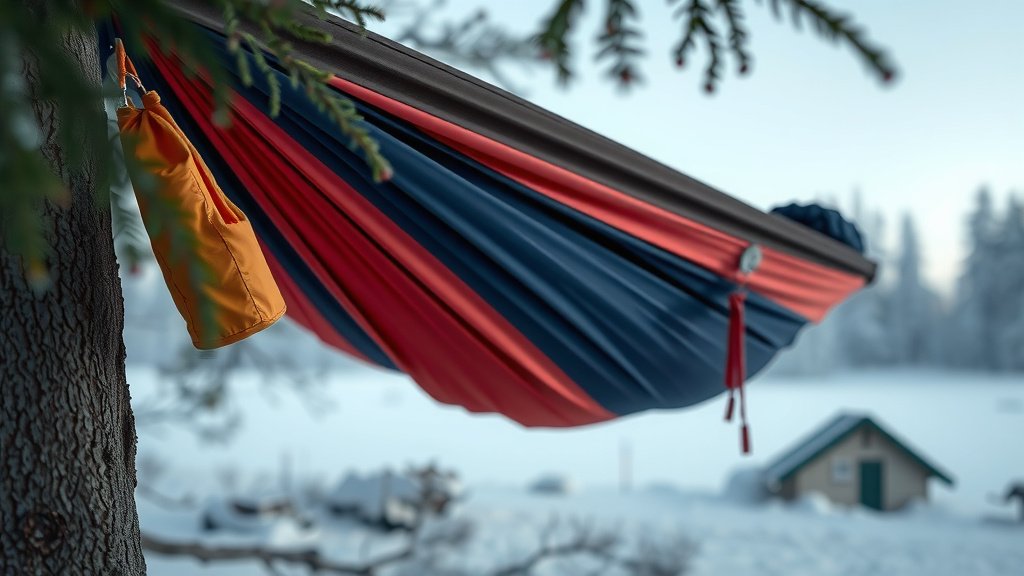
Some hammocks have built-in pockets or ways to attach fabric to close off the ends. If yours doesn’t, you might need to get creative. You can use a small piece of insulated fabric or even a stuff sack to block the opening. This prevents cold air from entering from the bottom.
Using Your Tarp Effectively
As mentioned earlier, pitching your tarp low is vital. Additionally, ensure the edges of your tarp are staked securely to the ground, especially on the windward side. This creates a sealed environment. You don’t want any drafts sneaking under the edges of your tarp.
Warm Water Bottle Trick
A simple yet effective trick is to use a Nalgene bottle filled with hot water. Wrap it in a sock or a small towel and place it inside your sleeping bag or under your quilt. It acts like a personal heater for the night. Many campers swear by this method for staying toasty (Camping Gear Lab).
By focusing on insulation, wind protection, and smart layering, you can enjoy the magic of hammock camping even when the temperatures drop. Happy hanging!
Conclusion
You’ve learned that hammock camping in cold weather is totally achievable with the right preparation. The key lies in a robust insulation system, primarily an underquilt and a warm top quilt, to combat heat loss. Protecting yourself from wind with a well-pitched tarp and dressing in layers of moisture-wicking materials are also vital. By sealing drafts and using smart tricks like a hot water bottle, you can ensure a cozy night’s sleep. Now, go plan your next cold-weather hammock adventure and enjoy the crisp air!
Frequently Asked Questions
How cold is too cold for hammock camping?
While hammock camping can extend into colder temperatures than you might think, there’s a limit. For most, camping below 0°F without specialized gear and significant experience can become unsafe. Always check your gear’s temperature ratings and your local forecast before heading out.
Can I use my regular sleeping bag in a hammock in winter?
You can use your regular sleeping bag, but it won’t be as effective as a dedicated setup. Lying down compresses the bag’s insulation, reducing its warmth. An underquilt is essential to prevent this heat loss. A sleeping bag can work as your top insulation, but be aware of potential compression.
What’s the difference between an underquilt and a sleeping pad in a hammock?
An underquilt hangs below your hammock and traps warm air, preventing heat from escaping downwards. A sleeping pad, whether inside or outside your hammock, provides an extra barrier of insulation and comfort. For serious cold, both an underquilt and a pad can work together for maximum warmth.
How do I stay warm if my underquilt isn’t rated for the temperature?
If your underquilt is a bit too light for the conditions, you can boost its warmth. Adding a sleeping pad inside your hammock on top of your underquilt creates an additional insulating layer. Dressing in warmer layers also helps compensate for less robust insulation.
How do I stop condensation inside my hammock when it’s cold?
Condensation forms when warm, moist air from your body meets the cold fabric of your hammock or tarp. To minimize this, ensure good ventilation by pitching your tarp slightly higher or using vents if available. Wearing dry layers and avoiding breathing directly into your sleeping bag can also help.