
How to Tie a Hammock to a Tree: A Simple Guide
The easiest way to tie a hammock to a tree is by using a strong tree strap or a loop system. You’ll want to wrap the strap around the tree trunk, then thread the end through a buckle or loop. This creates a secure anchor point for your hammock. Many experts say this method is safest for the tree and your hammock.
Getting your hammock setup correctly ensures a relaxing experience. You need to make sure the tree straps are positioned at a comfortable height. They should also be far enough apart for your hammock’s length. This setup avoids damaging the bark of the tree and prevents your hammock from sagging too much.
- Choose the right tree strap.
- Wrap it securely around the trunk.
- Thread the strap through its buckle or loop.
- Adjust for height and distance.
- Test for security before relaxing.
Ready to get your hammock hung? Let’s walk through exactly how to tie it to a tree step by step.
“`htmlHanging Your Hammock Between Trees Safely
Setting up your hammock between trees should be a breeze. You want to create a cozy spot to relax. This guide will show you the best ways to hang it. We’ll cover everything from choosing your anchor points to ensuring a stable setup.
Choosing the Right Trees and Location
Not all trees are created equal when it comes to hammock hanging. You need two healthy, strong trees. They should be spaced correctly for your hammock’s length. Think of them as your hammock’s sturdy new best friends.
What Makes a Good Hammock Tree?
Look for mature trees with a solid trunk diameter. A good rule of thumb is at least 6 inches (about 15 cm) across. This provides enough support. Avoid young, thin trees. They can be easily damaged or might not hold your weight. Also, check for dead branches or signs of disease. A healthy tree is a happy hammock anchor.
Spacing Your Anchor Points
The distance between your trees matters. It depends on the length of your hammock. A general guideline is to place your anchor points about 10-15 feet (3-4.5 meters) apart. This allows for a nice, gentle curve. Too close, and your hammock will be too tight. Too far, and it might sag excessively. You want that perfect hammock sag. It’s like finding your favorite comfy chair.
Essential Gear for Hanging Your Hammock
You’ll need a few key items to get your hammock up and ready. While some hammocks come with basic rope, it’s often better to use specialized gear. This protects both the trees and your hammock.
Tree Straps: Your Best Friend for Tree Hanging
Tree straps are widely considered the most tree-friendly option. They are wide strips of durable webbing. You loop them around the tree. Then, you connect your hammock to them. This distributes your weight evenly. It prevents the straps from digging into the bark. Many experts recommend them for their ease of use and minimal impact (National Park Service).
How Tree Straps Work
Most tree strap systems have a buckle or a series of loops. You wrap the strap around the tree. Then, you thread the strap through its own buckle or a loop. This creates a secure anchor point. You then clip your hammock’s carabiner or S-hook into one of the loops. Adjusting the height is as simple as moving to a different loop.
Rope vs. Straps: What’s the Difference?
While rope can work, it’s generally not the preferred method. Thin rope can cut into the tree bark. This can harm the tree over time. Rope also requires more complex knots. Knots can slip if not tied perfectly. Tree straps are simpler and safer for the trees. You can find various lengths and strengths of straps. Look for straps rated to hold at least 500 pounds (about 227 kg).
| Gear Type | Pros | Cons | Best For |
|---|---|---|---|
| Tree Straps | Tree-friendly, easy to use, adjustable, secure | Can be an extra purchase if not included | Beginners, eco-conscious users, all hammocks |
| Rope | Often included with hammocks, inexpensive | Can damage trees, harder to tie securely, less adjustable | Temporary setups, non-tree-friendly environments (use with caution) |
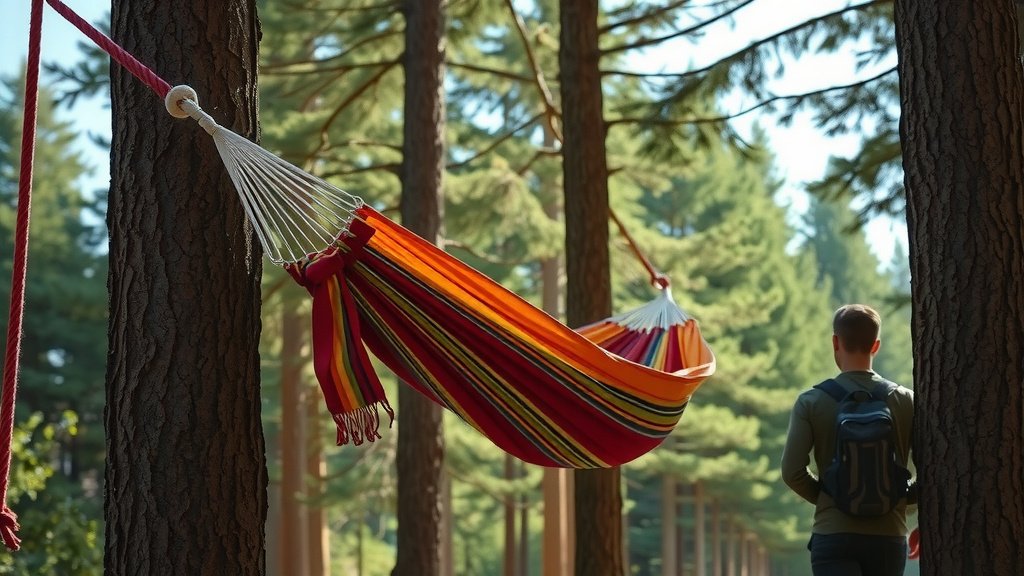
Step-by-Step Guide to Hanging Your Hammock
Now that you have your gear and your trees, let’s get hanging! Follow these simple steps for a secure and comfortable setup.
Step 1: Prepare Your Tree Straps
Take your tree straps out of their packaging. Unroll them so they are ready to wrap around the trees. Ensure there are no twists or knots in the webbing. This will help you get a smooth connection.
Step 2: Wrap the First Tree Strap
Go to your first chosen tree. Wrap one end of the tree strap around the trunk. Make sure it’s at your desired height. Aim for about 4-6 feet (1.2-1.8 meters) off the ground. This height usually provides a good hanging angle. Feed the strap through its buckle or loop. Pull it snug. You want it tight, but not so tight it’s difficult to adjust later.
Step 3: Wrap the Second Tree Strap
Move to the second tree. Repeat the process with the second tree strap. Ensure it’s at the same height as the first. This is important for a balanced hang. Again, thread the strap through its buckle or loop. Pull it snug. Check that the distance between the straps feels right for your hammock’s length.
Step 4: Connect Your Hammock
Now, take your hammock. Attach one end to one of the tree straps. Use the carabiner or S-hook that came with your hammock. Clip it securely into one of the loops on the strap. Repeat for the other end of your hammock and the second tree strap. You should start to see your hammock take shape.
Step 5: Adjust for the Perfect Sag
Your hammock might be too tight or too saggy. This is where adjustment comes in. You want a gentle curve, like a smile. A common recommendation is the 30-degree hang angle. This means the lines from the tree to the hammock should form a 30-degree angle with the ground (REI). If it’s too tight, move the strap to a lower loop on the tree. If it’s too saggy, move it to a higher loop. You might need to try a few spots to get it just right.
Step 6: Test for Security
Before you fully commit to relaxing, give it a gentle test. Gently sit in the hammock. Put about half your body weight into it. Listen for any unusual sounds. Feel for any slipping. Once you’re comfortable, slowly lower yourself in. Wiggle around a bit. If everything feels solid, you’re good to go!
Quick Hammock Hanging Checklist
- Select strong, healthy trees: At least 6 inches in diameter.
- Choose your gear: Tree straps are highly recommended.
- Set strap height: Aim for 4-6 feet off the ground, equally on both trees.
- Ensure proper spacing: 10-15 feet apart for most hammocks.
- Connect hammock securely: Use carabiners or S-hooks.
- Test the hang: Sit gently to check stability before full relaxation.
Conclusion
You’ve now learned the essential steps to securely tie your hammock to a tree. Using the right gear, like sturdy tree straps, is key for a safe and comfortable hang. Remember to choose healthy trees, space them correctly, and always test your setup before fully relaxing. Your perfect hammock spot awaits you, so go ahead and hang it up. Enjoy the simple pleasure of swaying in your hammock!
Frequently Asked Questions
Can I use any kind of rope to tie my hammock?
While rope can be used, it’s generally not recommended. Thin ropes can damage the tree’s bark, harming its health over time. Tree straps are a much better option because they distribute weight evenly and protect the tree. If you must use rope, opt for a wide, soft rope and tie it carefully.
How tight should my hammock be?
Your hammock should have a gentle sag, like a smile. Avoid making it too tight, as this can put unnecessary strain on the trees and your hammock. A common guideline is to aim for a 30-degree hang angle, where the lines from the tree to the hammock form that angle with the ground.
What if my trees are too far apart for my hammock?
If your trees are further apart than your hammock’s length, you’ll need to adjust your strap placement or consider using extension straps. Ensure the straps are still attached at a similar height on each tree to maintain a balanced hang. You might need to find a spot where the trees are closer, or use additional gear to bridge the gap.
How high off the ground should I hang my hammock straps?
A good starting point for hanging your tree straps is about 4 to 6 feet off the ground. This height usually allows for the ideal hammock sag when you sit in it. You can adjust this based on your preference and the specific length of your hammock.
Is it okay to hang a hammock from dead trees or branches?
Absolutely not. You should never hang a hammock from dead trees or branches. They are not strong enough to support your weight and could break unexpectedly, leading to injury. Always choose healthy, living trees with a solid trunk diameter of at least 6 inches.