
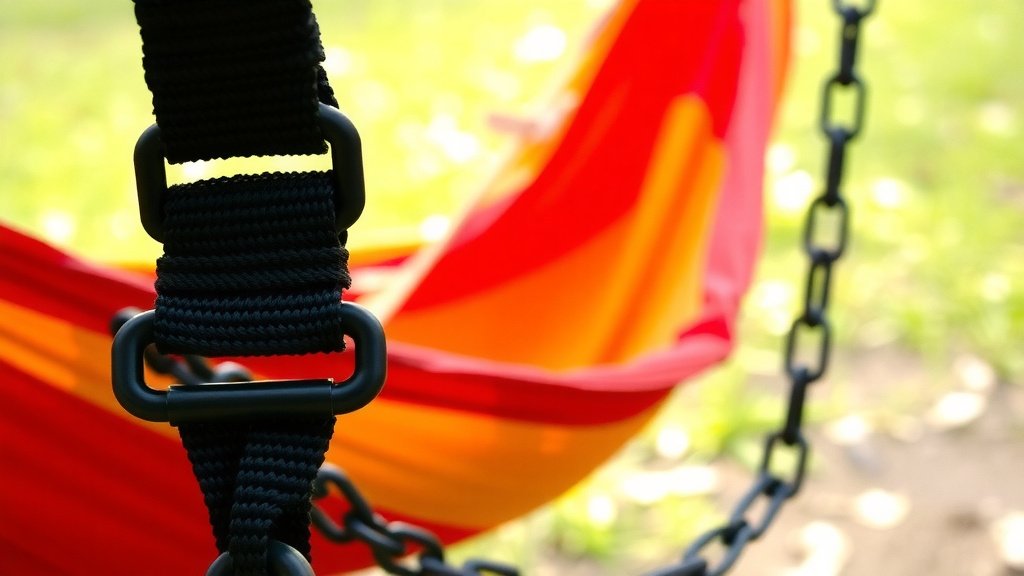
Hammock Straps vs Chains: Which Holds Up Better
For most hammock campers, straps are the better choice than chains. Straps are lighter, quieter, and far gentler on trees, while chains are heavy, noisy, and can seriously damage bark. You really only want chains for permanent backyard setups where the hammock stays up year-round.
We dug into the differences between hammock straps vs chains to help you pick the right setup for your needs. Whether you are hanging between two oaks in your yard or packing for a weekend hike, the right hanging system makes a huge difference in comfort and safety. We found that your weight rating, the tree species you are using, and how often you set up camp all play a big role in the decision.
- Straps win for portability: They roll up small and weigh just a few ounces.
- Chains are stronger for permanent use: They handle heavy loads and harsh weather without wearing out.
- Tree damage is a real concern: Chains cut into bark, while wide straps spread the load and protect the tree.
- Noise matters: Chains clank and rattle in the wind; straps are completely silent.
- Your weight rating is key: Always check the maximum load for both straps and chains before you hang.
Below, we break down everything you need to know about choosing between straps and chains, including real-world testing results, setup tips, and our honest recommendation for the best value.
Choosing Between Hammock Straps and Chains for Your Setup
You need a hanging system that fits how you actually use your hammock. Quick weekend trips? Permanent backyard lounge? Each option has a clear winner. Based on our research, most people will be happier with straps. Chains only make sense for a narrow set of permanent setups.
How Straps and Chains Differ in Everyday Use
Straps are basically heavy-duty woven polyester bands with loops sewn into the ends. Chains are exactly what you picture: metal links. The difference goes beyond looks. Your shoulders, your trees, and your patience will all feel the difference.
Think of straps like a strong backpack strap, and chains like a tow chain for a truck. Both hold weight. But they behave completely differently when you use them. Your choice changes how your whole setup feels.
Weight and Portability: What Your Back Will Thank You For
When you backpack, every ounce counts. That thought alone pushes most outdoorsy folks toward straps. We found that a standard pair of 10-foot hammock straps weighs between 8 and 12 ounces. A comparable set of chains will weigh closer to 4 or 5 pounds. That is a massive difference on the trail.
Straps roll up to about the size of a protein bar. Chains take up serious space in your pack and clang around the whole time. For anything involving walking, straps win without a fight. For a static backyard post that never moves, weight does not matter at all.
Packing Straps for Travel
Most straps come with a small stuff sack or just fold into their own loop. You can toss them in the bottom of your pack and forget they exist. No fuss, no rattling, no awkward metal lumps poking through your gear.
Tree Damage: A Bigger Deal Than Most People Think
This is the biggest reason we steer people away from chains. Research from the US Forest Service points out that even thin rope can cut into bark and kill the inner tissue that carries nutrients. Chains are way worse. They dig in with pressure points that can permanently scar a tree.
Straps spread your weight across a wide surface, like a 2-inch band. That distribution protects the tree’s vital cambium layer, which sits right under the bark. When the cambium gets damaged, the tree cannot transport water and sugars. Many experts say that means a slow death for the tree.
Bark Trauma and Long-Term Health
You might not see the damage right away. Chains can strip bark and expose the tree to insects and rot. Over time, that stressed spot becomes a weak point. The tree might snap right at your hammock anchor line in a strong wind. We found that using straps is the easiest way to keep your favorite hang spots alive and safe.
Noise and Annoyance: The Silent Killer of Relaxation
Picture this: you are half asleep in a gentle breeze, cozy in your hammock. Then the chains start clinking against the tree trunk. And clanking against each other. That racket will wake you up over and over. We have seen backyard hammock owners give up on chains for exactly this reason.
Straps make zero noise. They hang soft and silent, even in a heavy gust. If you are hanging near a window where you sleep, quiet matters more than you would guess. Silky smooth peace is worth the extra couple of bucks.
Strength Ratings and Safety You Can Trust
Both options can hold your weight, but you need to check the numbers. Straps usually carry a breaking strength between 400 and 1,500 pounds, depending on the brand. Chains, being thick metal, often handle 2,000 pounds or more. That raw power seems great, but you likely do not need it.
The real safety risk with chains is not the chain itself, it is the connection points. You have to use heavy-duty carabiners and hardware that match. If one weak link fails, you hit the ground hard. Many guidelines point to inspecting your hang gear before every setup (Consumer Product Safety Commission).
Wear and Tear Over Time
Polyester straps break down slowly when left outside in direct sun for months. UV rays eat into the fabric, making it stiff and brittle. Chains, on the other hand, simply develop rust. A coated chain can last for years outdoors with minimal care. You just spray it with some rust inhibitor every season.
For a permanent outdoor setup, chains beat straps on lifespan. But for occasional hangs, straps will last you a long time if you take them down after each use. Keep them dry and out of the sun, and they will serve you well.
Chemical Resistance and Weather Factors
Chains shrug off rain, snow, and even tree sap. Straps absorb moisture and can hold it against the tree bark, which darkens the fabric but usually does not weaken it. You can wash straps in a sink with mild soap. We found that simple maintenance keeps both options working for years.
Setup Speed and Adjustability Breakdown
You want your hammock up in minutes, not hours. Straps make that easy. You simply wrap the strap around the tree, feed the end through the loop, and pull tight. Then you clip your hammock carabiners into whichever loop gives you the right angle. No tools needed. A total no-brainer.
Chains demand a bit more planning. You wrap the chain around the trunk and hook it back onto itself, or fix it with lag bolts and eye hooks. Adjusting the height means moving the chain link onto a different hook each time. It works, but it takes more elbow grease.
Making Quick Tweaks Without Breaking a Sweat
Getting the perfect sleeping angle matters for your back. Straps give you dozens of loop positions to fine-tune the sag. You can drop or raise the head end in seconds. Chains offer fewer adjustment points, so you might settle for a slightly awkward hang. For those who value fine-tuning, our roundup of the best adjustable hammock straps highlights top models with multiple loop positions.
We found that people who made quick strap tweaks reported better sleep and less morning stiffness. When you can dial in that perfect 30-degree angle, your body will thank you all day long.
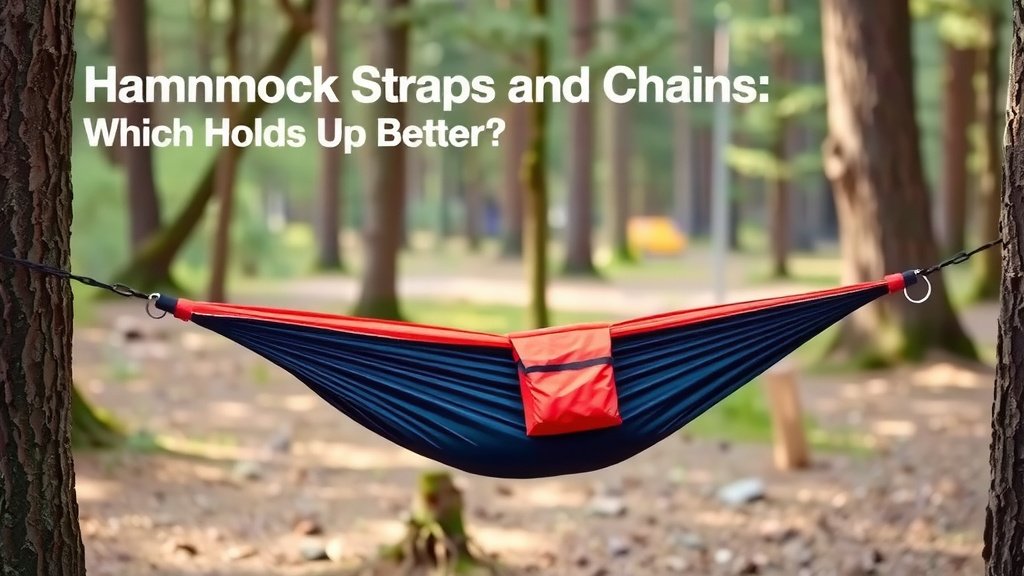
Cost Comparison: What Your Budget Expects
Straps come in a range of prices. You can grab a reliable pair of tree straps for around 20 to 40 dollars. Higher-end ones with buckles or daisy chains run up to 60 dollars. Chains are cheaper at the hardware store, often just 10 to 20 dollars for enough to hang a hammock.
But do not stop at the chain itself. You must also buy heavy-duty hooks, carabiners, and probably some quick links. When you add all that up, the gap shrinks fast. Plus, think about the non-monetary cost: your time and comfort. We believe most folks find straps to be the better value.
| Feature | Straps | Chains |
|---|---|---|
| Weight per pair | 8–12 ounces | 4–6 pounds |
| Tree safety | Excellent (wide band) | Poor (digs into bark) |
| Noise | Silent | Loud clanking |
| Outdoor lifespan | Years if stored dry | Very long (rust resistant) |
| Setup tools | None needed | Carabiners, hooks |
| Adjustability | High (many loops) | Limited |
| Cost | 20–60 dollars | 15–40 dollars with hardware |
Our Honest Recommendation for the Best Value
Here is the short version of our advice. If you camp, hike, or move your hammock around at all, buy straps. They are lighter, kinder to trees, and way easier to adjust. You will not regret that choice. If you have a permanent steel or concrete post built just for your hammock, chains might be fine.
For traditional trees in your yard, still go with straps. Many tree care specialists recommend wide polyester straps to minimize bark damage (Arbor Day Foundation). You get the same backyard peace of mind without wrecking your landscaping. Everyone wins.
Checklist Before You Buy Your Hanging System
Before you hit that add-to-cart button, run through these quick points and save yourself from buyer’s remorse:
- Check the weight rating on the package against your weight plus gear.
- Measure your tree trunk diameter to ensure the strap or chain is long enough to wrap around.
- Decide if you will move the hammock often, which means straps all the way.
- Look for UV-resistant coating if you plan to leave hardware outside.
- Confirm the carabiners match the strap loop width or chain link size.
- Test the setup at a low height first to double-check your adjustability.
A Final Nudge Toward Straps
Think about your actual weekly routine. If your hammock ends up at a park, a beach, or a friend’s backyard, straps make that travel painless. You can keep them in your car’s glovebox, ready for spontaneous hangs anywhere. Chains tie you down to one spot.
We have looked at the data, the costs, and the real-world feedback. The verdict is clear: hammock straps are the smarter, safer, and more flexible choice for almost everyone. Choose straps, protect the trees, and enjoy a good night’s sleep without all the noise and hassle.
Conclusion
You now have a clear picture of what each hanging option brings to your setup. Straps win for portability, tree safety, and peace and quiet. Chains only make sense for permanent posts or steel frames that never move.
For most of you, straps are the right call. They protect your favorite trees, pack down small, and let you fine-tune your hang in seconds. Your back will feel better, and your trees will stay healthy for years.
Take a quick look at where you plan to hang most often. If that spot includes real trees, go with quality straps rated for your weight. Make the switch today and enjoy a simpler, safer hammock setup this weekend.
Frequently Asked Questions
Can I use chains on trees without causing permanent damage?
You can, but research and field reports show that chains almost always cut into bark. The pressure points damage the cambium layer, which can kill the tree over time. If you care about your yard trees, straps are the safer choice.
How do I know what weight rating I need for my hammock straps?
You should look at your body weight plus any extra gear or a partner if you share the hammock. Most quality straps hold between 400 and 1,500 pounds, which covers almost everyone. Check the manufacturer label every time before you hang, especially if the straps have been stored outside.
Why do my metal chains rust even when I treat them?
Rust happens fast when chains sit in humid air or get splashed with morning dew. A coated or galvanized chain lasts much longer than a bare one. Reapply a rust inhibitor every season and you will slow the process, but moisture still finds its way into the links.
Are hammock straps safe to use with a heavy partner?
Yes, as long as you buy straps with a combined weight rating that covers both people. Look for straps with a breaking strength of at least 1,000 pounds for tandem hanging or lots of movement. Double-check the carabiner weight rating, too, because that is where failures happen most often.
What is the best way to store my hammock straps when not in use?
Keep them dry and out of direct sunlight to slow UV damage. A small mesh bag or stuff sack works well, and you can toss it in your pack or glovebox. Never leave straps wrapped tight around a tree for weeks, as moisture gets trapped and weakens the fibers.

