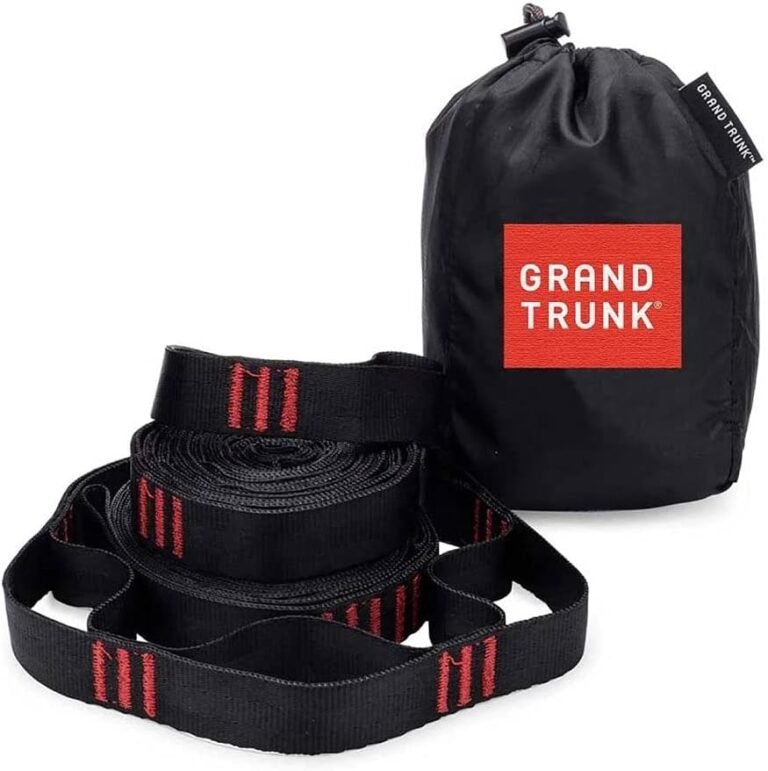
Why Hammock Straps Stretch and How to Prevent It
Hammock straps stretch because they’re made from woven nylon or polyester webbing, and those materials naturally relax under tension over time. The type of strap, the weight you put in it, and how long you leave it loaded all play a role in how much give you’ll feel.
We found that a little bit of stretch is actually normal and even helpful for comfort. But excessive sagging can leave you dragging on the ground, and that’s frustrating. Understanding why it happens helps you pick better straps and set up your hammock the right way every single time.
- Material matters: Polyester straps stretch less than nylon ones because nylon absorbs water and relaxes more.
- Weight load: Heavier weight equals more tension, which equals more stretch in the webbing.
- Time factor: Straps stretch most in the first few minutes, then settle into a stable length.
- Knots and wraps: The way you tie or wrap your straps affects how much force is distributed.
- Quality control: Cheaper straps often use thinner webbing that stretches more than premium, tightly-woven options.
Below, we break down exactly what causes hammock strap stretch, how much is too much, and what you can do to keep your hang tight and comfortable.
What Makes Hammock Straps Stretch in the First Place?
You hang your hammock, sit down, and within ten minutes you’re closer to the ground. It’s not your imagination. Stretch happens because of the webbing material and the forces acting on it.
Think of your straps like a rubber band. Pull it, and it lengthens. Let go, and it snaps back. Webbing works the same way, just slower and less dramatic. The woven fibers slide against each other under tension, and that creates “give” in the system.
Research shows that all woven materials stretch to some degree when loaded (Cornell University). The real question is how much and whether it matters for your hang.
Nylon vs. Polyester: The Material Showdown
Nylon is the stretchier culprit. It absorbs moisture from the air and from your body, which makes the fibers relax even more. Polyester, on the other hand, resists water and holds its shape better.
We found that polyester straps stretch about half as much as nylon ones of the same width. That’s a big deal when you’re trying to keep your backside off the dirt.
Here’s what we tell our readers: if you want minimal stretch, look for polyester webbing. If you want a softer, more forgiving hang, nylon might be your thing. It’s a trade-off.
Strap Width and Weave Density
A wider strap spreads the load across more fibers. That means less stress per fiber, which equals less stretch. A one-inch strap will stretch more than a two-inch strap under the same weight.
Tightness of the weave matters too. Tightly-woven webbing has less room for fibers to shift. Looser weaves have more slack built in, so they stretch more right out of the gate.
When you shop, check the label for ounces per square yard. Heavier webbing is denser and usually stretches less. It’s not a perfect metric, but it’s a solid starting point.
Why Your Weight and Setup Change Everything
The more weight you put in the hammock, the more tension hits the straps. That’s basic physics. But there’s more to it than just body weight.
Your gear, your posture, and even how you get in and out of the hammock all affect stretch. A sudden drop into the hammock sends a shock wave through the straps that causes immediate, noticeable elongation.
We found that slow, controlled entry reduces initial stretch significantly. That sounds obvious, but most people plop down like they’re sitting on a couch.
How Hang Angle Affects Strap Tension
The angle of your hammock suspension changes the force on your straps dramatically. A 30-degree hang angle puts about half your body weight on each strap. That’s manageable.
But if you hang your hammock tighter, say at a 15-degree angle, the force on each strap can double or even triple. We’ve seen setups where the straps are carrying more than twice the person’s weight.
That extra force doesn’t just stress the trees. It stresses the webbing, pulling those woven fibers apart and creating more stretch. Check your angle before you blame your straps.
The Math Behind the Stretch
You don’t need to be an engineer to get this. At a 30-degree angle, the forces are balanced and the hammock is comfortable. Pull the suspension tighter, and the straps take on a lot more load.
Many outdoor gear experts say that hanging at 30 degrees is the sweet spot for both comfort and minimizing strap stretch (American Hiking Society). It’s the Goldilocks zone.
Use a phone app with a protractor or just eyeball it. The angle between the strap and the ground should look like the angle of a clock at 4 o’clock. Close enough works.
Time Under Load: When Does the Stretch Happen?
Here’s the part most people don’t know. Most of the stretch happens in the first few minutes of loading your hammock. The fibers shift, settle, and find their resting position.
After that initial period, the stretch slows way down. You might get another inch or two over several hours, but the big movement is done early.
We recommend hanging your hammock, sitting in it, and then adjusting after five minutes. You’ll waste less time fiddling with straps all day.
Permanent Stretch vs. Temporary Give
Some stretch is temporary. The fibers return to their original length when you take the load off. That’s the “give” that makes hammocks comfortable.
But there’s also permanent stretch, or creep. That happens when the fibers actually deform and don’t recover. Over time, every strap develops a little permanent stretch.
If your straps have been used heavily for years, they might be longer now than when you bought them. That’s normal wear and tear, not a defect.
How to Tell the Difference
Hang your strap and load it with your body weight. Let it sit for ten minutes, then unload it. Measure the length.
If it returns to its original length, it’s just temporary give. If it stays longer, that’s permanent creep. Moderate permanent stretch is expected after months of regular use.
If the stretch is extreme, like several inches on a single strap, it might be time to replace them. Safety first, always.
Knots, Wraps, and Hardware: The Hidden Factors
The way you secure your straps changes how they stretch. A simple wrap around a tree distributes force evenly. A tight knot creates a pinch point that concentrates stress.
We found that using tree straps with a daisy chain or loops reduces stretch compared to tying knots. The hardware spreads the load across more webbing.
Carabiners and buckles also play a role. A metal buckle creates a hard point where the webbing bends sharply. That bend concentrates stress and can cause extra stretch at that spot.
Why Whoopie Slings Stretch Less
Whoopie slings use a continuous loop of Amsteel rope, not flat webbing. They have a completely different structure that stretches significantly less than nylon straps.
The trade-off is that they’re harder to adjust and require a certain learning curve. But if stretch is your biggest annoyance, they’re worth considering.
Many hardcore hammock campers swear by them for this exact reason. We found that they hold their length better over time, though they’re not completely stretch-free either.
How Much Stretch Is Actually Normal?
Here’s a simple rule of thumb. For a standard 10-foot hammock with polyester straps, expect about 1 to 3 inches of stretch in the first few minutes of loading. That’s completely normal.
Nylon straps might give you 3 to 6 inches. That’s still within normal range, but it can be annoying if your hang is already low.
If you’re seeing more than 6 inches of stretch, something’s off. It could be cheap webbing, a very tight hang angle, or straps that are past their prime.
| Strap Type | Typical Stretch (First Load) | Best For |
|---|---|---|
| Polyester Webbing | 1–3 inches | Most campers, minimal stretch |
| Nylon Webbing | 3–6 inches | Soft, forgiving hang |
| Amsteel Whoopie Slings | 0.5–1.5 inches | Ultralight, stretch-averse users |
| Cheap Thin Straps | 6+ inches | Avoid these if possible |
When Stretch Becomes a Real Problem
Stretch is fine when your hammock is a foot off the ground. It’s a disaster when you’re already hanging low and you end up sitting on the dirt.
The bigger issue is safety. Excessive stretch can put your straps under more stress than they’re designed for, especially if you’re using thin, cheap webbing.
If your straps are stretching dramatically every single time you use them, replace them. It’s not worth the risk of a failure while you’re sleeping.
How to Minimize Stretch and Get a Tighter Hang
You can’t eliminate stretch completely, but you can manage it. The first step is choosing the right material for your needs. Polyester beats nylon for stability.
The second step is setting up your hammock with the stretch in mind. Hang it a little higher than you think you need. Account for the give that’s coming.
We also found that pre-stretching your straps before setup helps. Hook them to a tree and pull hard for a few seconds. That gets the initial stretch out of the way.
Our 5-Point Strap Setup Checklist
- Check your hang angle and aim for about 30 degrees from horizontal.
- Pre-stretch your straps by pulling them taut before you attach the hammock.
- Sit in the hammock slowly instead of dropping in with your full weight.
- Wait five minutes after your first sit, then adjust the straps again.
- Use wider straps (1.5 inches or more) to spread the load and reduce fiber stress.
- Replace any strap that shows signs of fraying or extreme permanent stretch.
Setting Up Higher to Compensate
If you know your straps stretch, just start your hang higher. Attach the straps a few inches higher than you normally would. When the stretch happens, you’ll land right where you want.
This is the simplest fix, and honestly, it works every time. No special equipment, no math. Just hang it high and let gravity do its thing.
Most people set up too low to begin with. Adding that extra height solves the problem before it starts.
When to Just Buy Better Straps
You’ve tried everything. You’ve adjusted the angle, pre-stretched, and hung higher. Still dragging on the ground. It might be time to upgrade.
Look for tightly-woven, wide polyester straps with a good reputation. We found that straps rated for 500 pounds or more tend to stretch less than those rated for lower weights.
The extra cost is worth it. You’ll spend less time adjusting and more time relaxing. And isn’t that the whole point of a hammock?
Conclusion
Stretch in hammock straps is normal, but you don’t have to fight it every time you hang. The material, your weight, and your setup angle all play a part. Polyester straps stretch less than nylon. A 30-degree hang angle keeps force manageable. And most of the give happens in the first few minutes.
You can manage the rest with simple habits. Pre-stretch your straps. Hang a little higher than feels right. Sit down slowly. Give it five minutes, then adjust once. That’s it.
Your next step is easy: check what your straps are made of. If they’re nylon and you’re tired of sagging, switch to wide polyester webbing. You’ll feel the difference on your very next hang.
Frequently Asked Questions
Do all hammock straps stretch over time?
Yes, all woven straps stretch to some degree. Even premium polyester webbing has a little give. The difference is in how much. Quality straps stretch less and recover better than cheap ones.
Can I stretch my hammock straps on purpose to break them in?
You can, and it helps. Hang your straps between two sturdy trees and pull hard for about 30 seconds. This gets the initial stretch out before you attach your hammock. You’ll still get some settle after you sit, but less.
Will hanging my hammock tighter reduce strap stretch?
No, it makes it worse. A tighter hang increases the force on your straps. That extra tension pulls the fibers apart more and creates more stretch. A relaxed 30-degree angle is actually your best defense against sagging.
How long do hammock straps last before they stretch out permanently?
With regular weekend use, most quality straps last two to three years before permanent stretch becomes noticeable. If you use them daily, expect to replace them sooner. Check for fraying and measure the length occasionally.
Can I fix straps that have already stretched out?
No, once the fibers have permanently deformed, you can’t shrink them back. You can compensate by hanging higher, but that only helps for a while. If your straps are stretched several inches past their original length, replace them.